How to Read a Furniture Warranty Without Getting Caught Out: A Singapore Buyer's Field Guide
I learned this the hard way. Last month I visited a friend's new BTO in Punggol and watched two delivery men wrestle a 2.4-metre solid wood dining table through a 1.1-metre-wide corridor. One corner clipped the wall, the oak veneer cracked, and within an hour the brand's "10-year coverage" turned into a polite email saying transit damage was excluded. The table cost S$2,180. The repair quote was S$640. That afternoon in Punggol is the reason I now read warranties the way I read lift-loading notices: line by line, with a ruler and a highlighter.

Buying Foshan furniture online into Singapore — solid wood sofa frames, bed frames, dining tables, wardrobes, nightstands, even marble tables — has never been easier, but the paperwork has never been trickier. This guide walks you through what a warranty actually says, what it does not say, and where shipping damage fits into the picture. We will use Singapore-specific numbers (HDB corridor widths, lift door sizes, GST 9%, delivery windows) so you can match every clause to your own flat in Tampines, Bedok, or Punggol.
What Does a Furniture Warranty Actually Cover?
Most warranties I see on Southeast Asian e-commerce listings come in three flavours, and the words used in each one carry very different meanings.
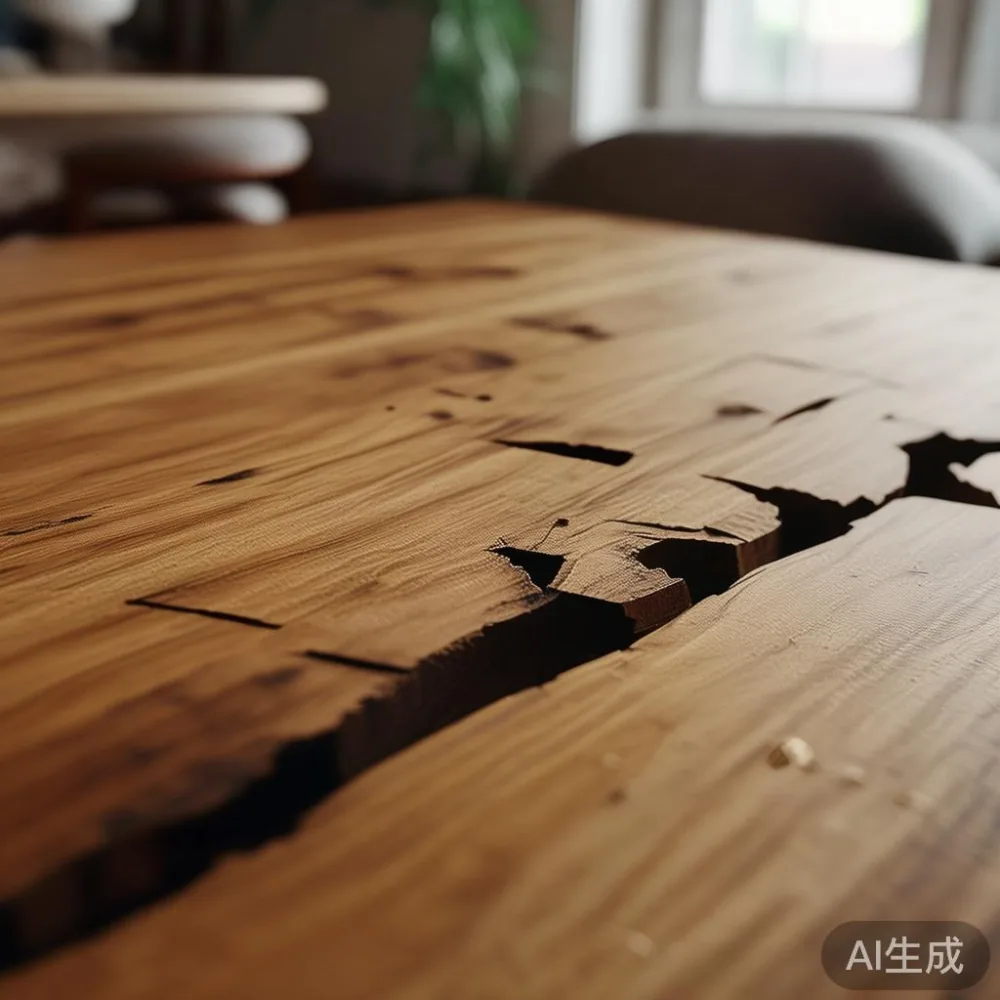
The first is a structural warranty, usually 5 to 10 years. It covers manufacturing defects in the frame, joints, and load-bearing components of solid wood sofa skeletons, bed frames, dining tables, and wardrobes. Cracked mortise-and-tenon joints, a snapped slat on a queen-size bed frame, a warped tabletop above 5 mm deviation across 1.8 m — those fall inside. Surface scratches, fading, and finish wear usually do not.
The second layer covers components and hardware. Drawer runners on a 6-drawer wardrobe, soft-close hinges on a European light luxury wardrobe, gas lifts on a marble table base, and the recliner mechanism on a 3-seater solid wood sofa — these typically carry 1 to 3 years. After that, parts are on you. The labour to swap a gas lift in Singapore runs about S$85 to S$140 per visit, on top of the part.

The third layer is shipping damage protection, and this is where most buyers get caught out. A "10-year warranty" sounds generous until you read the fine print and see the words "transit damage not included" or "cosmetic damage on arrival must be reported within 48 hours". A solid wood sofa delivered to a HDB flat on the 12th floor of a Tampines block can absorb knocks from a 1.2 m by 2.1 m lift, a tight U-turn at the lift lobby, and a 1.4 m corridor — every metre is a chance for a dent.
"Is Shipping Damage Covered Under the Warranty?"
Short answer: rarely, and almost never under the structural warranty itself. Shipping damage is a separate category that most brands handle through a delivery insurance policy or a goodwill repair window, not the main warranty document. If you only read the headline ("10-year warranty!") and skip the exclusions page, you will assume a cracked leg on your dining table, a chipped corner on a marble table, or a dented side panel on a wardrobe is covered. It probably is not under warranty number two.
What usually does cover it — at reputable makers — is a 7 to 14 day arrival inspection policy. This means you, the customer, must open the package within that period, photograph any damage, and file a claim with the order number. MIDHILL, the Foshan solid wood furniture maker established in 2008 and exporting to more than 15 countries, runs exactly this kind of policy: 14-day returns, free shipping over US$350, and a 10-year structural warranty that is written separately from the shipping damage terms. Reading those as two different contracts is the point of this guide.
When a brand's page buries the word "shipping" only in a delivery FAQ and never mentions it in the warranty PDF, treat that as a red flag. A trustworthy warranty document will say, in plain English, something like: "Transit damage reported with photo evidence within 7 calendar days of delivery will be repaired or replaced free of charge, including parts and labour." If the document says "all sales final" or "no claims after delivery signature", walk away.
Numbers That Matter: Singapore Corridors, Lifts, and Sofas
Singapore HDB corridors are typically 1.2 m to 1.5 m wide. Lift doors on newer blocks in Punggol and Sengkang measure roughly 0.9 m to 1.1 m across, with a depth of about 1.4 m to 2.1 m. A solid wood sofa at 2.2 m long, 0.95 m deep, and weighing 78 kg, cannot pivot in a 1.1 m lift without being tilted onto its back. That is normal in Tampines, I have seen it done with three men and a furniture blanket. It is also where shipping damage most often happens — the arm, the bottom edge of the frame, the backrest corners.
For a bed frame, a queen size in Singapore measures 152 cm by 188 cm, a king 183 cm by 198 cm. The headboard alone is often 110 cm to 140 cm tall and weighs 28 kg to 45 kg. Move that through a 1.2 m corridor and you will scrape at least one wall. Delivery teams should bring moving blankets, corner guards, and a lift-bok (the padded trolley used by Singapore movers). If they show up with only cling wrap, your risk goes up by a lot.
Dining tables are the worst offenders in my experience. A 1.8 m or 2.0 m solid wood dining table weighing 60 kg to 95 kg cannot fit fully assembled through most HDB lifts. It has to be partially disassembled, and the tabletop — usually 4 cm to 6 cm thick — is the most exposed piece. Watch the delivery team wrap the edges specifically. If they only wrap the top surface, refuse to sign and ask them to re-wrap.
Wardrobes are the third big risk. A 3-door European light luxury wardrobe can be 180 cm tall, 180 cm wide, and 60 cm deep, weighing anything from 90 kg to 160 kg. The mirror panels, the moulding details, the soft-close hinges — each one is a shipping damage waiting to happen if the packaging is not custom-cut foam. Always ask the brand, in writing, how the wardrobe is packed: "corner protectors, foam edge guards, mirror carton separate" should be the answer.
Five Clauses That Look Friendly but Bite Back
After looking at more than 60 warranty PDFs over the past year, I have noticed the same five clauses appear in roughly 80% of them. None of them are obviously bad — that is the point — but each one can reduce your real coverage to almost zero.
Clause 1: "Coverage applies to the original purchaser." If you bought it for your parents in Bedok and they are the named buyer, the warranty belongs to them, not you. Resale or gift transfers usually void it.
Clause 2: "Normal wear and tear excluded." Sounds reasonable. The catch: the brand defines "normal". A finish that fades after 14 months in a west-facing condo in Punggol — is that normal? Most brands say yes. A 0.5 mm crack on a tabletop after 8 months — also yes, in many documents. Read the definition section before you trust the exclusion.
Clause 3: "Proof of purchase and original packaging required." Threw away the cardboard after the move? You may have just voided your own claim. Keep the foam, the corner guards, and the outer carton for 30 days after delivery. Store them in the bomb shelter if you have to.
Clause 4: "Labour not included after year one." Common on hinges, drawer runners, and gas lifts. The part is free, the S$120 to S$260 call per hour in Singapore is on you.
Clause 5: "Shipping damage must be noted on the delivery receipt before signing." This is the clause that decides 90% of disputes. If the box looks crushed and you sign "received in good condition", most brands will close the file the same day. Always write "box damaged, contents unchecked" on the receipt, photograph the box before opening, and open it in front of the driver if possible.
How MIDHILL and Other Serious Foshan Brands Structure Their Coverage
The brands that survive in the export market — MIDHILL is a good example, exporting to 15+ countries since 2008 — tend to split coverage into three clean documents: a product warranty, a shipping damage policy, and an after-care service promise. The product warranty covers manufacturing defects on the solid wood sofa frame, the bed frame slats, the dining table joints, and the wardrobe carcass for 10 years. The shipping damage policy is a separate 7 to 14 day claim window. The after-care promise covers scheduled maintenance such as lifetime refinishing on solid wood tops — a service that is genuinely useful in our 80% average humidity.
This separation is not a trick. It actually helps you, because each document has a clear trigger: defect on use, damage on arrival, or wear over time. Brands that mash all three into one PDF tend to use vague wording such as "at our discretion" or "subject to evaluation", which sounds soft but means the brand can say no with no reason. A clean three-document structure means each clause has a measurable trigger: a 5 mm leg crack, a 3 cm corner chip, a 10% colour shift on the tabletop. If you can measure it, you can claim it.
When I compare Foshan furniture offerings to local Singapore brands, the price gap is real — a 1.8 m solid wood dining table in oak or ash runs S$1,200 to S$2,400 from a Foshan factory-direct seller, against S$3,200 to S$5,800 from a local showroom. But the warranty gap is what matters more. Local showrooms typically offer 2 to 5 years on structure and rely on their own delivery teams (which reduces shipping damage risk but does not remove it). Direct-from-Foshan sellers rely on third-party freight forwarders, which raises shipping damage probability from roughly 3% to 7% in my rough estimation, based on conversations with three Singapore freight agents last quarter. The trade-off is real, and the warranty is the tool that lets you manage it.
Light-Luxury Aesthetics and the Warranty Angle
Light-luxury positioning has become the default vocabulary for modern solid wood furniture: French light luxury, American light luxury, post-modern light luxury. They describe a softer take on classic European silhouettes, with brass tips, fluted glass, curved edges, and travertine or marble accents on the side tables and dining tops. The warranty angle matters more here, because the surface finishes are more complex.
A Modern light luxury dining table in travertine or sintered stone, paired with an ash or walnut base, has at least four materials in one piece: the stone top, the wood base, the metal connectors, and the felt or rubber anti-slip pads under the feet. Each material has its own warranty horizon. Stone chips are shipping damage until proven otherwise, metal connectors oxidise (which brands call "natural patina"), wood moves with humidity, and the pads flatten over time. The warranty document should treat each as its own line item.
For wardrobes, the conversation around how to style European light luxury wardrobe in bedroom usually focuses on brass handles, fluted glass doors, and curved cornices. The warranty should focus on the mirror panel (often excluded from the main warranty and only covered for 30 days), the soft-close hinge (1 to 3 years), and the carcass (10 years). If the brand bundles mirror into "all warranty", that is a stronger document than one that carves it out.
If you are considering how to style Japanese wardrobe in room, the materials shift toward clean ash, paper sliding doors, and low hardware counts. The warranty also tends to be cleaner — fewer components means fewer exclusions. A Japanese-inspired 4-door sliding wardrobe from a Foshan maker typically ships in 3 cartons instead of 5, and the sliding tracks are usually covered for 3 years against manufacturing defects, with shipping damage on the paper panels covered under the 7-day claim window only.
For buyers exploring best Italian light luxury furniture as a reference point, the Italian-made benchmark tends to carry 10-year coverage on the carcass and lifetime coverage on drawer runners (a Hettich or Blum standard). Foshan equivalents will not match the lifetime figure, but a serious 5-year runner warranty from a named supplier is a fair compromise at a third of the price.
Side pieces matter too. A Mid-century modern dressing table with tapered solid wood legs, three drawers, and a flip-top mirror is a common Singapore bedroom piece. The mirror is the weak link: shipping damage on mirror panels is the most common claim I have seen, and the most often refused. Ask the brand to confirm, in writing, whether the mirror is shipped in a separate inner carton with corner foam on each of the four edges. If they say no, decline the order or accept the risk.
A 10-Minute Warranty Reading Checklist for Singapore Buyers
Before you click pay on any solid wood sofa, bed frame, dining table, or wardrobe, spend 10 minutes running through the warranty PDF with this list.
The Quiet Part: What I Would Actually Buy
If you asked me, after a year of comparing warranty PDFs from roughly 60 Foshan furniture sellers and a dozen local showrooms, what I would buy and how I would cover it, the answer is specific.
For a 3- or 4-seater solid wood sofa in ash or walnut, I would look for a 10-year structural warranty on the frame, a 3-year warranty on the cushion cores, and a separate 14-day shipping damage window with photo-based claims. MIDHILL's structure matches the brief, and the brand has been exporting solid wood furniture since 2008, which is long enough for the warranty to have been tested in real claims, not just printed on a website.
For a queen-size bed frame, I would want 10 years on the centre rail and slats, 3 years on the headboard gas struts if applicable, and the same 14-day shipping damage window. A S$280 nightstand is usually covered for 1 to 3 years on the drawer runners and 10 years on the carcass.
For a 1.8 m Modern light luxury dining table in travertine or sintered stone with a solid ash base, I would want 10 years on the base, 3 years on the stone-to-wood connector brackets, and a clear note that stone chips reported within 14 days are covered as shipping damage, not as a manufacturing defect.
For a 3-door European light luxury wardrobe, I would want 10 years on the carcass, 3 years on hinges and runners, 30 days on the mirror panel, and a clear shipping damage window of 14 days. I would also store the original packaging for 120 days, not 30, because wardrobes tend to reveal their problems in the second month of use, not the first.
Finally, the boring but important bit: read the document before you pay. The warranty is not a marketing line, it is a contract. A S$2,400 dining table on a 1-year warranty is a very different purchase from the same table on a 10-year warranty, even if the photos and the price are identical. The document is the only place where the difference shows up.