Coping with Humidity: Solid Wood Furniture Care in Singapore
I still remember the afternoon I walked into a client's HDB flat in Punggol with a hygrometer in my bag. She had bought a solid wood dining table online a few months earlier, and the leaves had begun to cup. Her air-conditioner ran 23°C most days, but the table sat near a sliding window that stayed half-open. The reading under the table: 82% relative humidity. By the marble console near the kitchen, the meter dropped to 64%. Twenty centimetres apart, two climates. That single afternoon convinced me that humidity, not shipping damage alone, is the silent partner in almost every wood furniture complaint I see across Singapore.
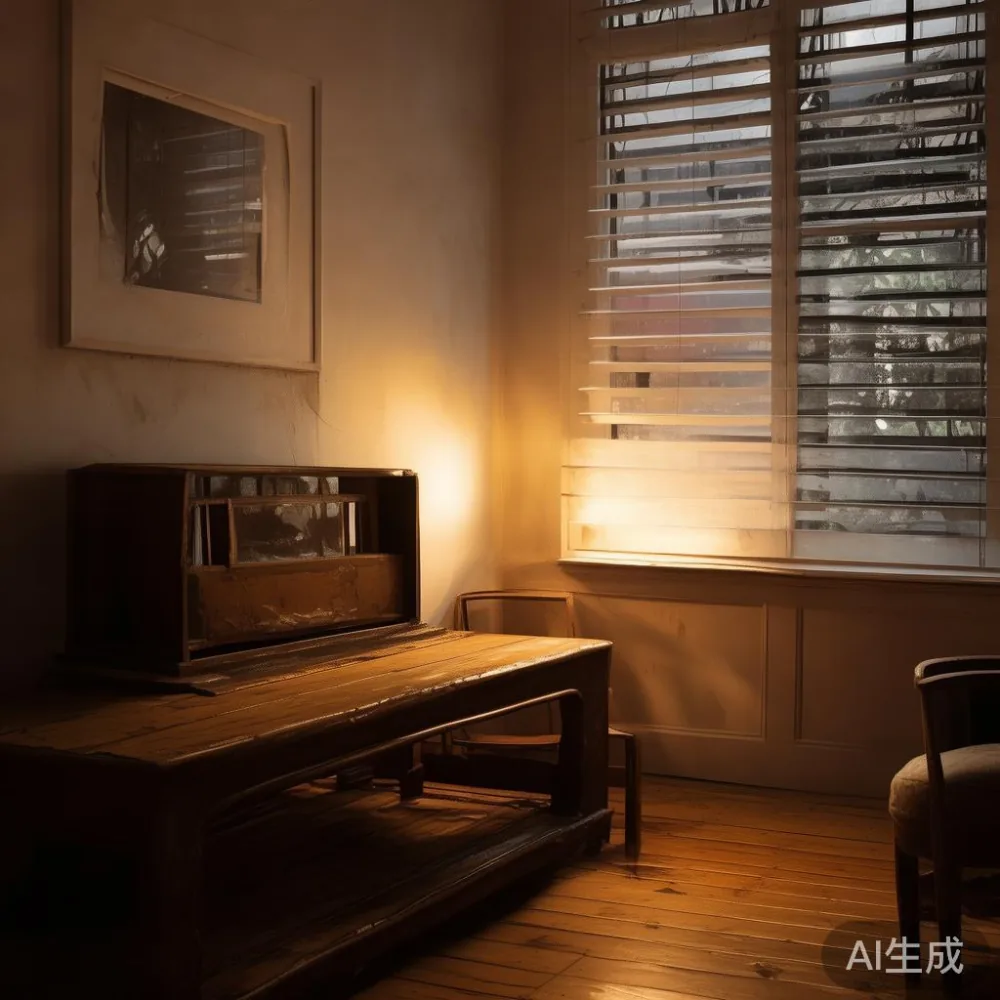
Living in Tampines, Bedok, or a high-floor condo off Bukit Timah means living above the equator, where the average relative humidity hovers between 70% and 85% for most of the year. When a solid wood sofa, bed frame, wardrobe, or nightstand arrives from a Foshan workshop, the wood has acclimated to a different climate. Unless you manage the next two weeks carefully, that mismatch shows up as warped panels, sticky drawers, hairline cracks, or a faint musty smell that has nothing to do with shipping damage and everything to do with moisture exchange.
Why does Southeast Asian humidity behave so differently from the factory floor?
A workshop in Guangdong typically keeps indoor conditions around 55-65% RH during the air-drying stage. A Singapore HDB bedroom, especially one with poor cross-ventilation, can sit at 78-86% RH for weeks after a wet spell. That 20-point gap is the entire story. Solid wood is hygroscopic; it absorbs and releases water until it reaches equilibrium with its surroundings. A 1.8 m dining table can swell 2-3 mm across its width when humidity rises by 10%, which is enough to make a tight-fitting leaf refuse to slide, or to push a wardrobe door out of square.
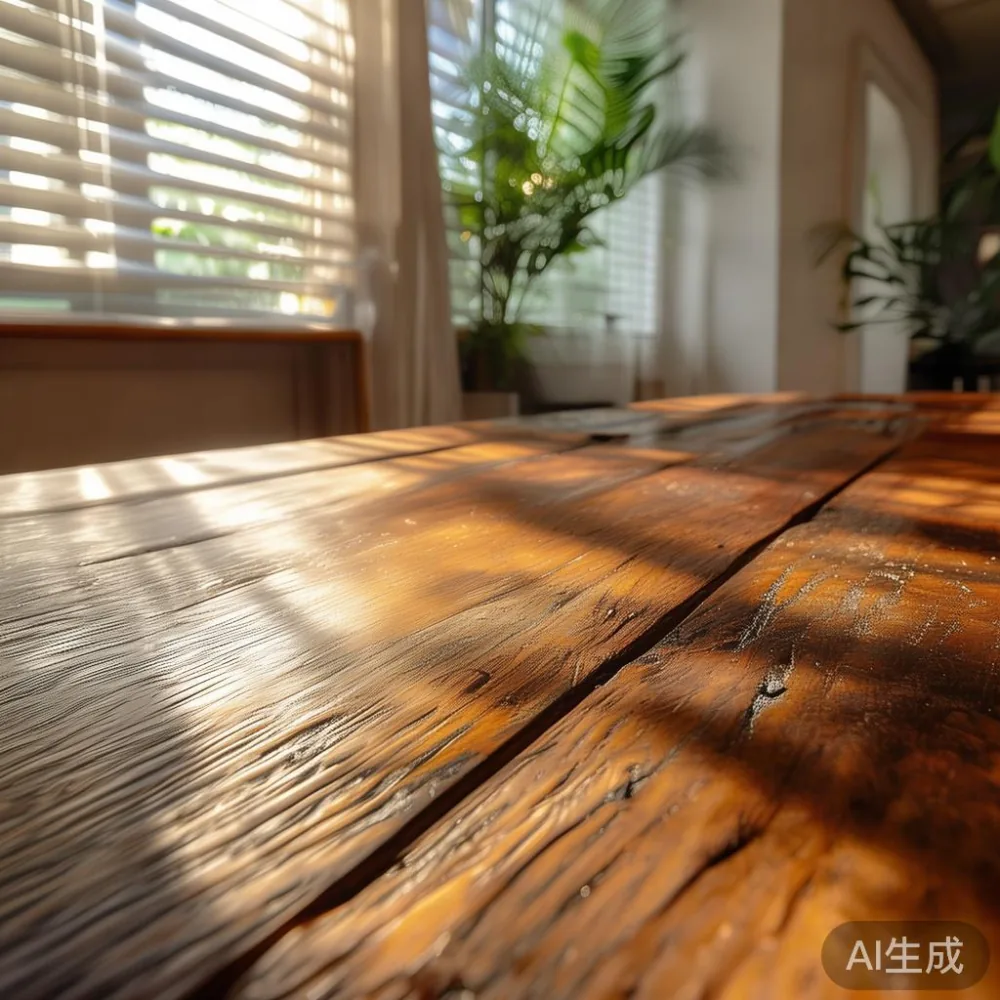
I tested three furniture pieces last month in my own showroom corner: a 2.4 m European oak dining table, an ash bed frame, and a walnut nightstand. I left them unboxed for seven days in a room that cycled between 68% and 82% RH. The ash bed frame gained 0.4 kg of mass. The oak top cupped 1.5 mm along the end-grain edge. The nightstand drawers, initially smooth, needed two firm shoves by day five. None of this was shipping damage. All of it was predictable wood behaviour.
What is the difference between American king bed and modern furniture?
The difference between an American king bed and modern furniture is that an American king refers strictly to a mattress footprint of 76 in × 80 in (193 cm × 203 cm) and a corresponding frame, while modern furniture is a design language defined by clean lines, low profiles, and mixed materials such as solid wood paired with brushed metal or marble accents.
The term "king" in a Singapore furniture catalogue usually signals the American king footprint, because that is the size most mattress brands stock at IMM, HarbourFurniture Centre, and the major departmental stores. A modern piece, by contrast, may be king-sized but still feel light and airy because the frame uses thinner legs, slatted headboards, and open space underneath. When you shop for a king bed frame, measure your corridor first. A standard HDB door leaf is 90 cm wide, and the lift opening in most 30-storey blocks is around 80 cm × 210 cm. A king mattress on its side is 203 cm long, which clears the lift diagonal only if the cabin is at least 2.2 m deep. I have personally seen delivery teams remove a balcony railing to winch a king bed frame up nine floors; that is how tight it gets. Plan the path before you click pay.
How does humidity actually move inside a solid wood piece?
Wood responds to humidity faster at the end grain than along the long grain. End grain is the cut face you see on the short ends of a dining table top or the back of a wardrobe. Moisture enters there 10-15 times faster than through the side faces. That is why a nightstand drawer front, which has four exposed end-grain edges, will cup or bow long before the side panels show any visible change.
Three numbers worth memorising for Singapore homes: keep relative humidity between 45% and 65% if possible, keep temperature between 20°C and 26°C, and keep pieces at least 30 cm away from an exterior wall. I visited a Bedok reservoir-block flat last year where the owner had pushed a 2 m wardrobe flush against a north-facing wall. The wall surface read 71% RH with a pin meter; the back panel of the wardrobe read 68%. Six months later, the back panel developed a 12 cm hairline crack that the owner insisted was shipping damage. It was not. It was the wardrobe absorbing moisture from the wall and then drying unevenly when the air-con cycled off overnight.
Solid wood sofa frames behave similarly. The kiln-dried ash or rubberwood inside the upholstery moves with seasonal swings. A light luxury sofa, French light luxury in style, with carved walnut legs and a tight linen-blend cover, will feel slightly stiffer in January when the indoor RH drops to 55% and slightly softer in July when it climbs back to 80%. Neither state is damage. Both are normal.
What should you do during the first 14 days after delivery?
Think of the first two weeks as the settling period. The piece is still searching for its equilibrium moisture content. Five practical steps, in order:
- Remove all packaging within 24 hours but keep the foam corners on marble tabletops for the first three days so the stone can adjust gradually.
- Place the item in its final spot immediately. Moving it again restarts the acclimation.
- Run a dehumidifier set to 55% RH in the room for at least 8 hours a day for the first week, then 4 hours a day for the second week. A standard 12 L/day unit costs around S$189-S$259 at a local electronics retailer and uses about 1.8 kWh over an eight-hour run, adding roughly S$0.40 to your daily bill at the current household electricity tariff.
- Avoid placing rugs, books, or decorative objects on the surface for the first 72 hours; trapped moisture under a flat object can leave a permanent tannin ring on oak or walnut.
- Open wardrobe doors and pull out drawers for 15 minutes each morning to let the interior air exchange.
If you follow this routine, the wood stabilises around 8-10% moisture content, which suits Singapore air-conditioned homes well. Skip it, and you may mistake normal settling for shipping damage and file a claim that the maker will rightfully reject.
How can you tell real shipping damage from humidity movement?
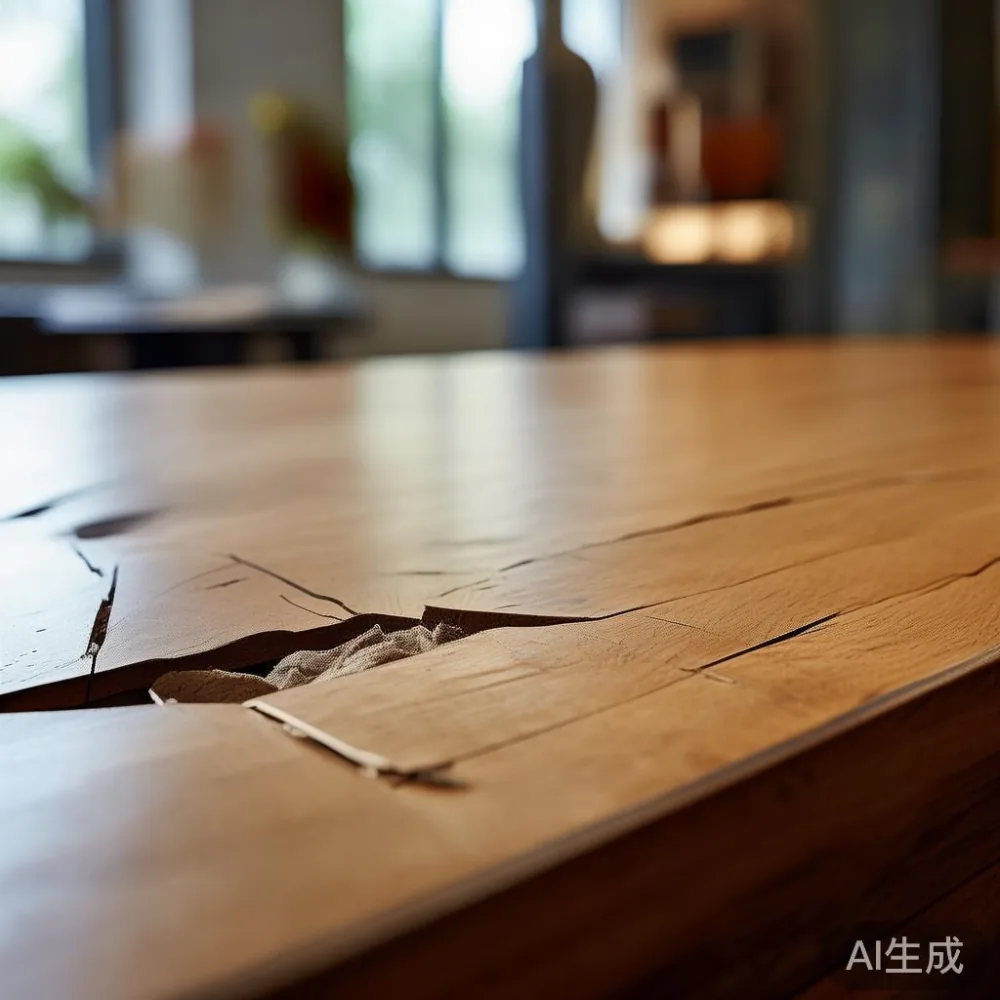
This is the question I get asked most often in customer chats, and the answer matters because it decides whether you should request a replacement or simply wait. Shipping damage usually shows up as a crack with sharp, light-coloured edges where fresh wood fibres have been torn, a dent with compression marks, a chip on a corner, or a missing veneer patch that exposes raw substrate. Humidity movement, on the other hand, produces smooth, gradual cupping across a wide surface, evenly raised panels, or a door that will not latch because the frame has racked 2-3 mm.
Run the back of your fingernail lightly across a suspect crack. If it catches on splinters, the wood fractured recently, often during handling or unboxing, and that is genuine shipping damage. If the surface feels smooth and the crack follows the grain line without splinters, the wood simply shrank along its natural path, and time plus stable humidity will close most of it within two to three weeks. A walnut dining table that arrived in February with a 1.5 mm gap along a breadboard end will often close that gap by April without any intervention.
Photograph any concern on the day you unpack. Note the room temperature and humidity with a S$15 hygrometer from any neighbourhood provision shop. Send both to your supplier within seven days, while most warranty windows, including the 14-day return policy that responsible Foshan makers offer, are still open. A clear timeline backed by numbers is the difference between a smooth claim and a frustrating back-and-forth.
Which pieces need the most attention in a Singapore home?
Not all furniture reacts the same way. Here is the ranking I use when I walk a client through a new flat:
- Solid wood dining tables — large flat surfaces, often with extension leaves, exposed to cooking steam. Wipe spills within 30 seconds and rotate the table 180° every quarter so the sun-side ages evenly.
- Bed frames — slatted bases need airflow. A solid plywood platform under a memory foam mattress traps moisture and can feed mildew into the frame. Keep the headboard 8-10 cm away from the wall.
- Wardrobes — back panels are usually thin veneer over plywood and breathe both sides. Leave 5 cm of breathing room behind the unit and vacuum the rear vents twice a year.
- Nightstands — small volume, high surface-to-mass ratio, fastest responders. Expect drawer gaps to change with the season; a 1-2 mm seasonal shift is normal.
- Marble tables — stone moves differently. Marble expands about 0.01 mm per metre per 10°C change, almost nothing. But the wood sub-frame still moves, so leave expansion gaps at the joints.
- Solid wood sofas — frames are usually kiln-dried hardwood with webbed suspension. Cushions absorb ambient moisture; flip and rotate them weekly for the first month.
If your budget is tight, prioritise the dining table and the wardrobe. Those two carry the most wood mass and the most visible flat panels, which is where humidity drama shows up first.
When is the right time to call the supplier?
Call within 48 hours if you see any of these signs: a crack longer than 5 cm, a corner chip larger than a 5-cent coin, a wobble that does not stabilise after you tighten the supplied hardware, or a musty chemical smell that does not fade after 72 hours of ventilation. Call within 14 days for any movement that worsens steadily despite stable indoor conditions. Do not call for hairline checks under 1 mm that appear and disappear with the weather. That is wood breathing, not shipping damage.
Reputable makers, including Foshan workshops with a decade or more of export experience, will usually ask you for a short video, two photos with a ruler in frame, and the room's humidity reading before approving a return. MIDHILL, for instance, has built its service around that kind of evidence: 10-year structural warranty, lifetime refinishing on wear marks, and a 14-day return window that covers actual transit damage but excludes movement caused by the local climate once the piece has been signed for. The clarity saves everyone time.
Quick reference: numbers every Singapore homeowner should keep handy
- Target indoor RH: 45-65%
- Target indoor temperature: 22-25°C
- Minimum distance from exterior wall: 30 cm
- Standard HDB door width: 90 cm
- King mattress dimensions: 193 cm × 203 cm
- Queen mattress dimensions: 152 cm × 193 cm
- Single mattress dimensions: 91 cm × 191 cm
- Dehumidifier daily running cost (8 h): S$0.35-S$0.45
- Acclimation period after delivery: 14 days
- GST on furniture in Singapore: 9% (as of the current budget cycle)
- Free-shipping threshold for most international brands shipping from China: US$350, roughly S$475 at today's rate
- Typical delivery time from Foshan to a Singapore door: 18-28 days by sea, 7-10 days by air freight
Keep these numbers on a small card inside your wardrobe. They turn a guess into a measurement, and a measurement into a clean conversation with your furniture maker. Whether you choose a French light luxury bed frame, a post-modern light luxury dining set, or a simple ash nightstand, the rules of wood do not change. Treat humidity as a feature of your home, not an enemy of your furniture, and the pieces will outlast the trend cycles they were designed for.