How Southeast Asian Humidity Affects Solid Wood Furniture (and How to Prevent Shipping Damage in Your HDB or Condo)
Last month, I visited a customer in Tampines who had just received a 2.4-metre solid wood dining table from our Foshan factory. The lift in her HDB block measured 1.1 m wide by 1.5 m deep, the corridor was 1.2 m wide, and we tilted the box at 35 degrees to thread it through the door of her 4-room flat. Three weeks later, she sent a photo of a hairline crack along the table edge and blamed the courier. When I pressed a finger against the underside, the wood felt spongy. Her air-con had been running at 23 degrees while outdoor humidity sat near 84 percent. The real culprit was not shipping damage at all; it was moisture exchange.

Singapore's climate is one of the harshest environments on earth for solid wood furniture. Average relative humidity runs between 70 and 85 percent year-round, peaking in the December monsoon. Indoor humidity in a non-air-conditioned HDB corridor can climb to 90 percent at 2 a.m. Solid wood is hygroscopic, so it physically moves. A 1.8 m solid wood bed frame can swell 1 to 2 mm across its width during the wet phase, then shrink back when the air-con drops the room to 55 percent. Repeat that cycle twenty times and you get checking, cupping, or a stuck drawer on a wardrobe.
Why does humidity in Southeast Asia warp solid wood so quickly?
Solid wood is a bundle of long cellulose fibres that absorb and release water vapour every hour of the day. In Foshan, where our workshop sits, the kiln-dried target moisture content for ash, beech, and white oak is 8 to 10 percent. When a 60 kg solid wood sofa frame leaves the workshop it is at equilibrium with that 10 percent. Step it off the plane at Changi, drop it into a Tampines HDB with 82 percent indoor humidity, and the wood starts drinking. Surface fibres swell first, the underside stays smaller, and within 48 hours you can measure 0.5 mm of cupping on a dining table top. That is the same physical force behind most shipping damage claims filed in the first week after delivery, because the box was sealed in dry Foshan and opened into wet Singapore.
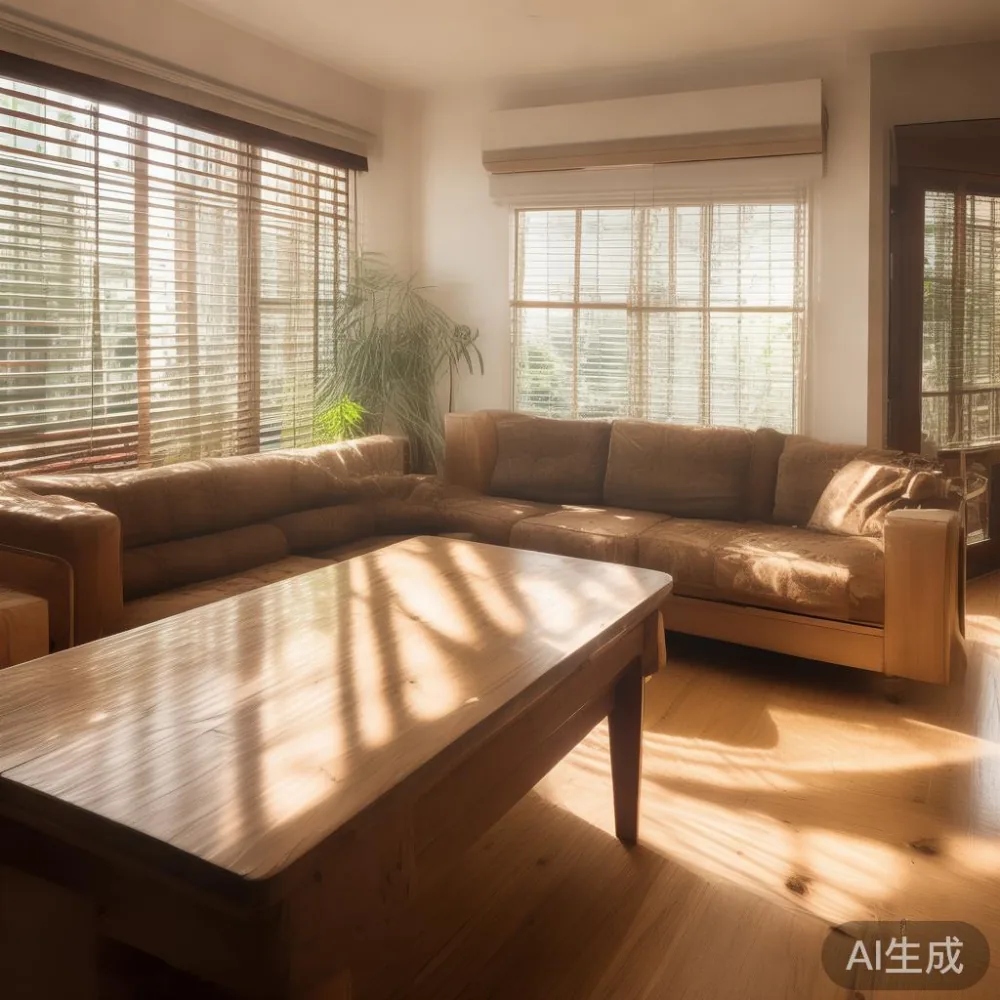
Engineered boards (plywood, MDF, particleboard) handle this better because the glue locks the fibres in place. The trade-off is that a 25 mm MDF wardrobe door held in a Bedok condo at 90 percent humidity will still swell 1 mm at the bottom after six months, and the lower hinge screw pulls free. No board is immune; only the failure looks different.
How thick is a chunk of coffee table top wood?
Standard mass-produced coffee table tops run 18 mm to 25 mm thick, while a light-luxury piece built for post-modern light luxury interiors usually comes in at 30 mm to 40 mm. Marble table tops in the same category run 15 mm to 20 mm because stone is denser and a 1.2 m round marble slab at 18 mm already weighs around 95 kg. Our factory default for a light-luxury coffee table is a 35 mm solid ash top with a 6 mm marble inlay, which keeps the centre of gravity low and the weight manageable when two delivery men carry it up a Punggol HDB corridor. The heavier the top, the more it amplifies any warp, because moisture-induced stress scales with mass.
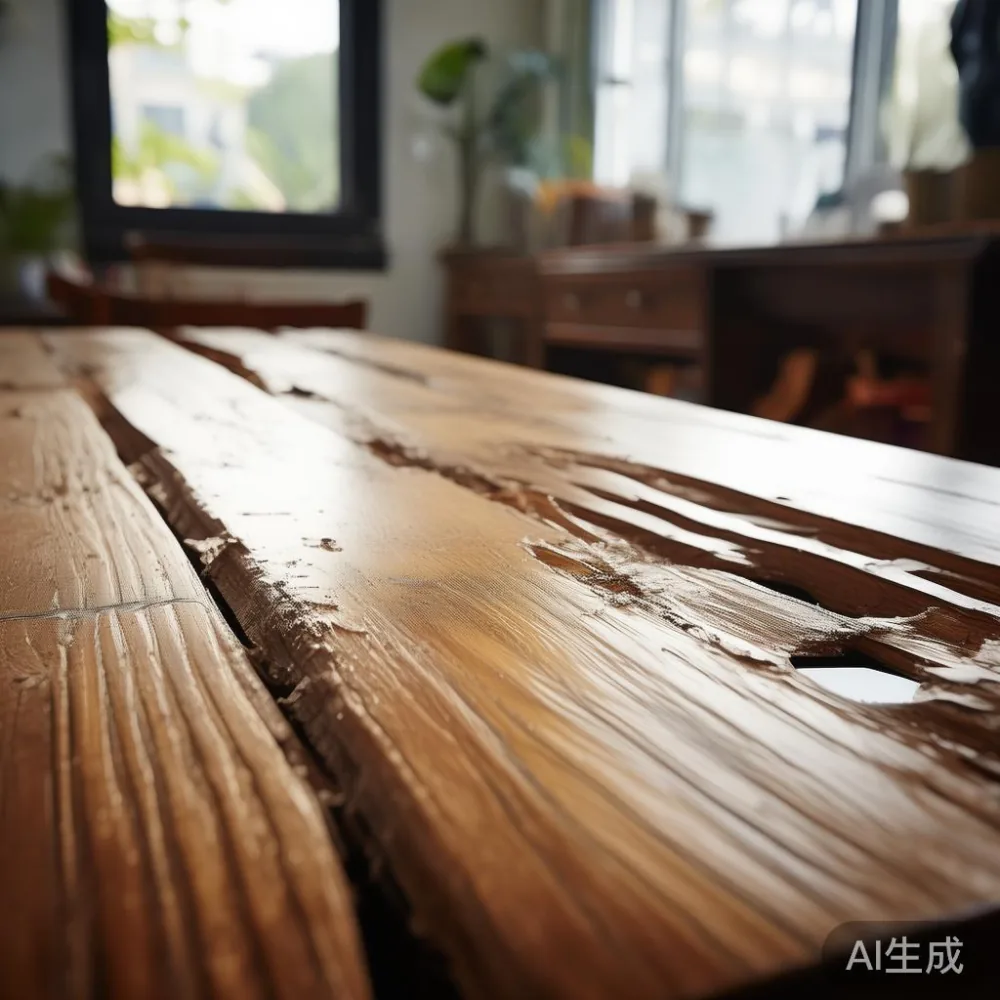
How do I style a coastal style in a modern Singapore home?
Coastal styling in a modern Singapore home means pairing white-oak or white-ash solid wood with linen upholstery, jute rugs, and rattan accents, then keeping the palette of materials tight at three so the eye reads calm rather than busy. Use a 1.8 m solid wood bed frame in white oak as the anchor piece, two white-oak nightstands with cane fronts, and a low 1.4 m solid wood sofa in oatmeal boucle; add one marble coffee table with a pale Crema Marfil top to break up the wood, and finish with a wide-leaf monstera and a linen curtain that filters the afternoon sun. Keep all wood pieces inside a 5 percent colour range (white oak, light ash, or warm maple) so the room reads as a coastal palette even when the windows are closed against the rain.
What actually counts as shipping damage versus humidity damage?
This is the question our customer-service team answers every week, and the answer lives in the first 72 hours. Shipping damage shows up as a corner crush, a cracked marble top, a snapped stretcher on a dining table, a gouge on a wardrobe door, or a missing component. You can photograph it. Humidity damage looks like cupping across the grain, a drawer that swelled shut, a hairline split along a knot, or a milky white ring on a nightstand that was not there at delivery. To prove the kind two we ask for a hygrometer reading taken in the room at the time the customer noticed the issue, plus a side-by-side photo with a steel ruler. With 90 percent of claims filed in week one, the test is simple: if the wood was inside the box at the time the issue appeared, that is shipping damage. If the wood was assembled in the customer's home for two weeks, that is almost always moisture exchange.
A real case from last quarter: a buyer in Punggol received a 2 m solid wood wardrobe in two cartons, total weight 142 kg. The cartons sat on his corridor overnight because the lift booking was for 8 p.m. The next morning, the wardrobe was carried up, assembled, and looked perfect. On day 11, the lower drawer swelled shut. He filed a claim citing shipping damage. Our team visited, measured 0.8 mm cupping across the drawer face, and traced it to his bedroom humidity of 86 percent (recorded on his Xiaomi sensor). We refinished the drawer under our lifetime refinishing service, which is free for the original buyer, and sent him a 12-piece dehumidifier starter pack. No replacement, because the wood was reacting to his room, not to the trip.
How wide is a wide of a lift doorway?
Most Singapore HDB passenger lifts have a clear door opening of 800 mm to 900 mm wide and 2,100 mm tall, with a cabin depth of 1,300 mm to 1,700 mm. Newer BTO blocks in Punggol and Tengah run wider, around 1,100 mm by 1,400 mm. Private condo service lifts go up to 1,400 mm wide and 2,400 mm tall to fit furniture. Our packing team in Foshan builds every carton 8 to two metres long for sofas and beds, and 1.6 m for wardrobes, so the longest piece fits through any Singapore lift on its side. We also build in 10 mm of clearance on every dimension so the box does not scrape the lift frame, which is a common cause of shipping damage during the last 30 metres of the journey.
A bedroom door in a 4-room HDB is typically 800 mm to 900 mm wide, which is why our 1.6 m solid wood wardrobe ships in two cartons that each weigh under 32 kg. Two delivery men can carry each piece through the door without tilting. A 1.8 m solid wood bed frame ships in three cartons, the heaviest at 41 kg. Those numbers are not marketing, they are what fits through your corridor.
What should you measure before a MIDHILL delivery arrives in Singapore?
Three numbers, in this order. First, measure the lift door width and cabin depth in millimetres, and take a phone photo of the lift certificate plate (it lists the exact internal dimensions). Second, measure every corridor corner from the lift lobby to your front door, because the corridor is often narrower than the lift; a 1.2 m corridor turns into a 1.05 m gap when you factor in the skirting. Third, measure your front door width and the diagonal of the largest piece (for a wardrobe, it is height minus side to length). For a 2 m tall wardrobe, the diagonal is 2.04 m, which means the door must be at least 2.05 m tall after the frame, which is why most HDB doors at 2.1 m clear with 50 mm to spare. A standard delivery from our Foshan warehouse to a Singapore HDB takes 18 to 28 days by sea, including 9 days for export fumigation and Singapore customs clearance, and shipping is free over US$350 (about SGD 480 at the current 1.35 rate). Three months for an Italian light luxury TV console shipped to Canada runs longer, around 35 to 45 days by sea from Foshan to Vancouver or Toronto, because the route adds two extra port transfers.
How much humidity control does a home keep a home safe for solid wood?
A solid wood dining table, a bed frame, and a wardrobe all behave well when indoor relative humidity sits between 45 and 60 percent. Below 40 percent, surface fibres dry too fast and you risk splits along the grain; above 65 percent, the wood keeps absorbing and never reaches equilibrium. In Singapore, that means running a 12-litre dehumidifier in the bedroom for 4 to 6 hours a day during the December and January monsoon, and leaving the wardrobe doors open for 20 minutes after the air-con cycles off. A SGD 35 Xiaomi hygrometer is the cheapest insurance you will ever buy for a SGD 2,400 solid wood bed frame.
For a French light luxury interior with marble accents and brass hardware, the rules tighten a little because marble is dimensionally stable but the brass reacts to salt-laden air. Wipe brass weekly with a dry microfibre cloth and keep the room below 70 percent humidity to stop the lacquer from blooming. For an American light luxury look built around wide-plank white oak and oversized sectionals, the sofas themselves breathe better in 50 to 55 percent, and the seat cushions hold their loft longer when humidity does not swing more than 10 percent across the day.
What does MIDHILL cover if real shipping damage is found in the first seven days?
If our team confirms genuine shipping damage within seven days of delivery, we replace the affected component (a wardrobe door, a dining table top, a marble inlay, a nightstand drawer) at no cost and cover the return courier. The 10-year structural warranty covers frame cracks, joint failure, and warping caused by manufacturing error, which is different from humidity-driven movement. Lifetime refinishing covers surface scratches, a faded finish, a water ring that did not respond to your cloth, and a re-oiling every 5 to 8 years for solid wood dining tables. Refinishing is free for the original buyer; refinishing for a second owner is SGD 180 per piece, which covers courier, labour, and materials. Returns are accepted within 14 days for unused pieces in original cartons, less a 15 percent restocking fee that covers the return courier from Singapore to Foshan.
One note on weights, since they matter for HDB delivery. A 1.4 m solid wood sofa weighs 120 kg; a 1.8 m solid wood bed frame weighs 95 kg in three cartons; a 2 m wardrobe weighs 142 kg in two cartons; a dining table for six weighs 78 kg in two cartons; a nightstand weighs 28 kg per piece. None of these need a hoist to clear the space, but all of them need two men and a trolley to clear the corridor. We book the lift slot 48 hours before delivery, send you the delivery team's WhatsApp, and share a live ETA the morning of arrival. If you live on a high floor in Bedok and the lift is being serviced, we move the slot at no charge, which has happened to three customers this quarter.
What is the cheapest way to keep a solid wood dining table flat through the monsoon?
The cheapest way to keep a solid wood dining table flat through the monsoon is to run a SGD 189 dehumidifier in the dining room for 6 hours overnight, keep the room between 50 and 60 percent humidity, and apply a fresh coat of hard wax oil once a year. A 250 ml tin of Osmo or equivalent hard wax oil costs SGD 38 and covers a 1.8 m table for one coat, applied with a lint-free cloth in the direction of the grain. Avoid silicone polishes, which seal the wood and stop it from breathing, then trap moisture underneath the film and cause a cloudy haze. Use a damp microfibre cloth for daily wipe-downs, never a soaking wet one, and never place a hot pot directly on the surface, even with a coaster, because the wood fibres underneath will dry out faster than the surrounding area and lift the grain.
For a marble table, the rules are simpler. Wipe spills within five minutes, especially coffee, wine, and tamarind juice, which etch the polished surface. Use a SGD 24 marble sealer twice a year, and never place a hot pot on marble without a trivet, because marble conducts heat fast and a 90-degree pot can thermal-crack a 15 mm slab. Marble is heavy, dimensionally quiet, and the easiest surface in your home to live with, as long as you respect its chemistry.
What is the one rule a Singapore owner should never break with solid wood?
The one rule a Singapore owner should never break with solid wood is to never store a piece in a non-air-conditioned space for more than two weeks at a time. A garage, a balcony, a sheltered UBB corridor, or a storeroom place will push humidity past 90 percent and the wood will absorb moisture faster than you can wipe it down. If you must store a piece for a move or a renovation, wrap it in a breathable cotton sheet, never plastic, and place a 12-piece dehumidifier pack inside the wrap. Plastic traps moisture and creates a microclimate that cooks the wood from the inside out, which is the same physical process behind most warping claims filed three months after delivery.
Solid wood furniture built in Foshan, exported to 15 or more countries, and supported by a 10-year warranty is built to handle the climate. The single biggest predictor of how a piece will look in year five is how the owner treats humidity in year one. Buy a SGD 35 hygrometer, run the dehumidifier four hours a day during the wet months, wipe spills within five minutes, refinish every five to eight years, and a solid wood dining table or bed frame bought today will still look new when your youngest starts primary school in Punggol.