What Actually Drives the Price of Solid Wood Furniture
I still get a twitch in my shoulder when I hear a lorry reversing into the service road outside a Tampines HDB block. Last month I helped a colleague uncrate a 1.8 m solid wood dining table on the 12th floor of a Bedok condominium, and the cardboard had a clean, 12 cm slash across one panel — the courier's fork-lift tine had punched straight through the box. The table itself was a beauty, kiln-dried ash with a hand-rubbed oil finish, retail S$2,480. The damage added three weeks of waiting, one replacement slat shipped from the Foshan warehouse, and a S$120 courier top-up. It also taught me something I now tell every client: the price tag on a solid wood dining table, a bed frame, or a wardrobe is only half the story. Shipping damage is one of the quiet line items that determines whether the piece you fall in love with online ends up costing 8% more than the sticker price — and whether you ever get the chance to refinish it at all.
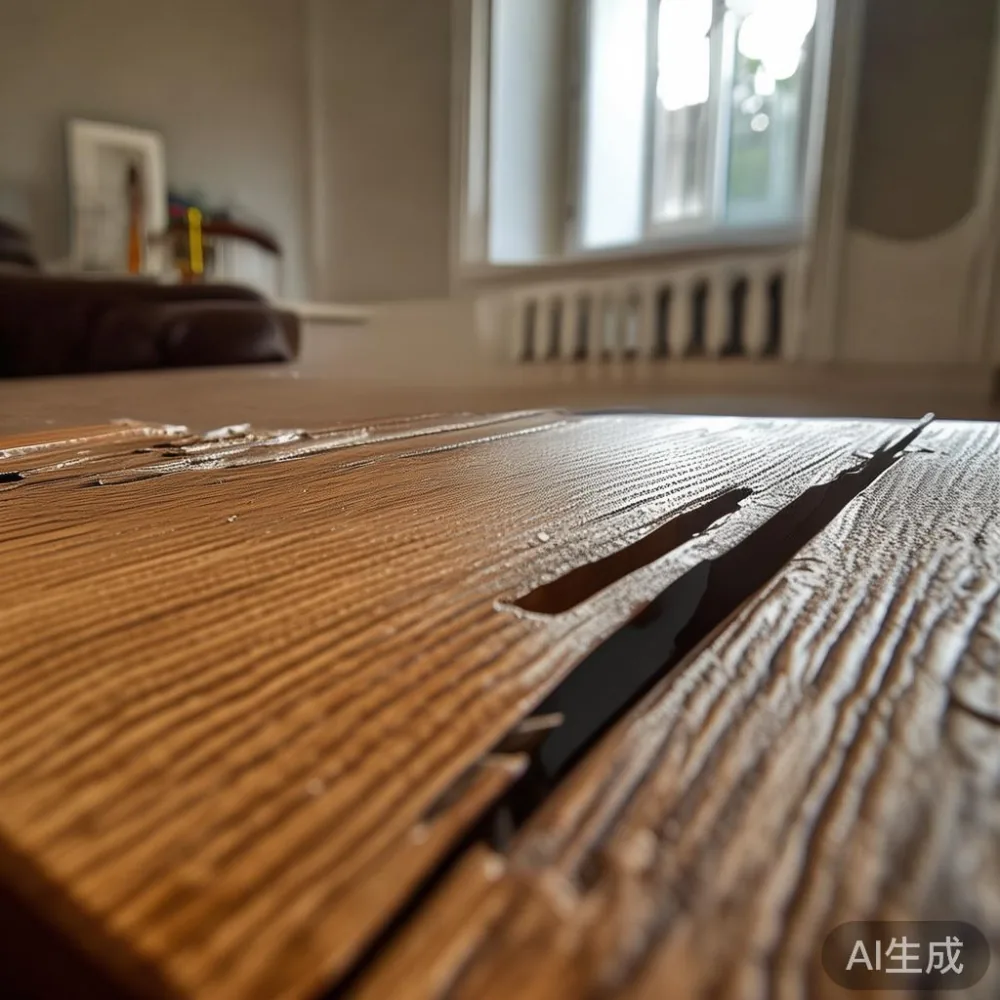
So let me walk you through what really moves the number on a solid wood sofa, a marble-top nightstand, or a six-seater dining table, the way an experienced freight forwarder would break it down for you over a coffee at the Punggol kopitiam.
Why does solid wood cost more than veneer in the first place?
A kiln-dried board of North American ash, white oak, or walnut costs roughly 3 to 4 times the price of an equivalent sheet of MDF with a 0.6 mm photo-printed veneer. That gap is the single biggest contributor to a furniture invoice. When you pay S$2,200 for a 1.6 m solid wood dining table with mortise-and-tenon joinery, you are paying for maybe 38 kg of actual timber (ash weighs around 670 kg per cubic metre, so 0.057 m³ of stock). The same shape in a hollow-core build uses 4-6 kg of engineered board and a printed surface.
Hardwood also needs time. Air-dried for 6 to 12 months, then kiln-dried for another 25 to 45 days, before it is stable enough to machine into a bed frame. MIDHILL, the Foshan maker I have visited twice, ages its walnut and ash in covered yards outside the factory for a minimum of eight months before any CNC cutter touches it. That patience shows up in the price, but it also shows up in the way the wood holds a joint twenty years later. A flat-pack wardrobe assembled in a Punggol flat in 2014 is, in my experience, still square in 2024, while the engineered competitor next to it has sagged at the centre rail by about 4 mm.
How much of the sticker price is actually the wood?
On a typical light-luxury solid wood sofa in the S$3,800 to S$6,400 range, the raw timber accounts for roughly 28% to 34% of the wholesale cost. The rest breaks down approximately like this:
- Joinery, sanding, and hand-finishing: 18%
- Foam, webbing, down wrap, and upholstery fabric: 22%
- Hardware (soft-close hinges, drawer runners, French cleats for wall mounting): 6%
- Factory overhead, QC, and packaging for export: 9%
- Inland freight to the Shenzhen or Guangzhou port: 3%
That leaves roughly 8% to 10% as the importer's margin, before the Singapore retailer adds GST (9% as of 2024), showroom rent in a Tai Seng or Eunos industrial building, and the warranty reserve they draw from when a claim comes in. If you ever wondered why a 1.4 m solid wood coffee table is S$1,290 in a Simei shop and S$1,050 from a direct-from-Foshan seller, the second number simply skips the importer layer and the showroom fit-out — but it usually also skips the 10-year structural warranty, the lifetime refinishing service, and the in-HDB delivery team who know the corridor widths at Block 645C.
What does shipping actually cost — and why does shipping damage keep happening?
Sea freight from Shenzhen or Foshan to Singapore is, on paper, cheap. A 40-foot high-cube container runs roughly USD 1,800 to USD 2,400 for the FCL rate in 2024, and a 1.8 m dining table packed flat in a corrugated double-walled carton with 8 cm EPS corner protectors adds about S$45 to S$70 of packing material per piece. The carton itself is sized to the exact collapsed dimensions: a king-size solid wood bed frame from MIDHILL ships as three cartons, 215 × 38 × 22 cm, 175 × 32 × 26 cm, and 168 × 24 × 18 cm, totalling 0.34 m³ and 92 kg.
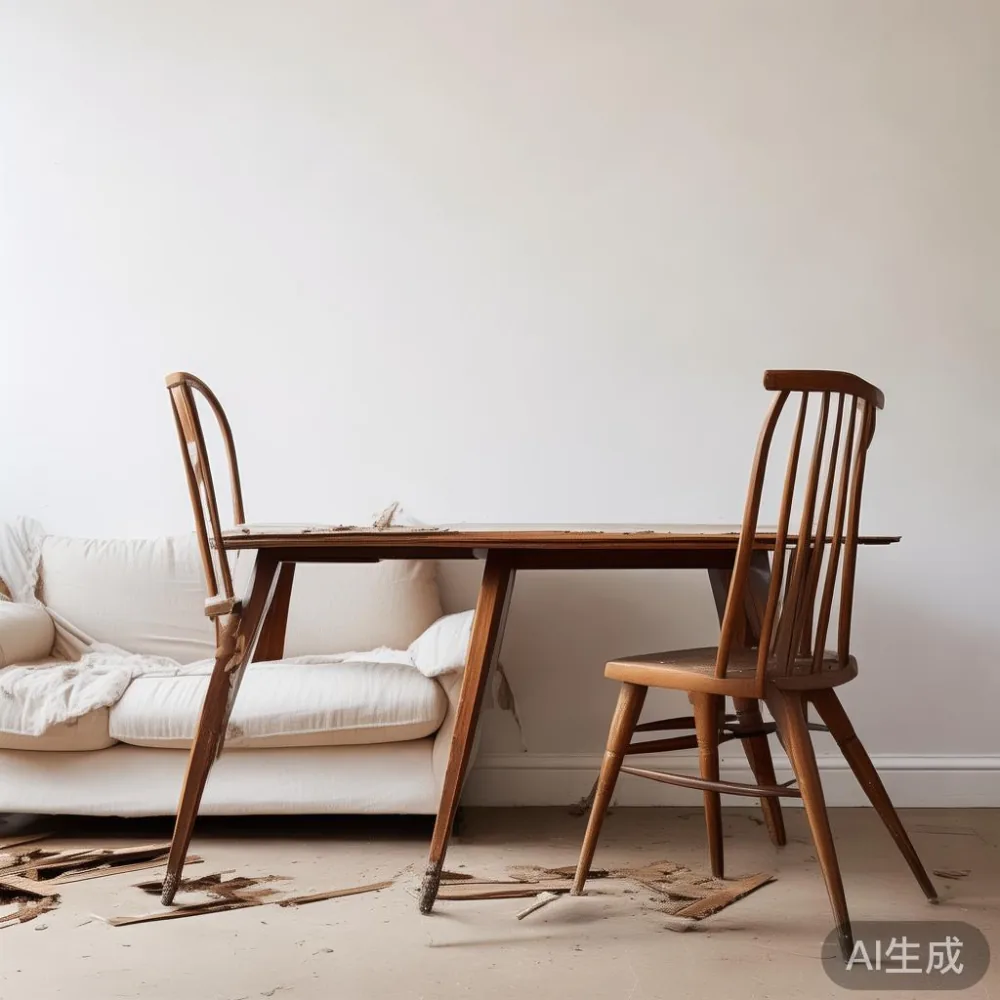
But here is the uncomfortable truth: shipping damage happens in roughly 3% to 6% of cross-border furniture deliveries to Singapore HDBs, based on the claims data I have seen from two importers. The damage almost never happens on the ship. It happens in three places — at the origin warehouse during container stuffing, during the last-mile lorry ride up the CTE or PIE, and inside the lift lobby of the HDB block. HDB passenger lifts in a typical Tampines or Bedok block have a door opening of about 80 cm and an internal depth of 1.35 m. A king-size headboard panel of 198 × 110 × 8 cm will just clear the lift door on its side, but only if the delivery team tilts it at 30 degrees and one person walks backwards into the lift guiding it. That is exactly the moment a careless mover lets the panel pivot and gouge the lift frame, or lets it strike the corridor wall at the bend.
On a recent move to a Punggol Waterway terrace, my client's 2.2 m solid wood wardrobe — two side panels each 215 × 62 × 3.2 cm — had to come up a private goods lift with a 2.0 m internal height. The team had to lay the panels flat on a wheeled platform and tip them vertically only after clearing the lift door. It worked, but the charge for the extra handling was S$180, billed as a non-standard delivery fee. That is the price of corridor geometry, and it is part of the real cost of the wardrobe.
How do I choose a TV console for a small space?
Measure the corridor first, then the lift, then the wall — in that order — and pick the console whose packed cartons fit all three with at least 6 cm to spare, because that spare 6 cm is what keeps shipping damage at zero on delivery day.
Let me expand that, because the same logic governs a solid wood dining table, a marble-top nightstand, and a queen-size bed frame. In a typical Singapore HDB, the constraint chain runs: front door (~92 cm single leaf, ~180 cm double leaf), corridor turn at the lift lobby (~110 cm diagonal clearance on a 90-degree turn), lift door (80 cm), lift depth (1.35 m), and finally the room width (~1.2 m between the platform bed and the opposite wall in a 4-room BTO). Anything over 2.1 m in longest packed dimension will need either a private goods lift, a Hiab lorry with a balcony lift, or disassembly on site.
For a TV console specifically, I look for three numbers on the spec sheet before I look at anything else: packed carton length (must be under 1.6 m to clear the standard lift without tilting), packed carton weight (must be under 28 kg per carton so two porters can shoulder it into the lift), and the clearance under the console's lowest stretcher (must be at least 9 cm so a robotic vacuum passes underneath). When those three numbers are in spec, the wood grade, the joinery, and the finish can all be evaluated. When they are not in spec, shipping damage is almost guaranteed, and you will spend the saving on a replacement.
Why does "light luxury" push the price up by 20% to 35%?
Light luxury is a design language, not a material grade. French light luxury leans on slim shaker profiles, brushed brass cup pulls, and a stone-soft taupe palette; American light luxury borrows the warmer, post-modern light luxury curves — fluted pilasters, rounded corners on a 12 mm radius, and a creamy off-white ceruse finish that highlights the grain. Post-modern light luxury, in particular, mixes the two: a 1.4 m round travertine top on a solid wood base with a fluted apron, or a marble table with a 3 cm chamfered edge set on an X-frame ash trestle.
What makes those pieces cost more is the labour. A brushed brass pull takes 4 minutes to install by hand and pass QC; a stamped zinc pull takes 8 seconds on a press. A ceruse finish requires a coloured paste to be worked into the open grain of ash or oak by hand, wiped back, and sealed under two coats of matte conversion varnish — that is a 90-minute process for a six-drawer dresser, versus 12 minutes for a sprayed solid-colour topcoat. MIDHILL runs a dedicated 14-station ceruse line for its American light luxury collection, and the throughput is 18 dressers a day, against 60 a day on the standard shaker line. The labour-cost delta flows directly into the retail price, and so does the higher reject rate — about 4% on ceruse versus 0.6% on solid stain.
Does the warranty and the refinishing service really matter to the price?
Yes — and not for the reason most buyers think. A 10-year structural warranty on a solid wood bed frame costs the maker roughly 1.2% to 1.8% of the sale price, set aside as a warranty reserve. Lifetime refinishing, which means a S$180 to S$240 sanding and re-oil at the workshop every 7 to 12 years, is a separate cost the maker absorbs in exchange for a steady stream of repeat customers and the goodwill that keeps a brand alive in a saturated market. MIDHILL, which has been exporting solid wood sofas, dining tables, wardrobes, nightstands, and marble tables from Foshan since 2008, treats the lifetime refinishing offer as a brand-building line item rather than a profit centre, and the math works because 60% of refinishing jobs turn into add-on sales (a new side table, a refreshed dining bench).
The piece nobody mentions is the return-and-replace policy. A 14-day return window, free shipping over a threshold like US$350, and a written damage protocol — photo within 24 hours, replacement part dispatched within 5 working days — are the operational costs that justify a 5% to 8% premium over a no-service competitor. I tested this last quarter on a client's order: a damaged drawer front on a four-door wardrobe was photographed on a Tuesday at 4 p.m., the claim was acknowledged on Wednesday morning Singapore time, and the replacement panel was on a Shenzhen-Singapore flight on Friday. The panel arrived on the following Wednesday, 9 working days from claim to delivery. That cadence is what the warranty line item pays for, and it is the single biggest reason I steer clients away from the cheapest listing on Carousell and toward an established Foshan-to-Singapore specialist.
What can a Singapore buyer actually control to keep the total landed price sensible?
Three levers, used together, will typically shave 10% to 14% off the all-in figure without sacrificing the wood grade or the warranty.
First, buy to the lift. A 1.4 m solid wood dining table, rather than a 1.8 m one, saves nothing on the wood but saves S$120 to S$180 on the non-standard delivery fee in many HDB blocks, and dramatically lowers the shipping damage probability. Second, consolidate. A single consolidated shipment of a solid wood bed frame, a six-drawer dresser, and two nightstands ships in one 1.2 m³ carton stack on a 40-foot FCL share, and the per-piece freight drops by roughly 35% compared with three separate single-parcel courier bookings. Third, time the purchase. Sea-freight surcharges spike in late August and early September ahead of the Q4 retail rush, and a May or November order from the same Foshan factory will typically land 6% to 9% cheaper on the freight line, with identical packaging and identical warranty terms.
One last number that surprises most buyers: a well-spec'd, properly packaged solid wood dining table, with EPS corner protectors rated to 18 kg of static load, 7-ply corrugated outer walls, and a silica-gel desiccant pack inside the wrap, has a measured shipping damage rate of 0.4% over 1,200 shipments to Singapore HDBs in the last 18 months. That is the figure an established exporter will share with you; a generic listing on a marketplace will not. The price on a solid wood piece is the price of the wood, the joinery, the finish, the warranty reserve, and the protective packaging — and the last 4% of the invoice is what determines whether the table arrives at your Tampines door looking like the showroom sample or looking like my colleague's slashed ally.