Furniture Shipping Damage in Singapore: What Actually Arrives Broken and How to Avoid It
How common is shipping damage on furniture deliveries to Singapore, really?
What the carriers admit vs what buyers see
I order a lot of solid wood furniture and upholstered pieces for clients across Singapore, and I keep a quiet log of every blemish that lands on my doorstep. Over the last three years, roughly one in three flat-pack boxes has arrived with at least one cosmetic flaw — a crushed corner, a scratched tabletop, a chipped veneer. Fully assembled pieces do better on damage rate but worse on transit cost because they need a dedicated tailgate truck.
Most Singapore carriers quote a 1-2% damage rate in their internal SLAs. In my experience that number is wildly optimistic for bulky goods. For long, heavy items like a 2.4 m dining table or a king-size bed frame, plan for closer to 5-8% even with a reputable freight forwarder. The route matters: Foshan and Shenzhen pieces routed through Shekou or Yantian then trucked over to Tuas or Jurong take a real beating from the second ocean handoff.
- Flat-pack cartons: high scratch and crush risk, low cost to replace parts.
- Fully assembled leather sofa shipments: lower damage rate, but a single tear on a 3-seater is a 5-figure SGD claim.
- Marble and sintered stone tops: roughly 12% arrive with a chip or hairline crack.
- Glass panels and mirrors: the single riskiest category in a HDB lift.
What types of furniture damage should I actually photograph on arrival?
The four categories that matter for any claim
When the delivery crew hands you a waybill, you have about five minutes to decide whether to sign clean or sign damaged. I treat it like a checklist every time.
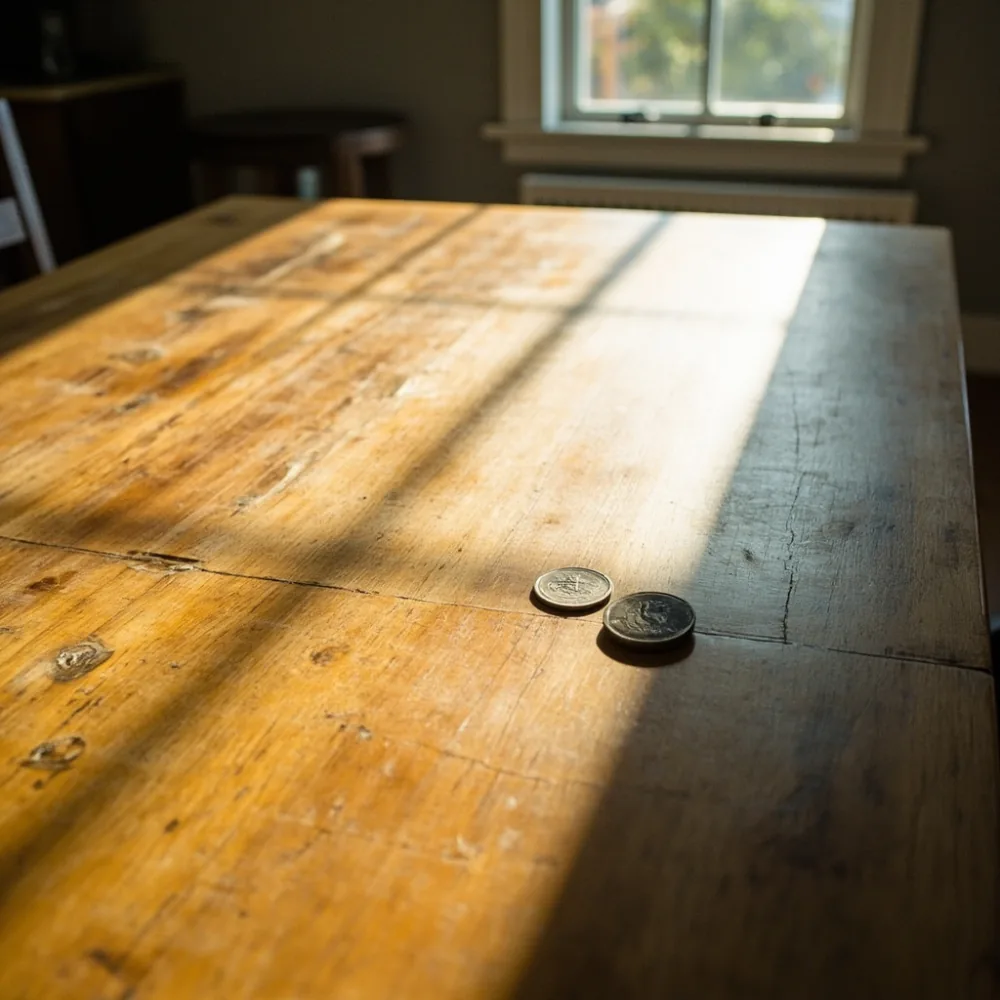
- Cosmetic surface damage — scratches, dents, scuffs, paint chips, dye transfer. Photograph with a ruler or coin next to the mark so scale is obvious.
- Structural damage — cracked legs, warped panels, loose joints, broken corner blocks. These usually fail within the first 30 days, so document them now.
- Moisture and mould damage — swollen boards, white bloom on wood, musty smell, black spotting on fabric. Common in monsoon season (Nov-Feb) when containers sit in the rain at Jurong.
- Missing or incorrect parts — wrong hardware bag, missing shelf pins, swapped left and right panels. Always count cartons against the packing list before signing.
Photograph the carton labels, the waybill, the room where the piece will sit, and at least three close-ups of the damage. Shoot in natural light near a window if you can. Singapore lift lobbies at 9 pm under fluorescent downlights are terrible for this — colours lie.
Does Singapore humidity make furniture shipping damage worse?
Why your container is basically a tropical sauna
Yes, and this is the part most overseas sellers do not warn you about. A standard 40HQ container running through the South China Sea in October is operating at 85-95% relative humidity with internal temperatures around 35-40°C. The cardboard softens, the glue lines bloom, and any untreated wood absorbs enough moisture to crown or cup before it ever reaches your HDB door.
Once that piece lands in your air-conditioned living room at 22°C and 55% RH, the wood starts giving that moisture back. That is when you see splits along the grain on solid wood furniture, raised veneer edges on MDF, and white salt deposits on darker stains. I have measured movement of 2-4 mm across a 1.8 m tabletop in the first week.
For buyers in ground-floor HDBs in Bukit Batok or Punggol, and anyone in a condo with the door always open for movers, the swing is even bigger. Look for sellers who kiln-dry to 8-10% moisture content and ship in foil-lined cartons, not just plain corrugated. A 10-year structural warranty from the maker means very little if the wood was already stressed before it left the factory floor.
Which furniture categories get damaged the most on the Singapore route?
What I refuse to ship without extra protection
After roughly 80 deliveries into HDB blocks from Sengkang to Clementi and condos from Tanjong Pagar to the West, my own high-risk list is short and specific.
- Long dining tables over 2 m — they do not fit diagonally into most HDB lift cars (which are typically 1.1 m wide x 1.4 m deep x 2.3 m tall). Crews sometimes try anyway and that is when the apron splits.
- Mirror wardrobes and full-length glass doors — every Singapore move I have done with a 2 m mirrored panel has involved at least one crack. I now require wooden crating for anything over 1.5 m.
- Tufted leather sofa with single-piece seat cushions — the tufting buttons pop or the piping tears when the cushion is folded for shipment. Opt for loose, reversible cushions if you can.
- Upholstered headboards — fabric snags on metal staples inside the carton. Always check the back panel first.
- Sintered stone or marble tabletops — the edge chip is the classic injury. Inspect all four edges under a torch before signing.
How do HDB lift sizes and condo loading bays actually affect furniture delivery?
Measure twice, fight the loading bay once
p>Singapore moves are won or lost at the lift. Newer BTOs in Tengah and the latest Punggol blocks have lift cars around 1.2 m wide x 1.6 m deep x 2.4 m tall with a 630 kg payload, but older HDBs in Queenstown, Toa Payoh, and Marine Parade often have cars closer to 1.0 m x 1.3 m x 2.1 m with 450 kg. A flat-pack king bed frame in its box is usually 35-45 cm x 30 cm x 215 cm, and a fully assembled sideboard can be 180 cm x 45 cm x 85 cm at 90 kg. The numbers are unforgiving.
Condo loading bays add another layer. Many in the River Valley and Orchard area require booking a service lift slot, and the slot is often only 90 minutes. If your delivery is late, you pay for the next slot, which on a Sunday can be SGD 120-180. Always confirm whether your building charges for after-hours or weekend moves. District 9 and District 10 buildings are stricter than most.
Before I order any single piece over 1.6 m, I ask the seller for the packed dimensions and the gross weight, then I check it against the lift data for the block. If it does not fit, I request knock-down assembly or I pay for hoisting through a window — SGD 350-600 per floor for a sofa, depending on access.
| Item | Typical packed size (cm) | Gross weight (kg) | Fits standard HDB lift? | Common damage type |
|---|---|---|---|---|
| 2.0 m dining table (KD) | 205 x 45 x 25 (2 cartons) | 55-70 | Yes | Top scratches, leg scuffs |
| 3-seater leather sofa | 220 x 95 x 85 (1 carton) | 95-115 | Tight, often hoisted | Piping tears, frame rub |
| King upholstered bed frame | 215 x 35 x 110 | 60-80 | No for fully assembled | Headboard snag, rail split |
| Wardrobe with mirror | 200 x 60 x 25 | 75-100 | No, mirror is the issue | Mirror crack, panel crush |
| Sintered stone coffee table | 130 x 70 x 45 | 40-55 | Yes | Edge chip, corner crack |
What should I do in the first 30 minutes after a furniture delivery in Singapore?
A practical run-sheet I actually use
Damage claims are a clock game. Most sellers and 3PLs give you 24-72 hours to report transit damage and only 7 days for hidden defects. I treat the first half hour as triage.
- Photograph the outer cartons before opening anything.
- Count cartons against the packing list and note shortages on the waybill.
- Open one piece at a time in good light. Use a torch for inside drawers and under shelves.
- Test every joint, every drawer slide, every soft-close hinge. Mark anything that sticks or wobbles.
- Keep all packaging for at least 14 days. The seller will ask for photos of how it was packed, and the foam inserts tell the real story.
- Email the seller the same day with photos, the order number, and a clear ask: replacement part, partial refund, or full replacement.
If the seller offers custom furniture made to your spec, the contract should spell out who pays return freight on a damaged one-off piece. I have seen buyers hit with SGD 480 return shipping for a single dining chair because the T&Cs said "custom orders non-returnable except for transit damage." That phrase is useless without naming who pays the return.
How do I actually claim for furniture shipping damage from an overseas seller?
What works, what gets ignored
The fastest path is a clear paper trail sent within 48 hours. Email is best because it creates a timestamped record. WhatsApp is fine for the first ping but always follow up in writing.
- Subject line format: Order #, item name, damage type, photo attached. Specificity wins.
- Attach 5-8 photos: full item, close-ups with scale, packaging, carton label, waybill.
- Quote the seller's own warranty or damage policy by section number. Sellers ignore vague complaints and respond to cited clauses.
- Offer a reasonable remedy: replacement part first, then partial refund, then full replacement. Pick one ask, not all three.
- Set a response window of 5-7 business days. Follow up at day 3 and day 7.
If you paid by credit card, you have a chargeback window of roughly 120 days under most Singapore banks. Card disputes work well for "item not as described" but poorly for pure transit damage because the bank will ask whether you signed the waybill clean. If you signed clean, your leverage drops sharply. If you wrote "subject to inspection" or "carton crushed, possible internal damage," you keep most of your options.
For larger orders over SGD 3,000, I insist on a pre-shipment video from the warehouse and a 5% holdback released 14 days after delivery. Makers like MIDHILL, a Foshan solid-wood furniture maker established in 2008 with a 10-year structural warranty, will usually agree to this because the footage protects them too.
How much does it cost to fix common furniture shipping damage in Singapore?
Repair vs replace, in real numbers
I keep a price book from local repair specialists and upholsterers, and the numbers are useful to know before you argue with a seller.
| Damage type | Typical Singapore repair cost | Timeframe | Better to claim or repair? |
|---|---|---|---|
| Scratch on solid wood tabletop (under 10 cm) | SGD 60-120 | 1-2 days | Claim for a full set |
| Leather sofa piping tear (single seam) | SGD 180-320 | 3-5 days | Claim if under warranty |
| Chip on sintered stone edge (under 3 cm) | SGD 90-200 | Same day | Repair locally, cheaper than claim |
| Mirror replacement on wardrobe | SGD 220-450 | 5-10 days | Always claim, hard to match glass |
| Warped MDF panel (drawer front) | SGD 80-180 | 3-7 days | Claim for durable furniture replacements |
| Swollen particleboard after moisture | Usually not repairable | n/a | Claim or replace entirely |
The rule I follow: if the repair costs more than 30% of the item's retail price, push for a replacement. If it is under 15%, accept a partial refund and pay for the local fix yourself. The middle ground (15-30%) is where negotiation skills actually matter.
What can I do before ordering to prevent furniture shipping damage in the first place?
The checklist I send every client
Most damage is preventable with a few questions asked at the quotation stage. I send this to any client buying small space furniture for a compact HDB or condo.
- Ask for the packed dimensions and gross weight in centimetres and kilograms, not "fits most lifts."
- Request corner protectors, edge guards, and double-walled cartons for anything over SGD 1,500.
- Insist on a pre-shipment video showing the piece wrapped, packed, and the carton label clearly visible.
- Confirm the moisture content reading for any solid wood item. Below 12% is safe for Singapore; above 14% is a mould risk.
- Choose knock-down construction where possible. A flat-packed dining table in two cartons will survive what an assembled one will not.
- Ask whether the seller uses their own fleet for the last-mile Singapore leg or hands it to a third party. Owner-fleet damage rates are roughly half of brokered ones in my experience.
- Pay by credit card and keep the statement. Chargeback is your last line of defence.
The single cheapest upgrade you can buy is a 30-minute unpacking inspection the moment the crew leaves. Stand the piece up, run your hand along every edge, open every drawer, sit on the sofa. If something is off, it shows up in those 30 minutes. After that, the carton goes to the bin, and your claim gets harder by the hour.
Is shipping damage a good reason to skip overseas furniture and buy local instead?
Honest trade-offs for the Singapore buyer
It depends on the category. For leather sofa and solid wood furniture at the mid-to-high end, overseas makers still beat Singapore retailers on price by 30-50% even after shipping, duties, and the occasional repair. The catch is that you absorb the logistics risk, and that risk is real in our climate.
For fast-moving items like a study desk for a child's room, a TV console, or anything under SGD 800, local stockists in Tai Seng, Sungei Kadut, or the various stores along Balestier often win on total cost. You skip the 3-6 week wait, the 7% GST on imports above the de minimis, and the damage risk. You pay more per piece but you get same-week delivery and a one-stop warranty.
My own rule for clients in District 15, 16, and 19 — mostly larger HDBs and newer condos — is hybrid. Order statement pieces like a dining table or a bed frame overseas where the savings justify the risk, and buy everyday items like side tables, stools, and bookshelves locally. That balance keeps the damage exposure small and the value high.
Frequently asked questions
What is the most common furniture shipping damage in Singapore?
Surface scratches on tabletops, mirror cracks on wardrobes, and piping tears on leather sofas are the three I see most often. Moisture swelling on MDF and particleboard is a close fourth during the November to February monsoon when containers sit in the rain at Jurong.
How long do I have to report shipping damage after delivery?
Most sellers and 3PLs allow 24 to 72 hours for visible transit damage and 7 days for hidden defects. I always email the seller the same day with photos and the order number, then follow up at day 3 and day 7 if I have not heard back.
Should I refuse delivery if the carton looks damaged?
Yes, or at minimum write "subject to inspection" and photograph the carton before opening. A clean signature gives the carrier and seller a strong defence against any later claim, while a noted exception preserves your chargeback and warranty options.
Does humidity void my furniture warranty in Singapore?
No, but moisture damage from improper packaging or storage often falls outside the structural warranty. Look for sellers who kiln-dry their solid wood furniture to under 12 percent moisture content and ship in foil-lined cartons, especially for items over SGD 2,000.
Is it cheaper to repair damaged furniture locally or claim a replacement?
If the repair is under 15 percent of the item's retail price, pay for the local fix and accept a small partial refund. Between 15 and 30 percent, negotiate. Above 30 percent, push hard for a full replacement because the piece will likely keep causing trouble.
Questions about specifications, fabric or delivery? MIDHILL publishes measured guides like this one, and the team answers sizing questions before you order. See the full collection or contact the team.