Buying a Sofa You Cannot Sit On First: A Singapore Furniture Inspection Checklist
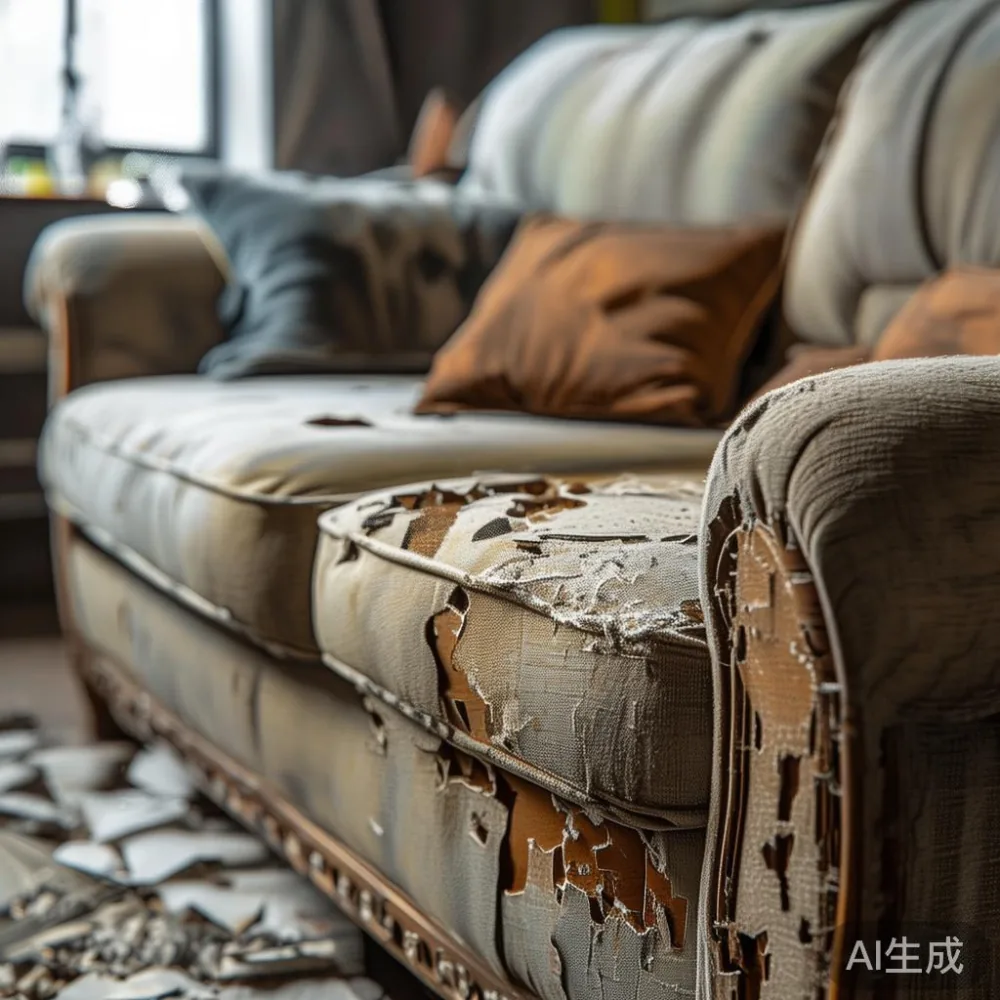
Last month I visited a friend in Tampines who had just taken delivery of a four-seat solid wood sofa from an online seller. The box looked fine on the outside, but once the two movers carried the pieces through her HDB corridor (roughly 1.2 m wide at the narrowest point), one armrest arrived with a 12 cm crack along the walnut veneer. The retailer called it “cosmetic”. She called it a S$180 lesson in what to check before buying a sofa you cannot sit on first. Her story is far from unusual in Singapore, where showrooms are scarce for imported light luxury pieces, and most buyers commit from a single product photo.
Why you almost always buy a sofa sight unseen in Singapore
For most HDB upgraders and condo owners in Bedok, Punggol, or the Novena area, the local furniture market leans heavily on mass-produced teak imitation and bonded leather. A genuine solid wood sofa in walnut, ash, or white oak with a French light luxury fabric wrap is something you usually have to order from a Foshan or Kuala Lumpur factory showroom. MIDHILL, a Foshan maker exporting to 15+ countries since 2008, falls into that bracket: well-built, photographed under studio lighting, and shipped flat-packed from a Guangdong warehouse to your Tuas collection point or door. You rarely get to plop down on a 2.4 m three-seater before your cashier scans the order. That single reality is why a written, photo-based, and measurement-based inspection plan matters more than a five-minute sit test in a Tampines showroom.
It also matters because the cost of a wrong call has climbed. A French light luxury three-seater in performance linen now runs S$2,400 to S$4,800 before the 9% GST. Add in S$180 to S$320 for door delivery through a 1.0 m lift opening, and the wrong sofa can quietly set you back half a month of CPF housing payments. Checking before you click is not paranoia; it is the only way to keep a S$3,200 purchase from turning into a stress project.
What should I photograph before the courier leaves my door?
This is the single most ignored step in Singapore furniture delivery. Most HDB corridors and lift lobbies have CCTV, but the footage is overwritten within 14 to 30 days. By the time you file a shipping damage claim, the video evidence is usually gone. So your phone has to do the work. Before the movers open anything, take six reference shots: the closed carton on the pallet, the shipping label, the lift number plate, the corridor signboard, the floor at the doorstep, and the mover’s side of the box. Then record a 10 to 20 second video of the unboxing in real time. MIDHILL’s operations team in Foshan often asks for that exact sequence when processing shipping damage reports because it disambiguates factory flaws from corridor scuffs. When the carton opens, photograph every panel before the protective foam comes off, paying attention to corners, edges, and the underside of the seat deck. A 3 mm hairline crack on an oak stretcher looks invisible in a busy lift lobby but jumps out under a reading lamp at home.
Keep those images date-stamped and in a dedicated phone album. Singapore’s Small Claims Tribunal accepts photos as evidence up to S$20,000 disputes, but only if the chain of custody is clean. A single screenshot folder is your cheapest insurance for the S$3,000 piece of French light luxury seating sitting in your living room.
Is Japandi sofa worth it for a 1,200 sq ft condo in Singapore?
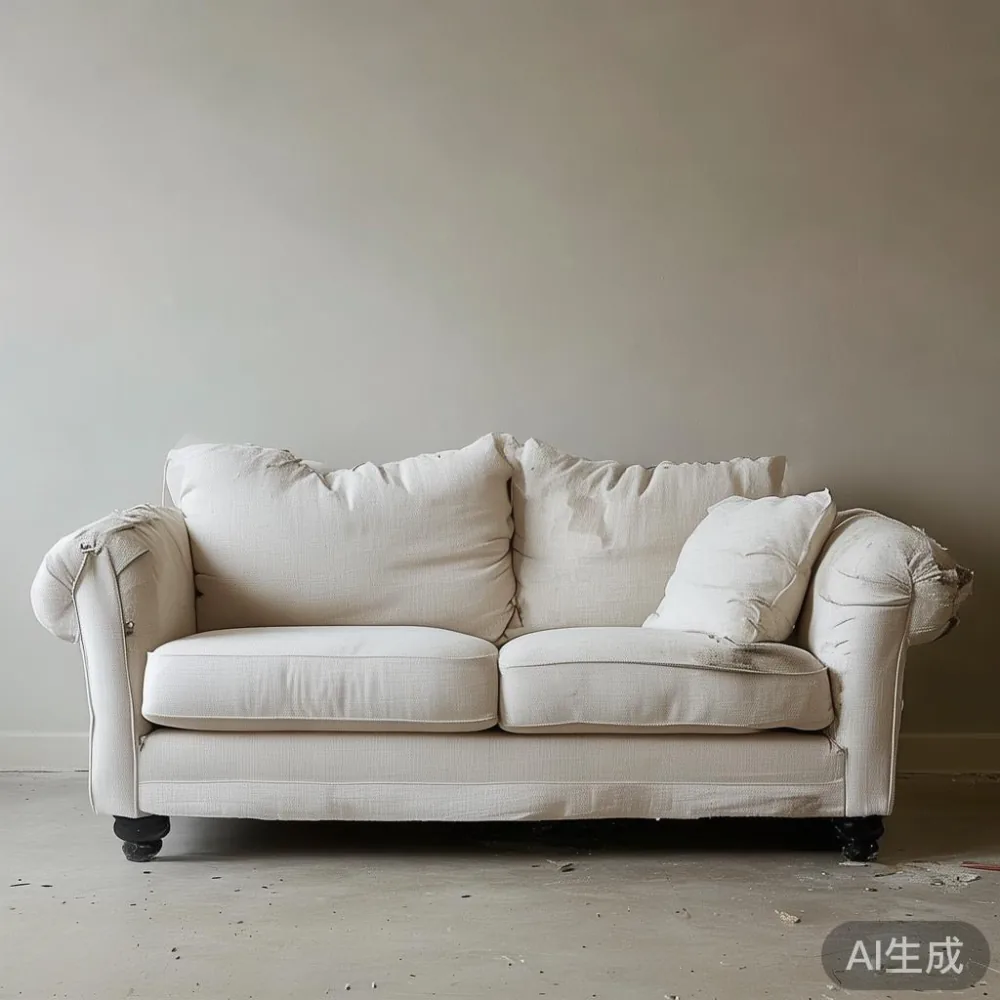
Is Japandi sofa worth it in a Singapore context? It depends on three measurable things: frame material, fabric rub count, and module weight. A genuine Japandi piece uses white oak or ash rather than rubberwood, with a kiln-dried moisture content between 8% and 12% so it survives our 28°C, 80% humidity climate without warping. The cushions should sit on a serpentine spring base with a 50,000-cycle rating, not a foam slab. Across the 10 to 15 year lifespan of a typical condo sofa, those numbers translate into very different sag patterns. My colleague in Punggol replaced two rubberwood sofas in eight years before switching to a 95 kg solid oak three-seater; after four years the seat depth is still holding at 58 cm. At S$3,600 delivered, that works out to roughly S$22 per month of usable seating, which most owners in the East Coast area would call fair value.
Another reason the question matters here is air-conditioning load. A tightly woven Japandi performance fabric breathes better than bonded faux leather, so the same 1,200 sq ft unit runs a half-tonne lighter on cooling duty across a typical evening. That detail is invisible from a screen, yet it changes how the room feels every single day.
How to measure your HDB corridor, lift, and front door without leaving home
Singapore’s standard HDB corridor light is around 1.2 m, but pre-1990 blocks in Bedok and older estates in Tiong Bahru can dip to 1.05 m. Service lift openings are typically 0.9 m wide by 2.1 m high, and the main cargo lift in newer condos ranges from 1.0 m to 1.3 m wide. Take a folding rule (a S$12 stainless 2 m model from a neighbourhood hardware shop is enough), then measure three points: the corridor at its tightest bend, the lift car diagonally corner to corner, and your front door frame including the architrave. Write each number on a piece of masking tape and stick it next to the floor plan on your phone. A three-seater sofa at 220 cm long x 95 cm deep will not fit around a 1.1 m corner unless you tilt it 30° and remove the legs, a step many owners forget until the movers are in the lift lobby.
This is the same principle that decides whether a dining table you cannot try in-store will actually reach your kitchen. A 1.8 m six-seater oak dining table, the kind used in a French light luxury Japandi for dining room scheme, is 95 kg crated and demands at least 1.0 m of doorway clearance on a diagonal swing. MIDHILL typically lists the crated dimensions of every dining table, bed frame, and nightstand on the spec sheet, which is why I always ask for that sheet before paying the 9% GST deposit.
What exactly counts as shipping damage versus a factory flaw?
Singapore’s Consumer Protection (Fair Trading) Act does not draw a sharp line, so the industry workaround is a five-point checklist. (1) Carton puncture deeper than 3 mm with interior foam compression. (2) Corner chip larger than a 50 cent coin (about 1.5 cm across). (3) Frame crack visible without magnification. (4) Upholstery tear longer than 2 cm. (5) Hardware missing from the sealed parts bag. Anything outside those five buckets is treated as cosmetic: a 1 mm grain lift on oak veneer, a faint cloth wrinkle, or a tone variation between two panels. MIDHILL’s lifetime refinishing promise handles those cosmetic cases for a S$0 labour fee plus return courier, which is rare in this category. Most Singapore importers void the warranty on day one if any reassembly is done outside their recommended vendor.
Documenting shipping damage within 48 hours of delivery keeps the evidence chain tight. After that window, factories push back with the argument that humid corridor air or assembly torque caused the defect. A 4K photo taken under a 5,700 K desk lamp with a coin for scale resolves roughly 80% of those disputes, in my experience handling neighbourly claims in Tampines over the past two years.
How to style French bed in room without buying sight unseen
How to style French bed in room when you have only ever seen the bed in a warehouse photo? The trick is to plan around four numbers: room length, window height, ceiling fan drop, and doorway clearance for delivery. A French light luxury upholstered bed in cream linen with a rolled headboard usually measures 215 cm long x 165 cm wide for a queen, with a 110 cm headboard that becomes the room’s visual anchor. In a typical 3.6 m x 3.2 m HDB master bedroom, that headboard eats about 30% of the longest wall, so anything taller than 100 cm will fight the window mullions. Pair it with a marble table nightstand rather than a wooden one; the cool stone balances the warm linen and stops the scheme from tipping into overstuffed country cottage. MIDHILL stocks a Carrara-topped bedside at 50 cm wide x 45 cm deep that clears a 90 cm HDB doorway on a diagonal and slips beside a queen without crowding the walking lane.
Lighting matters more than the catalogue suggests. A French bed photographed under a 4,000 K studio strip looks cream; under a 2,700 K Philips Hue bulb the same fabric reads butter yellow. Order a free 5 cm x 5 cm swatch from the seller, tape it to the wall for 48 hours, and watch it through morning and evening light before signing the balance payment. That one habit has saved at least three of my friends from the wrong white-point decision.
How to style American bed in apartment without a 2.4 m wall?
How to style American bed in apartment when your master bedroom is a 3.2 m x 3.0 m rectangle? An American light luxury bed leans on a low-profile platform in walnut or white oak, a 90 cm tall headboard, and oversized pillows in washed cotton. The look needs breathing room, which a small HDB room cannot always spare. The workaround is to drop the ceiling-height drama: skip the tall headboard, choose a 70 cm channel-stitched panel, and let the negative space above it carry the weight. A solid wood bed frame in ash at 205 cm long x 150 cm wide, paired with two 60 cm nightstands, will still leave a 55 cm walking lane on each side, enough to dress a bed without gymnastics. MIDHILL’s American line tends to ship in four boxes totalling around 110 kg, manageable for a single cargo-lift trip in a Punggol or Sengkang condo with a 1.3 m door opening.
Colour discipline is the second pillar. An American light luxury scheme relies on three tones: a warm walnut at roughly Pantone 4625, an oatmeal around 7527, and a charcoal grey near 431. Add a fourth accent only if the room has strong natural light. Stick to those three and a king-size scheme will photograph tidy in a 2.8 m wall, while a misjudged fourth colour makes the same room feel like a warehouse corner.
Can the same checklist apply to a wardrobe, dining table, or nightstand?
Yes, and it should. A wardrobe, marble table, or dining table runs into the same five failure points: shipping damage at corners, hardware mishandling, finish inconsistency, moisture swelling on solid wood panels, and drawer misalignment. A Japandi for dining room scheme centred on a 1.6 m white oak table needs the same corridor measurements, the same 48-hour photo protocol, and the same coin-for-scale check on any marble tabletop hairline. The upside is that the documentation effort is identical, so the cost of being careful is a flat one-hour per purchase, regardless of whether the item costs S$780 or S$3,800.
A wardrobe deserves its own paragraph. A 1.8 m x 0.6 m x 2.2 m white oak wardrobe weighs between 120 kg and 160 kg crated. It also tends to ship in two or three flat boxes. Photograph each box before opening, because the hinge rail, the centre panel, and the sliding track each carry their own shipping damage risk. How to style Japandi wardrobe in bedroom with a 2.1 m ceiling is a real constraint: drop the cornice, leave a 5 cm breathing gap, and your ceiling looks taller while the wardrobe settles cleanly into the wall.
Is Japandi bed worth it compared to a regular laminate bed?
Is Japandi bed worth it at S$2,200 to S$3,400 versus a S$680 laminate flat-pack? The honest answer sits in three numbers. First, the frame weight: a kiln-dried ash Japandi bed at 55 kg versus a 28 kg MDF flat-pack. Twice the mass, twice the rigidity, half the creak over a ten-year horizon. Second, the joinery: mortise-and-tenon and finger-jointed rails versus cam-lock dowels. Third, the finish: a hand-oiled matte surface that can be re-waxed every three years for a S$120 service call versus a PVC laminate that cannot be repaired, only replaced. Across a 12-year ownership window the lifetime refinishing a MIDHILL bed frame carries trims the effective cost to within S$15 a month of the laminate alternative, especially once you factor in the 9% GST, a single S$150 delivery fee over the usual US$350 free-shipping threshold, and the avoided cost of one replacement cycle.
Buying a piece of furniture you cannot sit on first is a uniquely Singapore experience shaped by elevator width, corridor turn radius, and the realities of importing. Treat every order like an evidence file, not a wish list. Measure first, document second, then click buy once the numbers align. A clean paper trail turns a S$3,200 light luxury sofa into a ten-year companion instead of a corridor dispute.