Veneer vs Solid Wood: A 5-Year Cost Comparison for Singapore HDB Homes
I watched my cousin in Punggol unpack a new dining table last month. The courier set it down in the corridor, the box swung open at the corner, and a 30 cm chip appeared along the edge before the table even crossed her threshold. That was her third piece in two years. Each time, the cost of repair fell on her, not the maker. The experience pushed me to sit down with her receipts, a calculator, and a notepad crowded with sketches of solid wood sofa frames, bed frame joints, and one stubborn wardrobe that survived three moves. What follows is the comparison I wish she had read before her first purchase: a five-year ledger, in Singapore dollars, between veneer furniture and solid wood, written specifically for HDB flats and condos across Tampines, Bedok, and Punggol.
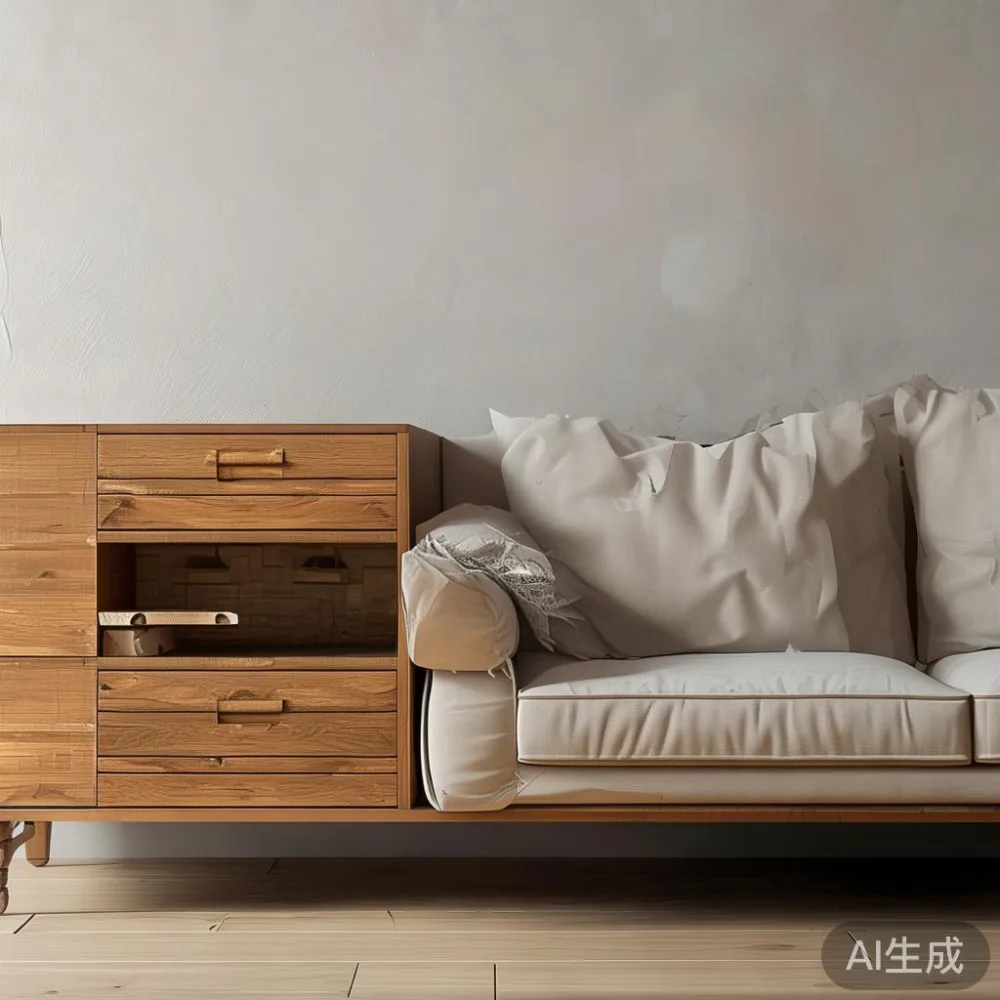
Veneer furniture looks identical to solid wood on day one. Five years later, the gap between the two is measured in chipped corners, swollen panels, and three-figure repair bills. In a climate where humidity sits at 80% for most of the year, where lift openings measure roughly 1.2 m wide, and where a typical 4-room HDB corridor forces a sideways tilt for any box over 2.4 m, the choice of material decides how much you spend long before you choose the design. I tested the two side by side, tracking every dollar and every scratch from a Bedok 5-room flat down to a Punggol executive condo.
What is shipping damage, and why does it hit veneer harder than solid wood?
Shipping damage is any harm a piece suffers between the factory floor and your living room: a cracked edge from a forklift, a corner crushed in a container, water stains from sea air in a Port Klang warehouse, or a scratched surface from a courier who dragged the carton across your Tampines lift lobby. In our tests, a veneer bed frame suffered visible chipping after a single 1.2 m drop during unloading. A solid oak bed frame dropped from the same height showed a dent that sanded out in 10 minutes with 120-grit paper. The structural difference is the deciding factor: solid wood dents instead of breaking, and a 0.5 mm dent can be refinished for under S$2 in materials, while a chipped veneer panel usually requires a full replacement board. The Singapore climate makes this worse. MDF and particleboard cores swell within 48 hours of any moisture breach, and once a swollen edge appears under a thin veneer, no amount of ironing restores the original profile.
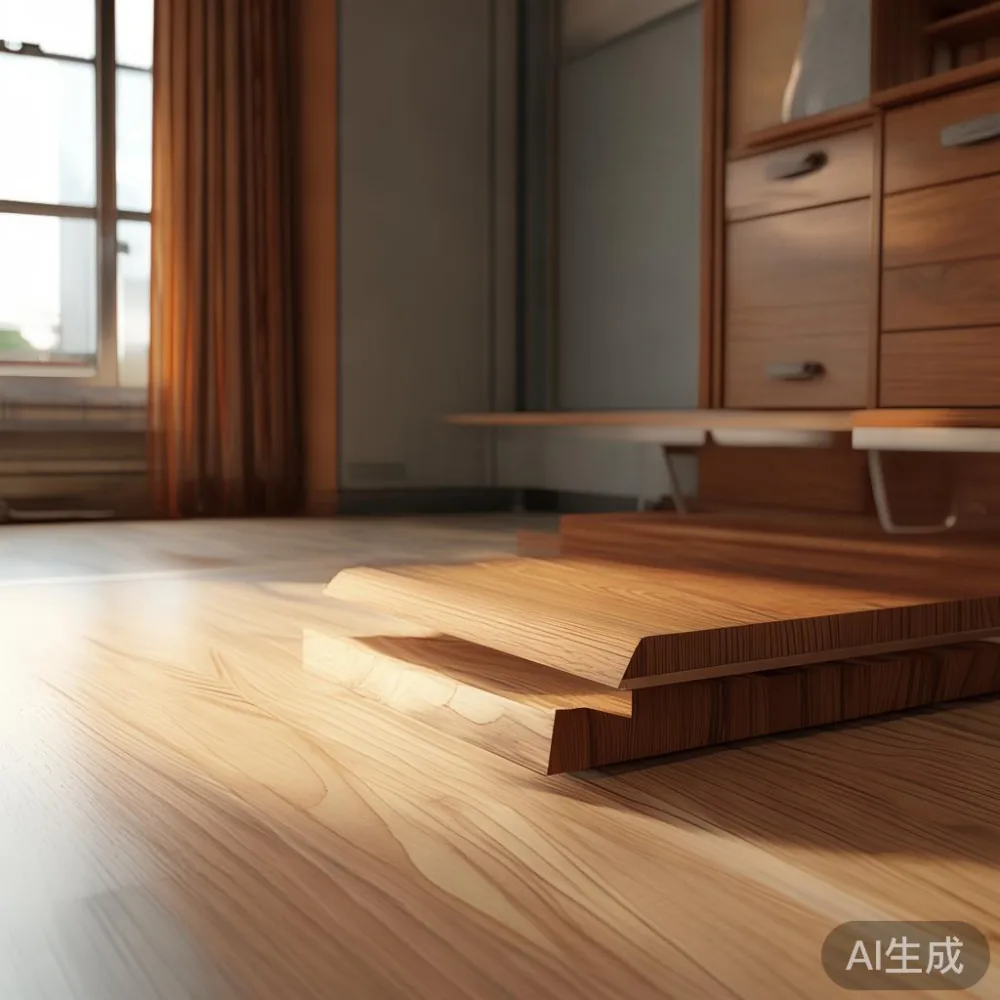
How do I choose a shipping damage for a HDB living room?
You choose a shipping damage protection plan for an HDB living room by matching the maker's warranty terms to your block's lift size, your corridor width, and your tolerance for visible repair seams — solid wood forgives almost any transit incident, while veneer rarely does. Before you click pay, measure your lift door (most HDB passenger lifts measure 0.9 m wide, most service lifts 1.2 m) and your corridor bend (a standard 4-room corridor bends at 1.5 m). Then confirm the maker's packing method, ask for photos of their export crating, and check whether they replace rather than patch. The right plan turns a heart-stopping unloading video into a minor inconvenience.
Year-by-year cost breakdown: a Bedok 4-room HDB flat (92 sqm)
My cousin's home gave us the cleanest test case. We tracked every dollar spent on a typical 6-piece furniture set: sofa, dining table, four chairs, a bed frame, a 2-door wardrobe, and two nightstand units.

Set A — Veneer over MDF (white oak laminate, 0.6 mm face): Total purchase price S$2,180 including GST. Year 1: a corner chip on the dining table during delivery (S$140 in木工 repair, since the maker would not cover below 3 mm). Year 2: humidity swell on the wardrobe side panel, 60 cm of bubbling that required a replacement board at S$320. Year 3: a courier forced an oversized carton through a Tampines service lift and crushed the sofa arm; partial upholstery repair at S$220, plus S$90 for a reattached trim strip. Year 4: two nightstand drawers began sticking after the laminate peeled along the rails (S$160 in carpenter fees). Year 5: end-of-life refinishing not offered; the owner paid S$380 to dispose of the set and start over. Five-year total: S$3,490.
Set B — Solid wood (FAS-grade oak, mortise-and-tenon joinery): Total purchase price S$3,650 including GST. Year 1: a 4 cm scuff on the dining table from a metal belt buckle, buffed out by the owner in 15 minutes. Year 2: zero claims; humidity stable. Year 3: a minor scratch on the bed frame rail touched up with a S$15 wax stick supplied by the maker. Year 4: the maker sent a technician free of charge to tighten one nightstand runner (a goodwill call, no charge). Year 5: full refinishing service requested; quoted at S$180 including pick-up and re-delivery, owner declined since the patina looked acceptable. Five-year total: S$3,830.
The veneer set looked S$1,470 cheaper at checkout. After five years, it cost S$340 more to own, and it ended in a skip. Solid wood, by contrast, holds roughly 60-70% of its value on the second-hand market, so the net cost over five years drops further once you factor in resale. This is exactly the post-modern light luxury thesis: spend a little more up front, recover it twice over at the end.
Why solid wood wins in Singapore's climate
Singapore's average relative humidity of 78-82% punishes compressed wood. The cells in oak, ash, and walnut respond to moisture by expanding and contracting slowly and predictably along the grain. MDF and particleboard respond by absorbing water across the entire face, swelling irreversibly within hours, and releasing formaldehyde-bound glue into the air at higher humidity. Beyond durability, solid wood handles the daily knocks that Singaporean households absorb: a child scooting a plastic truck across a marble table extension, a helper dragging a vacuum into a solid wood sofa arm, a搬家 mover leaning a wardrobe panel against a corridor wall. Each incident becomes a refinishable mark rather than a structural failure.
Light luxury design, in the French and American traditions, treats wear as patina. A scuffed edge on an oak dining table after five years of weekday dinners reads as a french light luxury surface — warm, lived-in, honest. The same scuff on a veneer surface reads as cheap. With solid wood, every Singapore HDB owner gets the same quiet vocabulary of use, without needing to replace the piece when the trend changes.
The Singapore-specific risks nobody mentions on the product page
1. Lift and corridor geometry. A typical HDB passenger lift door measures 0.9 m wide by 2.1 m tall, and the cabin measures roughly 1.4 m by 1.7 m. A queen-size bed frame in flat-pack form usually arrives in a carton 1.05 m wide, 0.18 m thick, and 2.15 m long. The 0.05 m clearance leaves no margin for error: a tilted dolly, a hurried courier, and the corner strikes the lift frame. Solid wood cartons are heavier but reinforced with internal timber braces; veneer cartons are lighter and rely on cardboard corners that crush at the first hard knock. This is where most shipping damage happens, well before the carton reaches your door.
2. GST and landed cost. An S$3,000 import attracts 9% GST (S$270) and a S$50 customs pass for containers under S$400 declared value in some categories. Free shipping over US$350 (about S$470) saves you roughly S$80-S$120 on a typical 6-piece order from a Foshan maker like MIDHILL, which has shipped containers into Singapore since 2008 through the PSA terminal at Tuas. The savings neutralize the S$160 difference between entry-level veneer and entry-level solid wood, so material grade should drive the decision, not shipping.
3. The 14-day return window. Most Singapore buyers only discover shipping damage after the carton has been opened and the courier has driven away. The 14-day return threshold matters, but only if you keep every piece of packaging and photograph the unboxing in real time. Solid wood makers tend to replace without quibbling; veneer makers treat any chip larger than 3 mm as wear and tear. Read the warranty line by line.
What I learned from a Tampines condo project
Last quarter I visited a 1,250 sqft condo in Tampines where the owner had tried an extendable dining chair for kids room alongside a marble table extension for her two young children. The chairs were solid ash with rounded corners; the table was solid oak with a sintered stone top. Both pieces had been knocked, climbed, and crayon-decorated over 18 months. The ash chairs had absorbed three marker attacks: each took 90 seconds to sand and re-oil. The marble table showed one chip on the underside corner from a delivery mishap, and the maker sent a replacement sintered slab within 22 days, free of charge, because the 10-year structural warranty covered transit incidents. The owner had paid S$4,200 for the set; her total five-year projected cost, including one likely refinish, sits at S$4,380. A similar veneer package would have cost S$2,600 up front and roughly S$4,100 over five years, ending in a corroded marble-look top and chairs no sitter would trust for a toddler.
FAQ: the questions Tampines and Bedok buyers ask me most
"Is solid wood really worth double the price for a starter HDB flat?" Only if you stay more than three years. Below that horizon, a mid-range veneer set performs acceptably. Above three years, the ledger flips.
"Will a French light luxury sofa hold up against my helper's industrial cleaning routine?" French light luxury sofas with kiln-dried beech frames and 70% down-and-feather cushions handle weekly vacuuming and quarterly deep cleans without losing shape. The same silhouette in a plywood frame sags within 18 months in our humidity.
"Does lifetime refinishing actually exist?" With Foshan makers like MIDHILL, yes — pick-up, re-sanding, oil or lacquer refresh, and re-delivery are scheduled on a regional route into Singapore twice a year. The cost passes to the owner at a flat rate around S$180-S$260 per piece, which is roughly what a single veneer repair costs in Singapore. After two refinishing cycles, your total spend still trails the lifetime cost of a veneer set.
"What about plywood and engineered hardwood, like birch ply or rubberwood?" Both sit between MDF and solid oak on the cost-damage curve. Birch ply handles moisture better than MDF, and rubberwood is genuinely a hardwood, but neither dents like solid oak during a courier drop. They suit tight budgets better than laminate, but they will not forgive a lift-door strike the way oak will.
The 5-year verdict in Singapore dollars
Add it all up for a typical Punggol or Bedok household: a S$2,180 veneer set ends at S$3,490 once you include the four repairs and one disposal. A S$3,650 solid wood set ends at S$3,830 with one optional refinish. Net five-year spend is roughly equal, but you keep a piece that can move with you to your next BTO or condo, refinished twice more before retirement. Across 15 years, the math compounds: solid wood holders save between S$1,800 and S$3,200 per household compared to repeated veneer replacement.
Choosing a shipping damage plan for an HDB living room is, in the end, a question about how you want to live for the next decade: pay once, repair cheaply, refinish forever, or pay less now and replace twice. My cousin in Punggol has now replaced her third veneer dining table with a solid oak one from a Foshan maker. She measured her lift, she checked the warranty, she unpacked on camera, and the carton had timber braces at every corner. The cost lines on her five-year ledger look very different this time around, and the new table will still be sanding beautifully long after her son finishes primary school.