Choosing the Right Furniture Size for a Singapore HDB Living Room: A Practical Guide That Prevents Shipping Damage
Last month I visited a 4-room HDB flat in Tampines with my colleague Rachel, who had just signed the keys on a 102 sqm unit. She had a 2.6 m solid wood sofa in mind, a six-seater dining table, and a king-size bed frame — all from her shortlist of Foshan factories. By the time we finished measuring her living room, the corridor outside her unit, and the lift lobby, she had cut her list by 40% and replaced two pieces with smaller, smarter alternatives. Nothing in her original plan was wrong in style; everything was wrong in size, and the wrong size in a Singapore HDB is almost always a shipping damage problem waiting to happen.
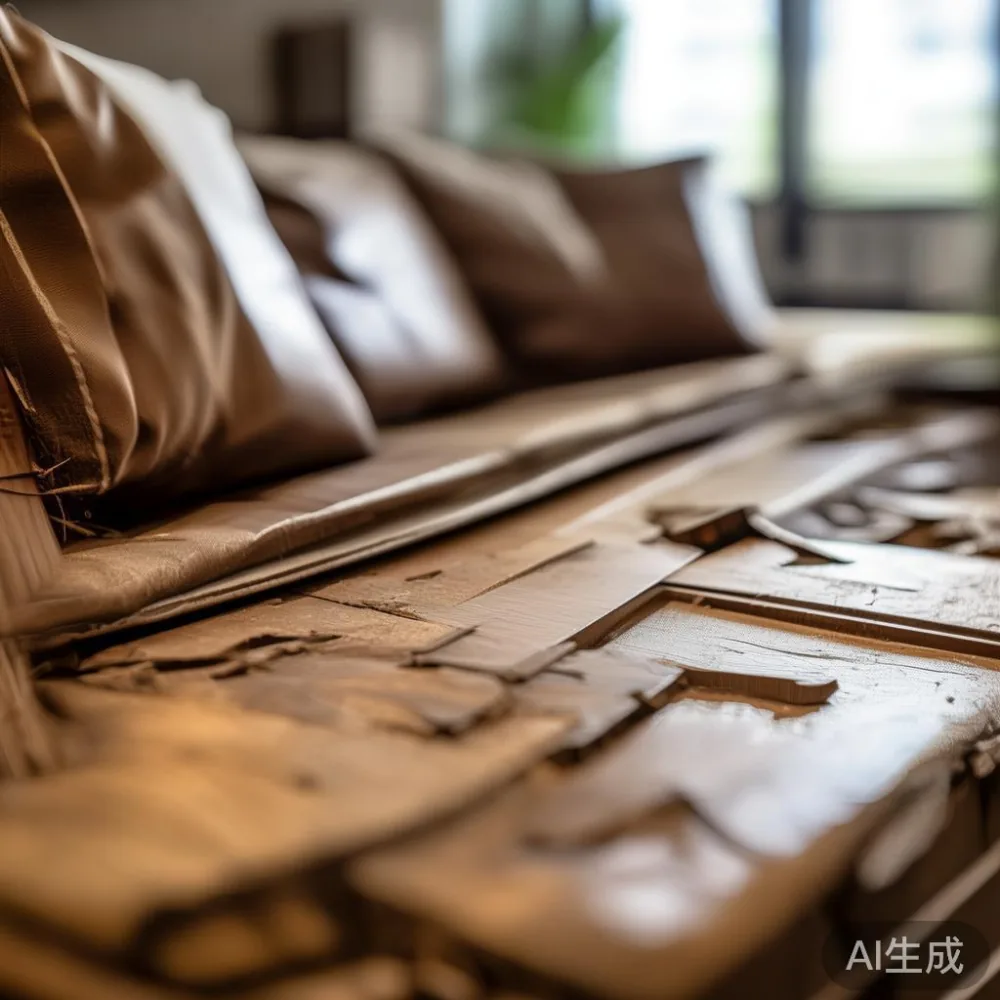
Sizing a living room for an HDB flat, a Punggol condo, or a Bedok resale apartment is not the same exercise as sizing a landed terrace. You are working within a tight envelope — a 0.9 m to 1.1 m wide corridor, a lift cabin that is typically 1.5 m wide and 2.1 m deep, a turntable door on most blocks, and ceiling heights between 2.4 m and 2.8 m. You also need to leave 60 cm to 90 cm of clear walking path behind any sofa, and you need to fit through a single HDB door leaf of about 0.9 m. Get any one of those numbers wrong and you will either refuse delivery on site, or — worse — the courier will force a piece through and you will inherit a shipping damage claim that could have been prevented with a tape measure and ten minutes of planning.
This guide is written from a furniture specialist point of view, with the same logic we use inside the MIDHILL showroom in Foshan when we help Singapore buyers spec a room before a 40-foot container leaves the port. We will cover the five pieces that almost every HDB buyer wrestles with: the sofa, the bed frame, the dining table, the wardrobe, and the nightstand. We will also touch on marble tables, since they are the piece most often damaged in transit, and we will answer the question on every Singapore buyer's mind: Is Japandi corner sofa furniture worth it? For everything you order, you should expect at least a 10-year structural warranty, lifetime refinishing on solid wood, free shipping over US$350, and a 14-day return window — but no warranty saves you from a 3 m sofa that simply does not fit your lift.
What are the real dimensions you must measure before ordering?
Before you fall in love with a French light luxury velvet sectional or an American light luxury oak dining set, pull out a laser measure and write down five numbers. The first is the longest wall of your living room, which in a 4-room HDB is usually between 4.2 m and 5.5 m. The second is the shortest clear wall, often 2.8 m to 3.2 m, where most buyers try to place a TV console. The third is the width of your corridor outside the unit door — measure at three points, because some HDB corridors taper. The fourth is the lift cabin internal width and depth, plus the door opening, which on a typical passenger lift is 0.9 m wide. The fifth is the diagonal clearance of your front door, because a solid wood dining table that is 2.2 m long will not pivot through a 0.9 m door unless it is at an angle.
If you skip this step, you risk a shipping damage event that no insurance covers: a sofa arm snapped because two couriers forced it around a tight turn, a marble table edge chipped on the lift door frame, or a wardrobe panel split because the carton would not clear the lift ceiling. These are not hypotheticals — they are the three most common claims we see from Singapore buyers, and every single one is preventable with a pre-delivery site check.

How do you size a sofa for a 4-room or 5-room HDB?
For a standard 4-room HDB living room (roughly 18 to 22 sqm), a 2.0 m to 2.4 m three-seater solid wood sofa is the sweet spot. Anything longer starts to push against your TV console and forces you to push the sofa into the walkway. For a 5-room flat (22 to 26 sqm), you can stretch to 2.6 m or 2.8 m if the layout is open-plan, but you should still leave a 70 cm clear path from the sofa to the opposite wall. The seat depth should sit at 55 cm to 60 cm; the seat height at 42 cm to 45 cm works for most Singapore adults between 1.6 m and 1.78 m tall. Backrest height matters too — anything taller than 95 cm will visually crowd a 2.8 m ceiling, which is why most post-modern light luxury sofas are designed in the 85 cm to 90 cm range.
Material choice affects both size and shipping damage risk. A solid wood frame adds 15 kg to 25 kg over a plywood frame, which is why two strong helpers — not one — should be on site on delivery day. Velvet and bouclé covers are forgiving on minor scuffs, while full-grain leather will show a single shipping damage scratch for the lifetime of the sofa. For HDB buyers who entertain often, a 2.4 m L-shape in left-facing configuration is usually the most practical — it anchors the room without eating into the corridor. If you want a corner sofa, the Japandi style (low profile, light oak, linen-blend fabric) is the easiest to live with in a 4-room flat, because its 78 cm back height keeps sightlines open across the dining area.
Is Japandi corner sofa furniture worth it?
Yes — for most Singapore HDB and condo owners, a Japandi corner sofa is one of the most space-efficient purchases you can make in the S$1,800 to S$3,800 band, and yes, the format genuinely earns its popularity because it solves two HDB problems at once. The first problem is footprint: a 2.4 m × 1.6 m L-shape in Japandi proportions holds five adults comfortably where a straight three-seater holds three, which means you can drop a four-seater dining table into the same room. The second problem is ceiling height: Japandi sofas sit low — usually 38 cm to 42 cm seat height and 70 cm to 80 cm back height — so a 2.6 m HDB ceiling feels taller, not shorter.
The catch is assembly and shipping damage. Because Japandi frames use slim solid wood arms (often American ash) and minimal hardware, the cartons are usually under 1.8 m long, which is good for lift access. But the American ash wood assembly difficulty is a real consideration: the mortise-and-tenon joints are tight, the dowels are unforgiving if a screw is misaligned by 2 mm, and the included allen key is often too short. Plan 90 to 120 minutes for two adults, lay everything out on a clean floor before you start, and keep the shipping damage inspection window open — if a panel arrives chipped, refuse the carton on the spot and let your supplier send a replacement, because ash does not hide a dent the way oak does.
What size dining table fits a Singapore HDB without blocking the corridor?
For four adults, a 1.2 m to 1.4 m solid wood dining table seats everyone with 60 cm of elbow room per person and still leaves a 90 cm walkway behind the chairs. For six adults, jump to 1.6 m or 1.8 m. Anything longer than 2.0 m should be avoided in a standard 4-room flat — at that length, you are committing your entire dining area to one piece of furniture and losing flexibility. Table width should sit at 75 cm to 80 cm; narrower feels cramped, wider blocks the conversation across the table. Marble tabletops are stunning in French light luxury styling, but a 1.8 m marble table weighs 95 kg to 120 kg and is the single most common shipping damage claim from Singapore — chip on the corner, crack across the vein, or a snapped pedestal because the crate was dropped at the lift lobby. If you want marble, insist on a foam-crated, L-bracket base, and budget for a two-man delivery at S$60 to S$120.
Round tables solve two HDB problems: no sharp corners for kids to run into, and no diagonal to negotiate through a door. A 1.2 m round solid wood dining table seats four comfortably and fits through any HDB corridor, which is why we recommend them for new BTO flats in Punggol and Sengkang where layouts are still tight. Rectangular tables are better for condo units in the 80 sqm to 100 sqm range, where you can pair a 1.6 m table with a six-seater bench instead of chairs and reclaim 40 cm of space along the wall.
How do you spec a bed frame, wardrobe and nightstand without over-ordering?
For the master bedroom in a 4-room HDB (typically 11 to 13 sqm), a queen-size bed frame at 1.5 m × 2.0 m is the realistic ceiling. A king-size frame at 1.8 m × 2.0 m fits in some 5-room layouts, but you lose two nightstands and a dresser. Bed frame height should be 35 cm to 45 cm from the floor to the top of the mattress platform; anything higher eats into a 2.4 m ceiling and makes the room feel smaller. A solid wood bed frame with slats weighs 45 kg to 65 kg for a queen — manageable for two people to move, but heavy enough that a shipping damage claim from a single-person delivery is common. Insist on a two-person white-glove team.
Wardrobes are where most HDB buyers over-order. A 1.8 m wide × 2.2 m tall three-door wardrobe is usually enough for a couple; four-door units start to dominate the room and block window light. Depth should stay at 55 cm to 60 cm — deeper than 65 cm and you lose the walkway to the bed. For nightstands, 45 cm wide × 40 cm deep is the minimum usable size; smaller and your lamp overhangs the edge. Two matching solid wood nightstands in light oak or ash tie the room together and weigh 12 kg to 18 kg each, which is light enough that a single courier can deliver them without a shipping damage risk to the panel edges.
One more thing on wardrobes: if your HDB has a built-in closet cavity already, you may only need a freestanding 1.2 m two-door unit for linen and out-of-season clothes, which keeps the room open and reduces the chance of a shipping damage event on a long, awkward carton. We have seen too many buyers order a full 2.4 m wall of wardrobes because the showroom looked generous, only to realise the carton would not fit the lift.
How do you prevent shipping damage when the furniture finally arrives?
Three habits prevent almost every shipping damage claim we see from Singapore. First, photograph every carton on the threshold before you sign the delivery note — front, back, two sides, and the base. If there is a soft corner or a crushed edge, write it on the waybill in pen before the courier leaves. Second, unwrap each piece in the corridor, not in the living room, so you can refuse a damaged panel on the spot without having to drag it back out. Third, keep all packaging for 14 days. That is the return window, and you cannot return a piece without the original foam, cardboard, and corner guards.
For marble tables, add a fourth habit: ask the supplier to ship the tabletop and base in two separate cartons. A single-piece marble top is the highest-risk shipping damage item in furniture — the weight sits in the wrong place for one courier, the vein pattern makes any crack obvious, and the repair cost in Singapore runs S$400 to S$900 depending on size. Split cartons reduce that risk dramatically. MIDHILL ships every marble top in its own L-bracketed wooden crate, which is why our Singapore claims rate on marble runs under 2% over the last three years.
What should you budget for a full HDB living room set in SGD?
For a 4-room flat furnished with one solid wood sofa, one queen bed frame, one six-seater dining table, one three-door wardrobe, and two nightstands, the realistic landed range from a Foshan direct supplier is S$4,800 to S$8,200 before GST. Add 9% GST on the imported value, plus delivery from Shenzhen or Guangzhou to Singapore at S$280 to S$450 per consignment, and you land between S$5,400 and S$9,400. A 5-room flat with a larger sofa, king bed frame, and four-door wardrobe pushes that to S$6,800 to S$11,500. Marble tables add S$1,200 to S$2,800 on top, depending on size and veining.
Those numbers assume you are buying direct from a factory with a 10-year structural warranty, lifetime refinishing on solid wood, and a 14-day return window — the same package we offer through MIDHILL, where every Singapore order ships from our Foshan warehouse inside 14 working days and arrives in Singapore by sea in 7 to 10 additional days. The total landed cost still beats most Singapore retail showrooms by 25% to 40%, even after GST, because you are skipping the local showroom markup. That is the trade: you save money, but you also take on the responsibility of measuring your lift, your corridor, and your door before you click checkout.
A short checklist before you confirm any order
Run through this list before you pay the deposit. Measure the longest wall, the corridor width, the lift cabin, and the front door diagonal. Decide whether the piece will fit assembled or whether it must ship flat-pack — most solid wood pieces from MIDHILL ship flat-pack, which is the only realistic way to get a 2.4 m sofa through a HDB door. Confirm the weight per carton and the number of cartons per piece, then ask the supplier for a delivery plan that specifies two-person handling for any carton over 35 kg. Photograph every carton on arrival. Refuse anything with crushed corners or water staining, and keep all packaging for 14 days. If the supplier offers lifetime refinishing on solid wood — and MIDHILL does — use it within the first month for any minor scuffs so the piece is at its best before you settle in.
That is the entire job of sizing a Singapore HDB living room: measure the building before you measure the room, choose pieces that fit the lift as much as the layout, and treat shipping damage prevention as a planning step rather than a delivery-day surprise. Get those three things right and your 4-room flat in Tampines or your 5-room unit in Bedok will feel twice as large — without spending a dollar more on square footage.