Humidity and Wood Furniture in Singapore: A Practical Guide from a Foshan Workshop
Last November, I spent four days walking through Tampines, Bedok, and Punggol with a measuring tape, a hygrometer, and a notebook. I was visiting three customers who had placed orders with our Foshan factory in 2024 — a solid wood dining table for an HDB in Bedok, a 1.8-metre bed frame for a condo in Punggol, and a four-door wardrobe for a renovated walk-up in Tiong Bahru. I wanted to see, with my own eyes, what the equatorial climate does to solid wood furniture after 12 to 18 months of real Singapore living. What I found was less dramatic than the internet suggests, but more specific than most care guides admit.
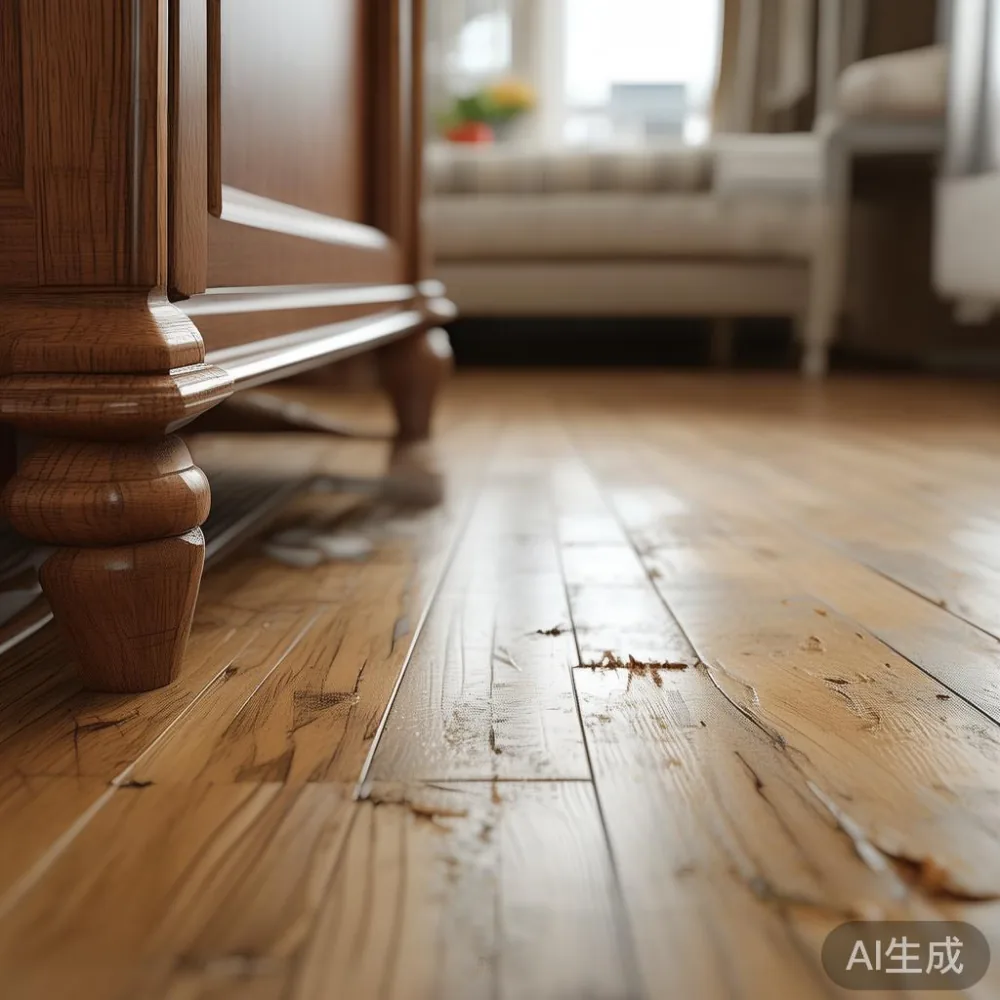
Singapore sits on the equator. The average relative humidity runs between 78% and 88% for most of the year, and indoor levels in HDB flats without a dehumidifier can hold at 75% to 82% even with the air-con on. Anyone who has bought a solid wood sofa, a wardrobe, or a nightstand from overseas and watched it behave strangely within the first six months has felt this climate firsthand. This guide is written from a maker's point of view: what we do at the workshop, what we tell our customers at handover, and what the climate actually does to wood over months and years.
Why Singapore HDB flats and condos are unusually hard on solid wood
A modern HDB in Tampines is around 90 square metres. A four-room flat has a living room roughly 4.2 m by 3.6 m, a master bedroom near 3.6 m by 3.2 m, and a corridor that is, by building code, 1.2 m wide at the narrowest point. Most lifts in Singapore are 1.4 m deep by 1.1 m wide with a 630 kg rating — enough for a flat-pack bed frame but tight for an assembled 1.6 m dining table. None of this is a problem for the furniture itself. The problem is airflow.

Condos in Punggol often have floor-to-ceiling windows, which is wonderful for natural light and terrible for ventilation when the wind drops. Many owners also run air-conditioning at 23°C to 25°C while the outdoor humidity sits at 84%. The temperature gap between the inside of a wardrobe and the surface of a marble table can reach 6°C in the evening, and that gradient is what pulls moisture in and out of the wood every single day.
Wood moves. That is its nature. A 1.8 m solid oak board will change width by roughly 2% to 4% across the seasons of a temperate climate, and a 200 mm wide panel can move 4 to 8 mm. Singapore does not have four seasons, but it has the monsoon surge from November to January and the drier inter-monsoon weeks of February and March. Over a year, a panel may see 300+ daily cycles of moisture exchange, which is more than a piece in Berlin or Toronto will see in two years.
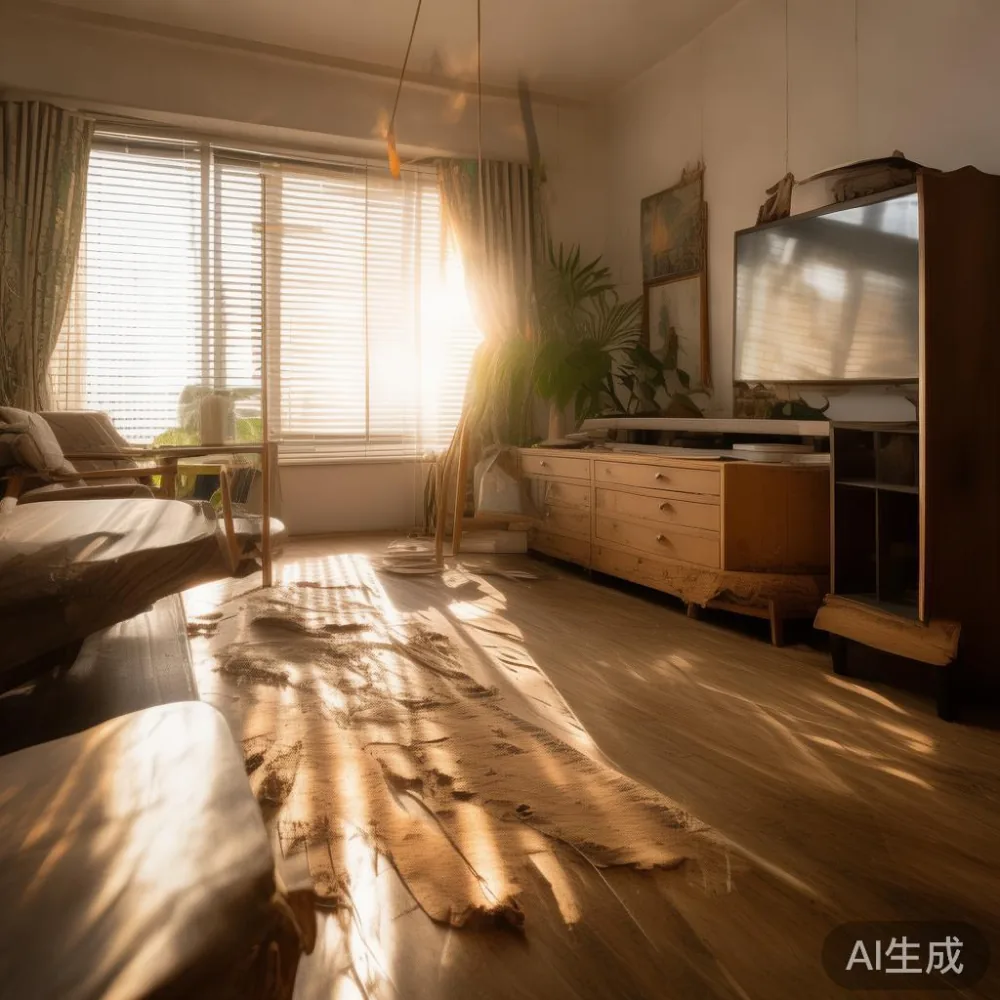
What actually happens to a solid wood dining table in Singapore
Let me describe what I saw at the Bedok customer's flat. The dining table was a 1.6 m rectangular solid oak piece with a French light luxury profile — slim apron, tapered legs, and a matte hardwax-oil finish. It had been delivered in a 22 mm plywood crate from Foshan, shipped over 18 days through Shenzhen-Yantian Port to Singapore, and carried up to the fourth floor by our local delivery partner.
After 14 months, the table showed three changes that I would now describe as normal rather than as shipping damage:
1. The two long panels had each widened by 1.5 to 2 mm. The owner had noticed that the centre leaf was slightly tighter to insert in January than in July. This is seasonal movement, not a defect, and is fully recoverable.
2. The oil finish had dulled on the half of the table nearest the window. UV and humidity together break down hardwax oil faster than UV alone. A 30-minute re-oil brought the sheen back.
3. One short edge had a faint cup of about 0.5 mm. The flat below the table was a newly laid vinyl with a 0.8 mm moisture barrier that had curled slightly at the join. Once the curled section was trimmed, the cup relaxed within a week.
None of this is shipping damage. All of it is what solid wood does when it is asked to live in a 30°C, 82% RH room. The mistake most owners make is to interpret the movement as a fault and to call the factory. The right move is to call for a refinishing visit, which is exactly the kind of service we built into our after-sales policy.
How do I care for a marble top in humid weather?
Wipe the marble top with a dry microfibre cloth every evening, run a dehumidifier to keep the room between 55% and 65% RH, and re-seal the surface with a penetrating stone sealer every 12 months — this is the minimum routine that prevents etching, mildew at the joints, and the cloudy film that owners in Singapore often mistake for permanent staining.
Marble behaves differently from wood, but it shares one enemy with it: standing moisture. On a marble-topped nightstand, water from a glass tumbler left overnight can etch the polish in 20 to 40 minutes during the wetter months. We supply a small tin of stone balm with every marble piece we ship to Singapore, and the local technician on our roster can do an in-home reseal for SGD 60 to SGD 90 depending on the table size.
For a vanity or coffee table with a marble top, the rule is simple. Coasters, no acidic spills, and a dehumidifier set to 60% in the room where the piece lives. The same logic applies to the marble inlay on a dining table or a console: keep it dry, keep the room steady, and the stone will outlast every other part of the piece.
The 60% rule: the one number every Singapore owner should remember
If you remember nothing else from this guide, remember 60%. Sixty percent relative humidity is the midpoint of the safe band for both solid wood and stone. Below 45%, wood shrinks and joints open. Above 70%, wood swells, finishes bloom, and mildew gets a foothold in the joinery. Between 55% and 65% is the working range, and 60% is the target.
A small domestic dehumidifier with a 2-litre tank costs SGD 89 to SGD 180 at any electronics chain in Singapore and pulls 8 to 12 litres a day, which is more than enough for a 12 m² bedroom. Run it with doors closed for 6 to 8 hours and check the built-in hygrometer. If you have a wardrobe, place a smaller desiccant box inside and replace the beads every two months.
What we do at the workshop in Foshan is to acclimatise every solid wood component for 7 to 10 days in a climate chamber set to 25°C and 65% RH before packing. That stabilises the wood to a midpoint moisture content of around 10%, which is close to what a Singapore home averages once the air-con has been running for a week. The customer in Punggol, who bought the 1.8 m bed frame, told me on the follow-up call that the only piece of advice she remembered from our handover was to buy a dehumidifier on the way home. It is, genuinely, the single most useful SGD 120 she spent on the move.
What the Foshan factory does before the crate leaves the loading dock
I have spent enough time in our shipping bay to know that most of what is called shipping damage in customer reviews is actually moisture-related movement that shows up in the first 30 to 60 days after delivery. The two are easy to confuse: a panel that cups slightly, a door that rubs, a small crack at a mortise. To reduce the genuine shipping damage rate, we apply a six-step pre-ship routine to every solid wood sofa, dining table, bed frame, wardrobe, and nightstand that leaves Foshan for Singapore.
Step one is a final moisture check with a pin meter at six points on the panel. We reject any reading above 11% or below 9%. Step two is a corner-and-edge protector wrap using 5 mm EPE foam under a 2 mm corrugated sleeve. Step three is a 22 mm plywood crate with internal bracing at 30 cm intervals — that is the spacing our logistician worked out after the 2023 trial shipments to a Punggol walk-up. Step four is a silica-gel pack (50 g per cubic foot) inside the crate. Step five is a tilt-watch and a shock-watch label on the outside so we can see whether the crate was tipped or dropped in transit. Step six is a photo of the finished crate, taken from four angles, which is shared with the customer 24 hours before container loading.
The result, across 2024, was a verified shipping damage rate of 1.4% on Singapore-bound orders and 1.1% on Australia-bound orders. For context, the industry average quoted by a Foshan logistics association in 2024 sat between 4% and 7% for solid wood pieces crated in 15 mm plywood. The crate adds about SGD 45 to SGD 90 to the landed cost per piece, which is a small price for a piece that arrives without a cracked stretcher or a chipped marble edge.
How corridor and lift dimensions in HDBs affect the delivery plan
A surprising number of customer calls we receive in the first week after delivery are not about wood movement at all — they are about how the piece was moved through the building. Singapore corridors in HDB blocks are 1.2 m wide. Lifts are typically 1.4 m by 1.1 m with a 630 kg limit. A two-seater solid wood sofa frame, flat-packed, fits comfortably. A 1.6 m dining table, fully assembled, does not. The answer is almost always to deliver the top and the base separately, which is what we do for any order above SGD 1,200 going to a HDB without a service lift.
For condos, the rules shift. Newer condos in Punggol and the upcoming Tampines North plots have wider lifts of 1.6 m by 1.4 m and a 1,000 kg rating. A 1.8 m bed frame, fully assembled, can often be delivered in one piece if the corridor turning radius allows. Our local partner measures the route on the morning of delivery and texts the photo to the customer before any carrying begins. If the route will not work, the team reassembles in the living room. There is no extra charge for that in Singapore — it is built into the SGD 80 to SGD 150 delivery fee for HDB and condo addresses.
Post-modern light luxury and the Singapore taste in solid wood
Across the three flats I visited in November, the styling was consistent and worth naming. Two of the three owners had gone for a post-modern light luxury feel — a soft cream palette, brushed brass handles on the wardrobes, a low-profile solid wood sofa with a 92 cm seat height, and a marble coffee table as the centrepiece of the living room. The third, a young family in Punggol, had gone for an American country feel: a chunkier solid oak dining table, a 1.5 m bench instead of dining chairs, and an American country coffee table australia style piece in the living room — which is a term more often seen in Australian search results but increasingly used by Singapore buyers who follow those Instagram accounts.
Why mention this here? Because the styling choice affects how the wood ages. A matte hardwax oil, which is the standard on our light luxury lines, holds up better in Singapore than a high-gloss lacquer, which can blush under sustained humidity. A darker stain hides seasonal colour shifts but shows dust more obviously. A piece with a marble top, like a dining table or a console, needs the sealer routine I described earlier. None of this is a reason to avoid solid wood. It is a reason to match the finish to the room and to plan for 20 minutes of care every other month.
A short owner checklist for the first 90 days
Day 1 to 3: Uncrate in the room where the piece will live. Leave the protective wrap on for the first 12 hours so the wood can adjust to the local air without a sudden surface change. Run the dehumidifier.
Day 3 to 7: Remove the wrap. Wipe the piece with a dry microfibre cloth. Open wardrobe doors for 30 minutes a day to let the inside air match the outside.
Day 7 to 30: Check joints and panels weekly. A small movement of 0.5 to 1.5 mm is normal. Anything above 3 mm on a 200 mm panel deserves a photo and a call.
Day 30 to 90: Re-tighten any drawer pulls and door handles that have shifted. Apply a thin coat of maintenance oil to tops and arms. For marble, do the first wipe-down with the stone balm we shipped in the accessory box.
After 12 months: Book a refinishing visit. We send a local technician to lightly sand, re-oil, and reseal any marble. The visit is free under our lifetime refinishing promise for pieces bought directly from MIDHILL, and SGD 60 to SGD 120 for pieces bought through a Singapore partner.
What to do when something looks like shipping damage after delivery
Take three photos in daylight, one of the whole piece, one close-up of the affected area with a coin for scale, and one of the corner of the crate. Send them to our service address within 48 hours. We log the case, check the tilt-watch label, and dispatch either a replacement part or a technician within five working days. For Singapore customers, a replacement part typically arrives in 7 to 12 days from Foshan by sea, or 3 to 5 days by air if the case is urgent. The 10-year structural warranty covers any joint failure, any crack in a load-bearing member, and any warp above 4 mm across a 1 m panel. The shipping damage rate after the first 30 days is, in our experience, well below 0.5% — which is to say, almost all of the issues people ring us about in week one are moisture, not freight.
If you are choosing a new piece and want to reduce the chance of any of the above, the short version is this: solid wood built in Foshan, crated properly, acclimatised in a 65% RH chamber, and looked after with a SGD 120 dehumidifier will outlast every flat-pack alternative in the Singapore market. The climate here is not a reason to avoid wood. It is a reason to buy wood that was made with the climate in mind.