Lacquered Wood in the Tropics: How Singapore Owners Prevent Shipping Damage and Keep Their Furniture Beautiful
I still remember the afternoon a client in Tampines called me, slightly panicked, three days after a delivery. She had ordered a lacquered American light luxury dining table from MIDHILL — a six-seater in walnut with a soft satin finish — and the cardboard crate had been opened in her fourth-floor HDB corridor because the lift at her block is only 1.1 m wide and 1.4 m deep. The table inside was fine, but the lacquer surface had developed a faint, milky haze where the protective foam had trapped moisture against the panel for the two weeks it spent in a bonded warehouse in Tuas. That single phone call is the reason this guide exists: in Singapore, caring for a lacquered surface is not the same as caring for one in London or Toronto. Our humidity sits between 70% and 90% for most of the year, our corridors are narrow, our lifts are small, and shipping damage is rarely a dramatic crack — it is almost always a slow, quiet film that creeps across the finish.
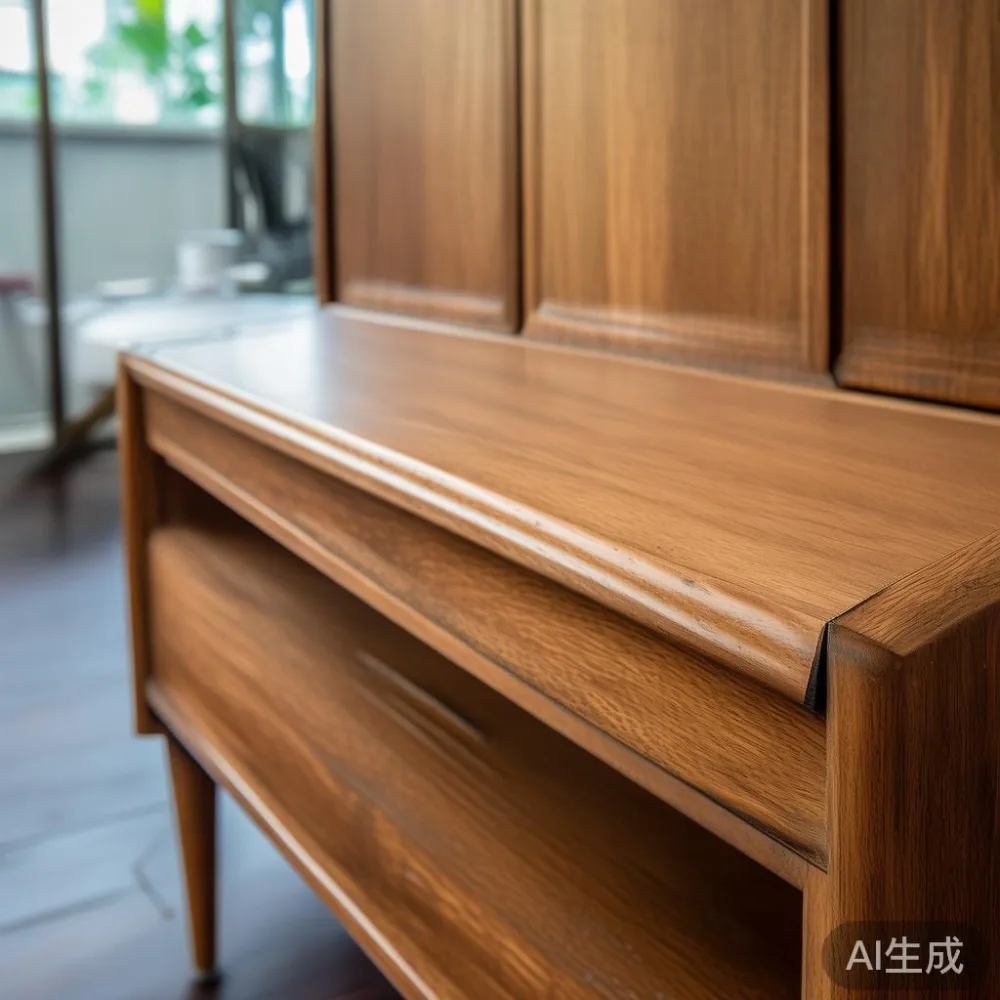
Why does lacquer behave differently in a tropical climate?
Lacquer, whether it is the conversion varnish used on most light luxury pieces or the pre-catalyzed nitrocellulose sprayed on mass-market bedroom sets, is a hard but breathable film. It is not a sealed plastic shell. Wood moves. In Singapore, a 1.8 m solid wood dining table can swell by 0.6 mm across its width between a February morning at 26°C and an August afternoon at 33°C, and the lacquer has to move with it. When the ambient relative humidity climbs above 75%, the wood beneath the lacquer absorbs water vapour, and the lacquer surface itself picks up a micro-layer of moisture. That is when you see the haze my Tampines client saw, and it is the opening chapter of almost every shipping damage report I have ever filed for a lacquered item.
The second factor is salt. Sea air carries chloride ions that settle on horizontal surfaces — dining tables, coffee tables, marble table tops on sideboards, the broad shoulders of a headboard on a king-size bed frame. Salt accelerates the breakdown of certain lacquer formulations, especially the softer acrylic-modified ones used on some post-modern light luxury collections. The third factor is ultraviolet. A typical HDB window in Punggol or Bedok lets in enough direct sun for 2 to 4 hours a day, and UV cooks the lignin in the wood under the lacquer, turning pale ash into honey-yellow within eighteen months if the piece is unprotected.
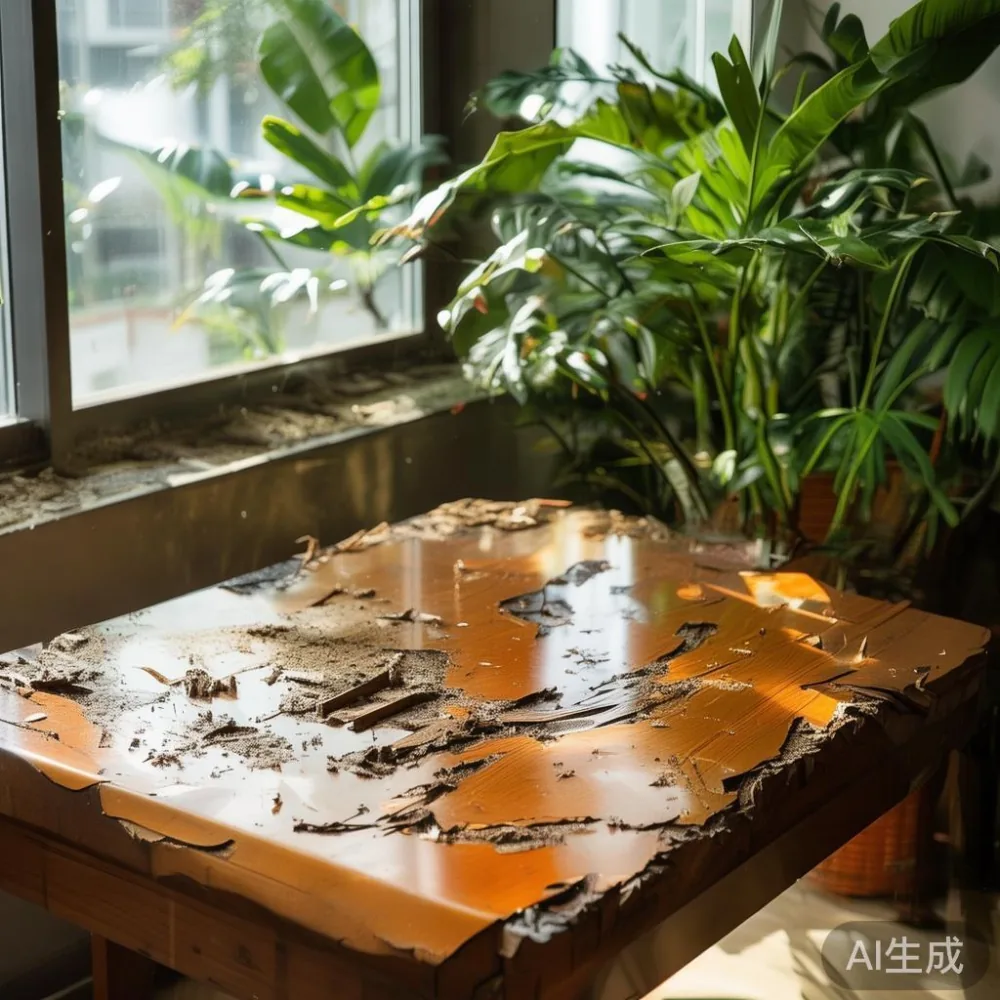
For owners, the practical takeaway is this: a lacquered dining table bought from a Chinese maker and shipped to Singapore has already endured a 4 to 6 week journey across the South China Sea. If the factory packed it at 60% RH and it lands here at 85% RH, the wood has already begun to acclimate in the container. By the time it reaches your corridor, the clock on shipping damage is already running. Your job is to slow that clock down.
How do I care for a coffee table in humid weather?
Wipe the surface with a dry, lint-free microfiber cloth every morning, run a dehumidifier in the room to keep relative humidity between 55% and 65%, place felt pads under every object that touches the lacquer, never use silicone-based polishes, and re-wax with a hard carnauba paste once every four months so the protective film stays ahead of the moisture attacking the wood beneath.
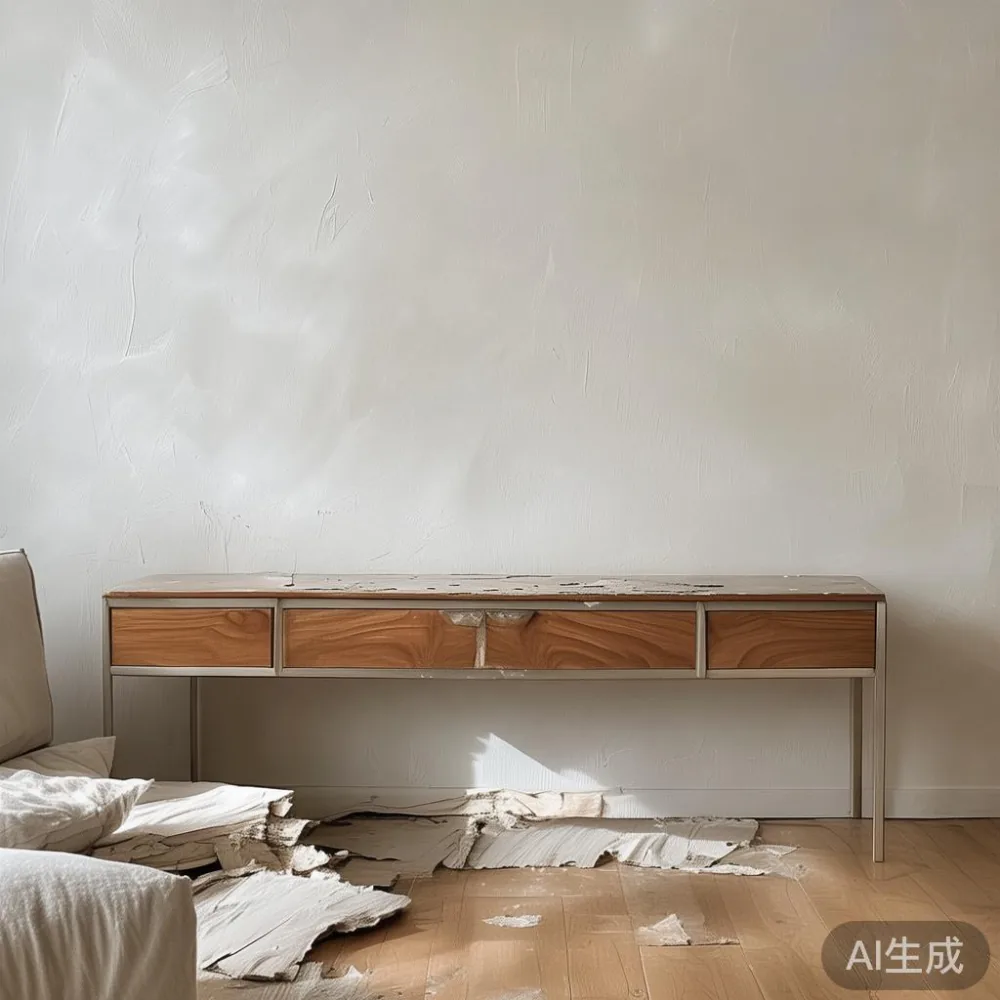
That sentence is the answer. Everything below it is the justification, the numbers, and the small habits that separate a coffee table that still looks new at year seven from one that starts peeling at year two. A 120 cm round lacquered coffee table sounds like a small thing, but it has roughly 1.13 m² of exposed horizontal surface, which is more area than the top of a typical single bed frame. That is a lot of film for the humidity to attack. In my own home, I keep a small thermo-hygrometer on the shelf below the table — a S$28 model from a Bedok Mall shop — and I check it before I decide whether to wipe with a dry cloth or with a barely damp one. If the reading is below 65%, dry cloth. Above 75%, I open the room's windows for twenty minutes first, let the air exchange, then dry-wipe. This habit alone has kept the lacquer on my own walnut coffee table intact for six years.
Avoid coasters made of cork or unfinished bamboo — they look natural, but they hold moisture against the lacquer and leave ghost rings that look like shipping damage but are actually slow chemical etching. Use felt or leather instead, and replace the felt every twelve months because the glue underneath breaks down in our climate.
What should I do in the first 30 days after delivery?
The first month is the window where shipping damage either appears or never does. Do not place the piece in direct sunlight during this period. Keep the room's windows closed between 11 am and 4 pm if your unit faces west. Allow air-conditioning to run for at least 6 hours a day for the first two weeks so the wood can shed the container's moisture in a controlled way. Wipe the lacquer with a clean, dry microfiber cloth every evening for the first fourteen days — no sprays, no oils, no traditional lemon-and-vinegar mixes that older relatives often suggest.
My colleague visited a Punggol Waterway Terrace condo last month where the owner had followed exactly the opposite routine. The lacquered nightstand — a post-modern light luxury design in oak — was delivered on a Friday, placed under the bedroom window, and left over the weekend with the curtains open. By Monday, the side facing the window had developed a visible warp of roughly 1.5 mm, which is enough to break the seal between the lacquer and the wood at the joint. The owner assumed it was shipping damage and wanted to return the unit. It was not shipping damage in the legal sense — the freight forwarder was not at fault — but it was moisture damage caused by acclimation failure, and it is the single most common reason for a 14-day return request in Singapore. Knowing the difference matters, because shipping damage is covered under MIDHILL's structural protection framework, while acclimation damage is the owner's responsibility to prevent.
If your unit has a service yard, leave the crated piece there — still sealed — for 48 hours before bringing it inside. The crate is designed to buffer the wood against sudden temperature swings of more than 5°C, and a Tuas afternoon hitting a Jurong air-conditioned lift lobby can be a 10°C swing in a single minute. Two days of outdoor equilibration reduces the risk of the lacquer cracking along the panel edges.
Which cleaning products actually work on lacquered wood?
Three categories, and only three. First, a clean dry microfiber cloth — 220 to 300 GSM weight, available from any Sheng Siong for under S$6. Second, a dilute solution of isopropyl alcohol and distilled water — 1 part 70% IPA to 4 parts distilled water — for sticky spots like candle wax or food residue. Third, a hard carnauba paste wax, applied with a soft pad, left to haze for eight minutes, then buffed. That is the entire toolkit. Anything else is a risk.
What does not work: silicone sprays, which leave a film that traps the next layer of moisture and causes the famous "fish eye" orange-peel effect; furniture oils, including tung and linseed, which penetrate the lacquer through micro-pores and soften it from within; ammonia-based glass cleaners, which yellow the lacquer within six months; vinegar, which etches the surface and removes the gloss layer. I have seen a S$2,400 lacquered marble table hybrid returned to a showroom in Clementi because the owner used a coconut-oil spray every weekend for a year. The surface looked dull, then patchy, then began to craze. Coconut oil does not belong on lacquer.
For a typical six-piece solid wood sofa + coffee table + dining table + wardrobe + nightstand + king bed frame package — the kind of set a young family in Tampines North might assemble over a six-month furnishing phase — budget roughly S$45 to S$70 a year on cleaning supplies. That buys two microfiber cloths per piece (rotate them weekly and wash monthly), one 500 ml bottle of IPA, and two tins of paste wax. The cost is trivial. The discipline is everything.
How can I prevent shipping damage the next time I order?
Choose a maker that packs in solid wooden crates rather than corrugated cardboard alone — at MIDHILL, for example, every lacquered dining table and bed frame ships in a plywood-and-foam hybrid crate that has been drop-tested to 1.2 m. Request "tropical packing" if you are ordering from overseas: this means silica-gel desiccant bags placed inside the crate at a ratio of 200 g per cubic metre of internal volume, and a moisture barrier film wrapped directly around each lacquered panel. Confirm the freight forwarder uses a reefer container or at minimum a ventilated container with humidity data loggers. Decline the delivery if the data logger shows the internal humidity exceeded 80% for more than 72 hours — that is the point where shipping damage becomes statistically probable.
Singapore's HDB corridors add a second risk that buyers often forget. The standard HDB corridor width is 1.2 m to 1.5 m, and most lift doors are 0.9 m wide. A crated king-size bed frame at 2.0 m x 1.8 m will not fit through either. Confirm with the seller that the headboard and footboard ship as two pieces rather than one, and that the side rails are detachable. This sounds obvious, but I have watched three separate deliveries in Bedok Reservoir in the past year where the crew had to partially dismantle the crate in the lift lobby, which is the exact moment that lacquered surfaces get scratched — the most visible form of shipping damage.
Ask the seller about the warranty before you pay. MIDHILL's 10-year structural warranty, lifetime refinishing service, and 14-day return window are written into the commercial invoice, not buried in the marketing. Lifetime refinishing is the clause that matters most in Singapore, because even with perfect care, a lacquered surface will need a professional buff-and-coat at year eight or nine. Knowing that service is included in the original price (free shipping over US$350, roughly S$470, applies to most full-room sets) changes the calculation of ownership cost.
What about long-term protection — what does year five look like?
By month sixty, a well-cared-for lacquered piece in a Singapore condo should still have at least 85% of its original gloss, no visible haze, no edge lifting, and no more than two or three micro-scratches on horizontal surfaces. If yours does not, something in the routine has slipped — almost always humidity control. The single most common long-term failure mode I see is at the joint between a marble table top and a lacquered wooden base, because the two materials expand at different rates. A 1.2 m marble slab expands roughly 0.08 mm per degree Celsius; a 1.2 m oak substrate expands roughly 0.18 mm per degree Celsius in the cross-grain direction. Over five years of thermal cycling, that differential shows up as hairline cracks in the lacquer where it meets the stone.
Year-five maintenance is simple: one full day of cleaning, waxing, and inspection. Move the piece 5 cm away from the wall so air can circulate behind it. Check all felt pads. Tighten any visible hardware with a hand screwdriver — never a drill, because the torque can crack the lacquer around the fitting. Photograph the surface from three angles under natural light and store the images in a dated folder. If a claim is ever needed, that documentation is the difference between a five-day resolution and a five-week argument.
Finally, accept that lacquered wood is a living finish. The piece you bought will not look the same at year ten as it did at month three, and that is not a defect — it is the honest record of a piece of solid wood living through Singapore's heat, monsoon rains, afternoon thunderstorms, and the occasional haze period when particulate matter settles on every horizontal surface in the home. Treat the lacquer as the protective skin it is, refresh it on a schedule rather than after a problem, and the dining table your children eat off at sixteen will still be the dining table their university friends take selfies at when they visit.