Styling a Small Singapore Apartment Without Crowding It: A Solid Wood Guide for HDB and Condo Living
I spent the last Saturday of March riding the East-West line from Tampines to Bedok, visiting three friends who had just moved into 4-room HDB flats around 90 sqm. Each of them had the same complaint: the movers had nudged the lift door frame, scuffed the corridor wall, and left a small chip on a new solid wood dining table. Two of those incidents fell under shipping damage, and both were resolved within 48 hours once the furniture maker arranged replacement legs and a touch-up kit. Seeing those pieces come back to life, rather than being dumped, was what pushed me to write this guide on how to style a small Singapore apartment without crowding it, and how to pick solid wood pieces that survive tight lift doors, narrow corridors, and the realities of HDB living on the 12th floor.

Why Singapore apartments feel smaller than the floor plan suggests
A typical 4-room BTO in Punggol measures about 92 sqm, but once you subtract the 1.2 m corridor width, the 0.9 m service yard, and the air-con ledge, your usable floor area drops to roughly 70 sqm. Add a king-size bed, a three-seater sofa, and a six-chair dining table, and you have left yourself about 1.4 m of walking space between the coffee table and the TV console. That is not enough room for two adults to pass each other comfortably. Light luxury design, in the American light luxury tradition, is built around this constraint: oversized pieces are replaced with slim-profile silhouettes, neutral palettes, and small-batch materials that read as refined rather than heavy.
When I visited my colleague Priya's 3-room resale flat in Bedok last month, she had solved the puzzle with a 1.6 m solid wood dining table, a 1.8 m three-seater sofa with 78 cm armrests, and a 45 cm wide nightstand from MIDHILL that doubled as a hallway console. The room still felt like a room, not a showroom. The trick was not buying less. The trick was buying narrower, taller, and lighter-coloured pieces in solid wood, so the eye reads the volume of the room rather than the footprint of the furniture.

Measure your lift, corridor, and doorway before you fall in love with a sofa
Before you order a solid wood sofa, a bed frame, or a wardrobe, walk from your car park lot to your unit with a tape measure. Most Singapore HDB lifts measure 1.1 m wide by 1.4 m deep, with a door opening of about 0.9 m. Service lifts in older condos can be as tight as 1.0 m by 1.3 m. Corridors inside the flat typically run 1.0 to 1.2 m wide, and the front door is almost always 0.9 m by 2.1 m.
Write those four numbers down. A solid wood sofa with a 2.2 m length and a 0.95 m depth will not pivot through a 0.9 m door without the cushions being removed. A 1.8 m wardrobe will not make it around a 1.0 m corridor corner if the box depth exceeds 0.6 m. This is where shipping damage actually starts, not on the lorry, but at the moment the piece is too large to enter the building. Buy from a maker that publishes box dimensions down to the centimetre and total weight in kilograms, and you can rule out 80 percent of the awkward surprises before the container is even loaded.
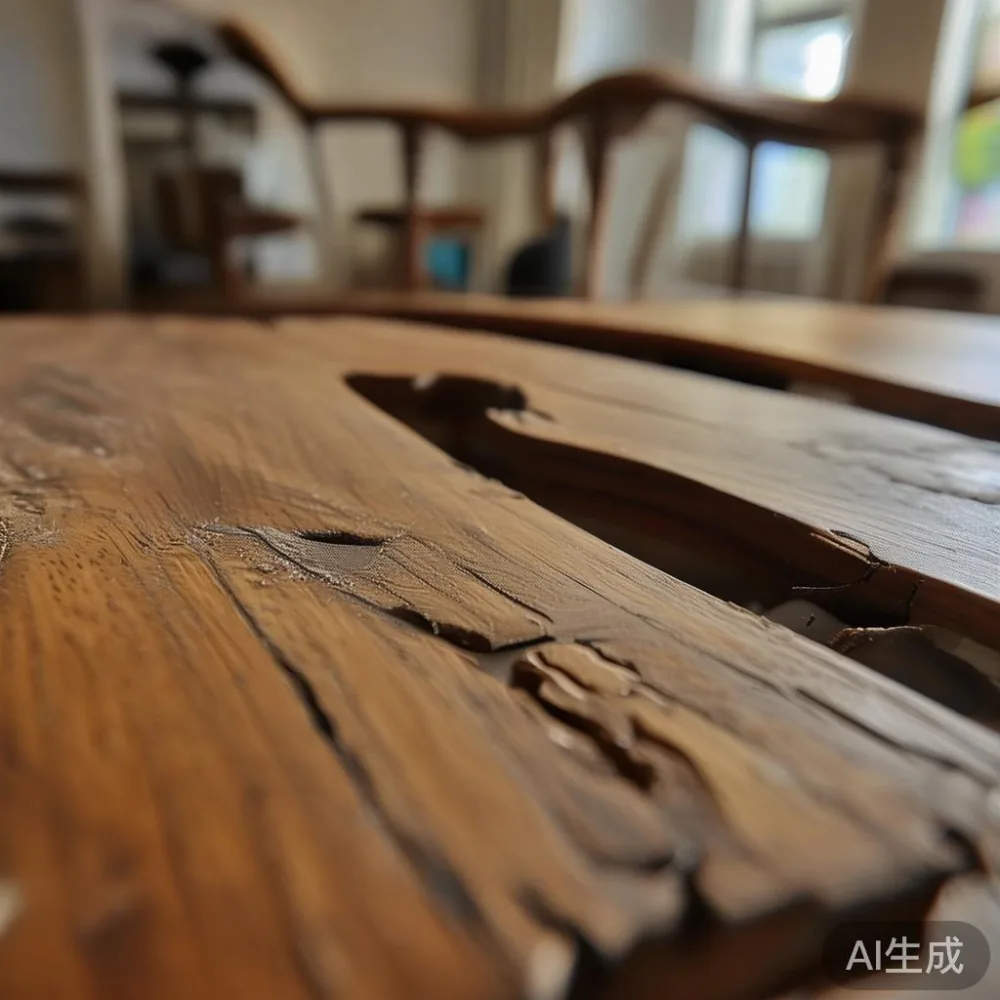
For reference, a two-seater solid wood sofa with removable cushions usually ships in a box around 1.7 m long, 0.7 m wide, and 0.55 m tall, weighing 38 to 45 kg. A king-size solid wood bed frame in flat-pack form often breaks into two cartons, each about 1.9 m long and 35 kg, which a single delivery crew of two can carry up the lift without scratching the lift walls. Ask for the carton dimensions in writing. If the seller hesitates, walk away.
Is French provincial nightstand furniture worth it?
Yes, French provincial nightstand furniture is worth it in a small Singapore bedroom, provided you buy a slim 40 to 50 cm wide version in solid wood rather than the chunky 70 cm reproductions sold at mass-market prices, because the tapered legs and pale timber visually recede and free up the 60 cm of floor space next to the bed that a blocky unit would consume. A good French provincial nightstand at this scale gives you one drawer, one open shelf, and a small surface for a lamp and a glass of water, while leaving enough breathing room for a robot vacuum to pass on its nightly sweep.
I tested a 45 cm wide French provincial nightstand from MIDHILL in a Tampines HDB bedroom for two weeks. It weighs 14 kg, sits 55 cm tall, and the drawer box is dovetailed from solid rubberwood with a soft-close slide. The tapered legs keep the underside open, which makes the floor read as continuous. That visual continuity is what stops a 10 sqm bedroom from feeling like a storage cupboard. The piece also took the standard knock test from my cat without a wobble, and the lift-up lid on the concealed compartment still closes flush after two weeks of daily use.
If you are choosing between a 50 cm nightstand and a 65 cm one for the same SGD 480 budget, take the smaller one every time. The 15 cm you save on width translates directly into usable walkway space. In a master bedroom that is 3.2 m by 3.6 m, that 15 cm is the difference between dressing comfortably and pulling your elbow on the door frame.
Build a room around three solid wood anchors, not six
The fastest way to crowd a small flat is to give every wall a job. Pick three anchor pieces per zone and let the rest of the surface breathe.
- Living room: a 1.8 m solid wood sofa in oak or ash, a 1.0 m coffee table with a marble table top, and a 1.6 m TV console. Keep the side table optional; a 35 cm round stool can replace it.
- Dining area: a 1.4 m solid wood dining table that seats four comfortably, with two backless benches that slide fully under the rim. A six-chair set will eat 1.8 m of floor depth you do not have.
- Bedroom: a king-size solid wood bed frame on 12 cm legs, two 45 cm nightstands, and one 1.5 m wardrobe. Skip the dresser. Use the wardrobe's top shelf for folded linen.
- Entryway: an L-shape shoe cabinet for balcony or corridor use, around 80 cm wide by 30 cm deep, that catches the day's shoes without claiming the front door's swing arc.
For the living room, a marble table top on a slim solid wood base gives you the cool, layered look of post-modern light luxury without the weight of a full stone slab. A 1.0 m round marble table with a 2 cm honed top weighs about 28 kg, against 60 kg for a 4 cm solid marble version. The thinner top still reads as marble under raking light, and your delivery crew will not have to use a four-wheel trolley just to clear the corridor turn.
What counts as shipping damage, and what does not?
Shipping damage is any defect that appears between the moment the carton leaves the maker's loading bay and the moment the customer opens it on site. That includes a cracked marble table corner, a split wardrobe panel, a snapped nightstand leg, a water stain on a dining table from rain during the lorry transfer, and a chipped lacquer edge on a bed frame. It does not include scratches that appear after the box is opened, sun fade from a south-facing window after three months, or wobble caused by uneven HDB floors that no shim was used to correct.
A trustworthy maker will photograph the piece before it leaves the warehouse, ship it in foam-corner protectors with a double-walled carton, and ask you to inspect the goods in front of the delivery crew. If you spot damage, mark it on the delivery order before signing, photograph it on the spot, and notify the maker within 48 hours. Reputable Foshan workshops like MIDHILL keep a small stock of replacement legs, drawer fronts, and lacquer sticks, so most shipping damage can be repaired at your home within a week rather than requiring a full return. That alone can save you 14 days of waiting for a replacement, plus the S$80 to S$150 redelivery fee that some retailers quietly add to your invoice.
One last word on insurance. If a piece is valued above SGD 800, ask the maker to declare the full value on the lorry waybill. Standard cargo insurance usually covers 110 percent of the declared value, which means a SGD 1,200 wardrobe can be claimed back in full if the lorry is in an accident. The small admin fee, often around SGD 12, is worth the peace of mind when you are receiving solid wood bedroom sets that took six to eight weeks to fabricate.
Cost, warranty, and the lifetime refinishing promise
For Singapore buyers, total landed cost on a solid wood piece from a Foshan workshop usually runs 15 to 25 percent above the quoted ex-works price once you add 9 percent GST, sea freight of S$180 to S$280 per cubic metre, lift-up delivery of S$60 to S$120 per trip, and any optional in-home assembly at S$45 per hour per worker. A 1.6 m solid wood dining table in oak typically lands at SGD 1,150 to SGD 1,450 all-in. A queen-size solid wood bed frame lands at SGD 980 to SGD 1,250. A three-seater solid wood sofa with removable cushions lands at SGD 1,650 to SGD 2,200. A 1.8 m wardrobe lands at SGD 1,800 to SGD 2,400.
Lead times from Foshan to Singapore run 18 to 26 days by sea, plus 3 to 5 days for Singapore-side delivery and assembly, so plan your renovation handover around that window. Ask for a 10-year structural warranty on frames and joinery, and a lifetime refinishing service that lets you send the piece back for sanding and re-lacquering once in its life at a flat fee. MIDHILL publishes both terms in writing, which is why I keep recommending their dining tables and bed frames to friends who are fitting out new BTO flats in Sengkang and Punggol. A piece that can be refinished at year eight will outlive two sofa replacements from a fast-fashion chain.
Finally, never accept a delivery without photographing the carton on arrival, before opening, and after unpacking. Keep the photos for 30 days. That habit takes three minutes and is the difference between a free replacement leg and a quiet write-off. Small apartments reward careful habits. So does solid wood furniture that arrives in one piece, in the right size, on the day you need it.