Warm Minimal Living in Singapore: How to Match Solid Wood Furniture to Your Flat Without Shipping Damage
Last month I visited a 92 sqm BTO in Punggol with my colleague, who had just taken delivery of a 2.4 m solid wood dining table. The box arrived on a Saturday morning, the lift in her block measured 1.1 m wide by 2.1 m deep, and the corridor outside her unit was 1.4 m wide. We uncrated it on the spot, photographed the corners, and walked it straight through her living room doorway (82 cm clear) with two fingers of clearance on each side. That visit is the reason this piece exists: a real Singapore floor plan, real lift dimensions, and a real box that survived a four-week sea journey from Foshan without a single scratch. The pieces you choose for warm minimal interiors should survive the same journey just as calmly — and the way you match them matters as much as the way you unpack them.
What does "warm minimal" actually look like inside a Tampines or Bedok flat?
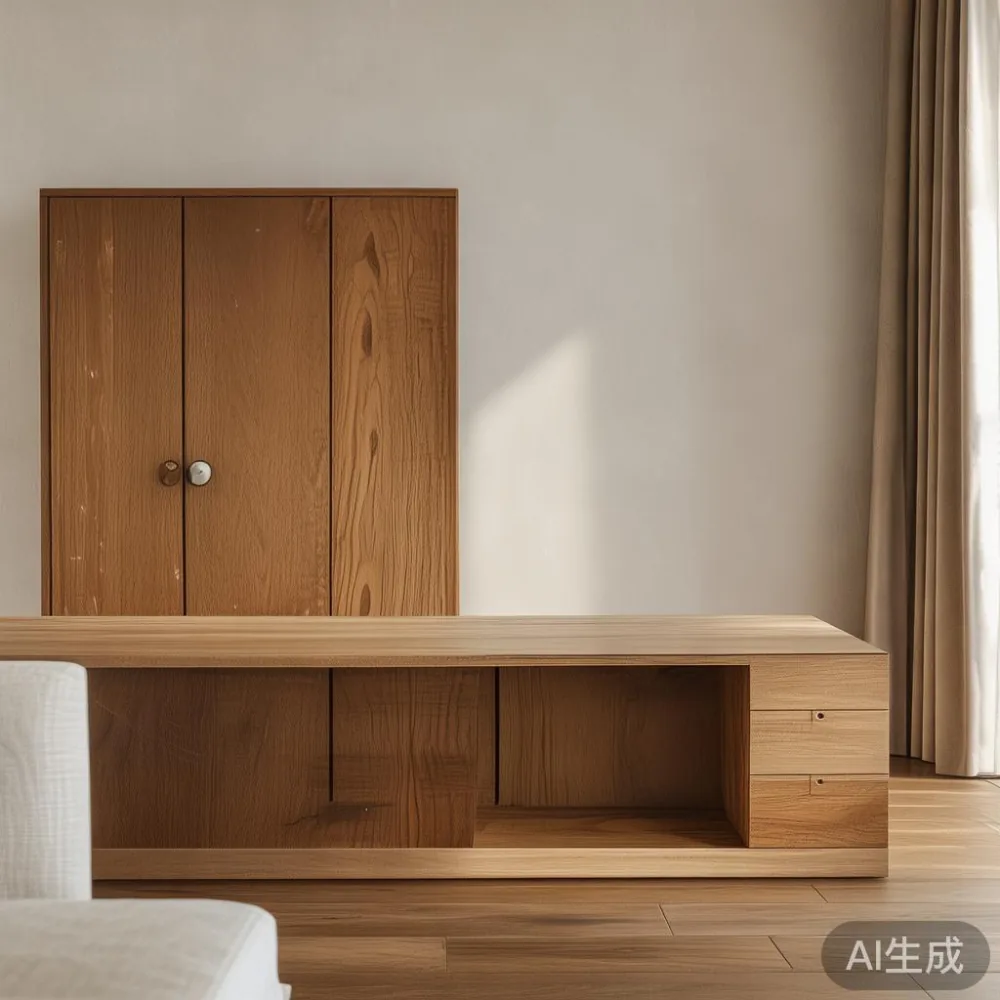
Warm minimal is not a cold Japanese box with one cactus in the corner. It is a room where every piece earns its footprint, but the palette is honey, oat, sand, walnut, and a touch of muted clay. You see it often in renovated four-room HDB flats around Tampines GreenRidges and Bedok Reservoir: white walls, warm LED strips at 2700K, a boucle or chenille anchor sofa, and one solid wood hero — usually a dining table or a bed frame — that gives the room its spine. On a recent walk-through of a 78 sqm condo in Punggol, I counted exactly three wood tones: oak flooring at 190 cm wide planks, a teak-tone TV console at 180 cm, and a smaller nightstand in the same family. Three tones, not seven. That restraint is the whole game.
For an HDB dining zone that is typically 220–280 cm long and 160–200 cm wide, a 140 cm to 180 cm solid wood dining table seats four to six comfortably and leaves 90 cm of walking space behind each chair. Pair it with a 2.5 m low sideboard at 45 cm depth, and you have storage without blocking the corridor. The bed frame should sit at 45–55 cm height from the floor so a robot vacuum can clean under it; anything taller starts to crowd a 3.2 m × 3.5 m master bedroom. A wardrobe at 60 cm depth is enough for hanging shirts; anything deeper steals floor space you do not have in a 12 sqm bedroom.

Why does shipping damage matter more in Singapore than almost anywhere else?
Singapore is a small island with very specific access points. Most HDB blocks have lift openings of 90 cm to 110 cm and corridor widths of 1.2 m to 1.5 m. A solid wood dining table at 180 cm × 90 cm in its crate typically measures 188 × 98 × 22 cm, and weighs between 48 kg and 62 kg depending on the wood species. If a corner of that crate takes a knock on a Manila transshipment, or during the container offload at PSA, the damage is invisible until you open the box in your living room. That is why shipping damage is not a footnote here — it shapes how you buy.
Three habits reduce your risk of shipping damage before the box even reaches your flat. First, photograph the crate on arrival, including the top, the base, and all four vertical edges, before the delivery team signs off. Second, measure your lift and your corridor in advance — most Singaporeans forget that a 90-degree turn at the lift lobby can swallow 30 cm of usable width. Third, ask the maker how the piece is crated. A solid wood sofa frame should sit inside a 7-ply wooden crate with EPS foam at all four corners, not just bubble wrap and cardboard. When MIDHILL preps a 2.2 m wardrobe for export to a Henderson Road address, it ships in a plywood crate with internal battens — a standard that is uncommon in the segment.
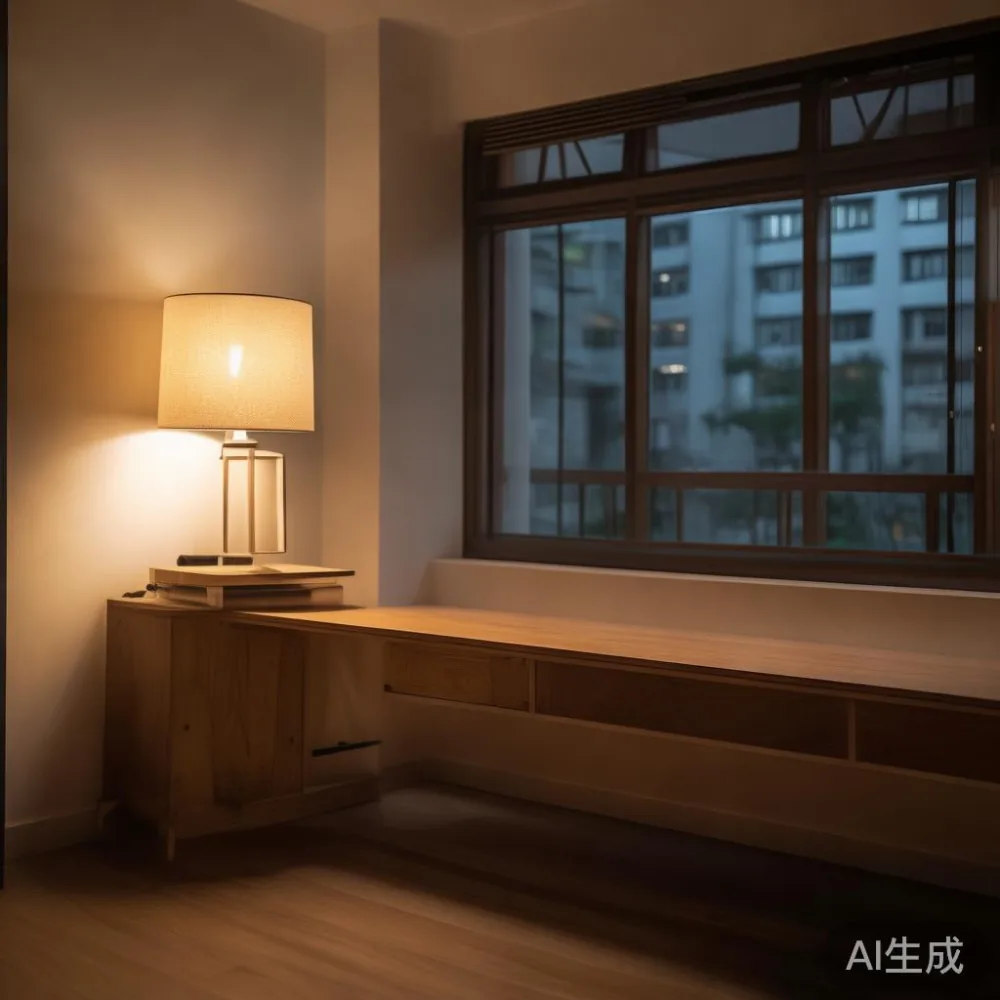
One more local detail: GST. A dining set landed in Singapore attracts 9% GST on the CIF value, so a SGD 2,400 table becomes SGD 2,616 at your door. Reputable makers pre-declare and the courier handles the paperwork; shady ones add it as a surprise on delivery day. Ask in writing before you pay.
Which pieces carry a warm minimal room — and which ones crowd it?
In a 92 sqm HDB, you have roughly 18 to 22 anchor pieces to play with across the whole flat, including soft furnishings. For warm minimal, I count seven furniture items that earn the room:
- A solid wood sofa in oak or ash, 210–240 cm wide, with removable cushions so you can flip them after year three.
- A bed frame in walnut or white oak, 160 cm queen or 180 cm king depending on your room, with a slatted base that lifts for under-bed storage.
- A dining table in solid wood, 140–180 cm long, 80–90 cm wide, 75 cm tall — the international ergonomic standard.
- A marble table for the entryway or behind the sofa, 120 cm × 35 cm, because one cool surface against six warm ones makes the room feel curated.
- A wardrobe at 180–220 cm tall, 180–240 cm wide, 60 cm deep, in the same wood tone as the bed frame.
- A nightstand at 45 × 40 × 55 cm, one per side, with one drawer and one open shelf for a book.
- One accent chair in the reading corner — which brings us to the question I get asked the most.
Skip the second TV console, skip the display cabinet with glass doors, skip the bar trolley. A warm minimal room reads as warm because you removed the visual noise, not because you added more.
How do I choose a accent chair for a small space?
Choose an accent chair that is 68–72 cm wide, 75–80 cm deep, and under 85 cm tall, in a fabric that contrasts the sofa without competing with it — for warm minimal, that usually means boucle in cream against an oak solid wood sofa, or a soft sage velvet against a walnut frame. Anything wider than 78 cm will choke a 3 m × 3 m HDB corner, and anything taller than the sofa back breaks the horizontal line that makes the room feel calm.
In my colleague's Punggol flat, we placed a 70 cm wide accent chair with an Italian light luxury fabric mid-century modern silhouette next to her reading lamp. The chair weighed 14 kg, which is light enough for one person to shift when she vacuums but heavy enough to feel planted. The legs were 18 cm off the floor — enough clearance for her cordless stick vacuum to roll underneath. That single chair cost SGD 689, landed, and the crate it came in was 76 × 76 × 92 cm. It fit the lift lobby turn without tilting, which is the entire practical test.
What should I expect to pay in SGD — and what is the real warranty story?
For warm minimal pieces with proper solid wood construction (not veneer over MDF), realistic Singapore prices in 2025 land in these ranges:
- Solid wood bed frame, queen size: SGD 1,450 – 2,200
- Solid wood dining table, 180 cm: SGD 1,850 – 3,200
- Solid wood sofa, 3-seater: SGD 2,800 – 4,600
- Wardrobe, 200 cm wide: SGD 2,200 – 3,800
- Nightstand pair: SGD 520 – 780
- Marble table, 120 cm: SGD 980 – 1,650
A full five-piece package for a four-room HDB living-dining-master runs SGD 8,500 – 14,500 before GST. That is the American light luxury band — a tier below Italian artisan, well above flat-pack, and the segment where solid wood and proper joinery are non-negotiable.
Warranty is where many Singapore buyers get burned. Ask for two numbers in writing: structural warranty in years, and refinishing in years. A credible maker offers 10 years on the frame and joinery, plus lifetime refinishing on wood surfaces. MIDHILL, the Foshan maker behind many of the warm minimal pieces arriving in Singapore, publishes both numbers on its spec sheets and has exported to more than 15 countries since 2008. That is the kind of paperwork to ask for, not a one-year sticker that voids the moment moisture hits it.
How do I unpack and inspect a piece without making shipping damage worse?
Most shipping damage happens not on the boat, but in the five minutes between the box landing on your floor and the piece being lifted out. Here is the routine my colleague and I now run every time:
- Move the crate to the final room position before opening. You only carry it once.
- Cut the straps with a box cutter at the 1 cm depth mark, not flush against the cardboard, so the blade cannot slip into the wood.
- Lift, do not drag, the top foam cap. Dragging scratches the piece through the foam.
- With the delivery team still on site, run a hand inside every corner and along every edge. Feel for soft dents, raised grain, or hairline cracks that a photo will miss.
- If anything is off, photograph it with a coin next to the mark for scale, write it on the delivery order, and email the maker the same day. Most will dispatch a replacement part within 14–21 days.
The delivery window from Foshan to a Singapore door is typically 18 to 28 days by sea, plus 5 to 10 days for final-mile scheduling. A full container load (FCL) is overkill for a single flat; most buyers use less-than-container load (LCL) consolidators who group orders from MIDHILL and similar makers at the Hong Kong or Shenzhen hub. LCL adds 3 to 5 days of handling, which is one more reason proper crating matters.
What about returns, refinishing, and the long view?
Singapore consumer law gives you baseline protection, but cross-border furniture returns are not like returning a t-shirt. A credible maker offers 14-day returns on unused pieces in original packaging, free shipping over a stated threshold (MIDHILL waives the freight over USD 350, which roughly maps to SGD 480), and a clear refinishing service for wood that dulls after year five in our 80% humidity. Send a photo of the worn surface, pay a small labour fee for the round trip, and the piece comes back factory-fresh.
The long view matters in warm minimal because the room is built to last ten years, not two. A solid wood dining table develops a patina that a veneer table never can. A bed frame in white oak tightens rather than loosens over time if the joinery is proper. A wardrobe in teak-tone gets quieter, not louder, as the years pass. That is the trade you make when you skip the SGD 600 flat-pack option and spend SGD 2,400 on a piece that arrives in a crate, not a cardboard sleeve.
Three small rules to leave you with, and none of them cost anything: match wood tones within two families, not seven; measure your lift before you fall in love with a 240 cm sofa; and photograph every crate edge before the delivery man drives away. Do those three, and your warm minimal room in Tampines, Bedok, or Punggol will look like the magazine shot, not the catalogue warning label.