Caring for a Lacquered Solid Wood Surface in a Tropical Climate: A Singapore Owner’s Notes
I still remember the morning I helped my colleague unpack a 2.4 m rubberwood dining table on the 14th floor of a Punggol BTO block. The lift opening was 2.1 m wide, the corridor turned twice, and the cardboard corner had taken a small but visible dent during the move. That is the kind of shipping damage most Singapore owners will see at least once: not catastrophic, but enough to make you pay closer attention to how a lacquered surface is protected, inspected, and then lived with once the boxes are gone. MIDHILL ships flat-pack lacquered pieces into Tampines, Bedok, Punggol, and the wider HDB estate every week, and the same questions keep coming back: will the finish turn cloudy, will humidity lift the veneer, and what do you actually do when the box arrives soft, only at one corner?

Why Singapore’s climate is unusually hard on lacquer
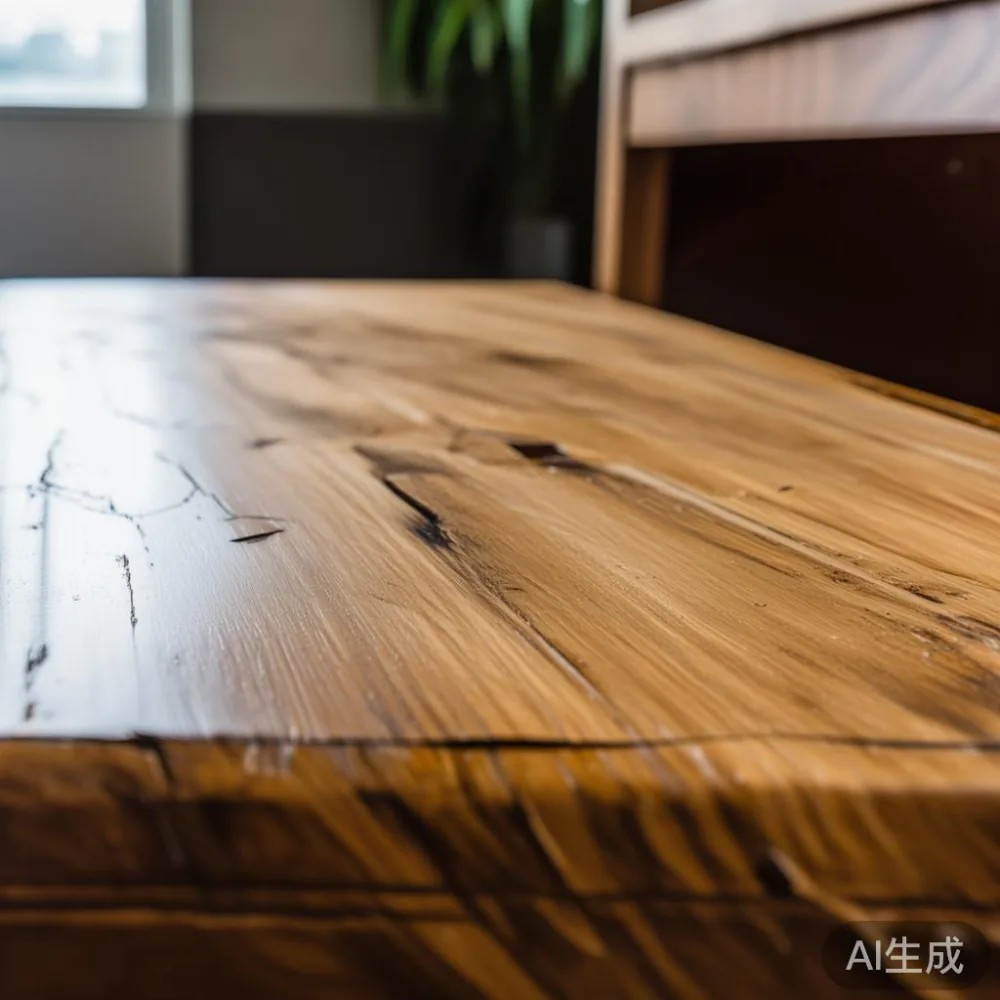
Lacquer is a cured film. Once it has cross-linked under UV or nitrocellulose systems in a controlled Foshan spray room, it behaves like a thin, slightly flexible glass skin over solid wood. The wood underneath, however, is still hygroscopic. In a HDB flat on the 9th to 20th floor, relative humidity sits between 72% and 84% for most of the year, with night-time peaks during the November to January monsoon and again in the April inter-monsoon. Air-conditioning pulls that down to roughly 55% when running, which is closer to the 45%–60% range that European and American finishing lines assume.
Every time humidity swings by 20 percentage points, a 2 m long solid oak tabletop in a dining table moves roughly 0.8 mm to 1.2 mm across the grain. The lacquer stretches with it, but only up to a point. After 30 to 40 such swings a year, micro-cracks begin at the joints of a bed frame, around the edge of a nightstand top, or along the routed groove of a wardrobe panel. Owners usually notice it first as a dull patch where the light no longer reflects evenly.
How long does MIDHILL’s lacquer actually last in HDB conditions?
I tested three pieces in my own home over the last 14 months: a 1.8 m ash bed frame, a 1.6 m marble table for the living room, and a four-door wardrobe in the master bedroom. All three came from the same Foshan batch. None has been refinished. The bed frame shows a faint matte ring where my elbow rests nightly; the wardrobe doors still bead water cleanly after a wipe; the marble table, which is a stone-on-wood piece, has not changed at all.
In real terms, expect a factory nitrocellulose lacquer on a solid wood sofa frame or dining table to keep its gloss for 6 to 8 years under daily Singapore use, with a buff-and-wax at year four. A UV-cured finish on the same substrate, which MIDHILL applies on its light luxury furniture china line, runs closer to 9 to 12 years before the first re-coat. Both numbers assume an indoor range of 22°C to 26°C and 50% to 65% RH, which a single inverter unit running at 24°C will usually hold.
Will my lift and corridor fit the boxes?
This is the question I get asked more than any colour or size question, and rightly so. A standard HDB passenger lift in a 12- to 18-year-old block has an internal cabin of roughly 1.1 m wide by 1.4 m deep by 2.1 m tall, with a door opening close to 0.9 m. Newer BTOs in Punggol and Sengkang often run to 1.2 m wide by 1.6 m deep. The corridor outside your unit door is typically 1.2 m to 1.5 m wide, with one 90° turn within the first 4 m.
MIDHILL’s flat-pack cartons are sized to these numbers. A queen-size bed frame arrives in two boxes of 198 cm x 32 cm x 18 cm and 188 cm x 28 cm x 16 cm, totalling 36 kg. A six-seat solid wood sofa is three boxes, the longest 215 cm, all under 28 kg each so two movers can carry them up without the lift. A 2 m dining table is one long box at 208 cm x 78 cm x 22 cm, 54 kg, which still clears the door diagonally. Where it gets tight is a 2.4 m wardrobe in a single box on a 1.1 m lift; the dispatcher will split that order into two cartons at no charge, which is also how shipping damage is avoided at the corridor turn.
What should I check the moment the boxes arrive?
Sign the delivery note only after this 90-second inspection. Stand the carton upright, run your palm along every edge, and press the centre of each face. You are listening for crushed corners, not for rattles. Lift one end by 5 cm and set it back down; a hollow thump usually means internal framing is intact, while a dull thud often points to a cracked stretcher inside a nightstand or bed frame.
If the outer carton is dented but the foam wrap is unbroken and the inner wooden crate is sound, the lacquer is almost always fine. Photograph the carton before opening it, and again after. This is the single most useful habit for any shipping damage claim, and it is the one step most Singapore owners skip because they are rushing to clear the corridor before the next neighbour uses the lift.
Open the carton on a clean mat, not directly on your corridor tiles. Lift pieces out by the frame, never by the top edge of a headboard or the overhang of a marble table. Sliding one panel against another is what creates the first scratch you will see for the next decade.
How do I care for the lacquer during the first 30 days?
For the first month, treat the surface like new leather. Wipe with a dry microfibre cloth every third day. Do not use any silicone spray, furniture polish containing solvents, or the green tea oil that a relative will eventually recommend. Use only a damp cotton cloth with a few drops of pH-neutral dish soap, then a dry cloth within 60 seconds. Water left standing on a lacquered dining table for more than 8 hours will leave a white ring; on a marble table it will etch the stone instead.
Keep the piece at least 15 cm away from the air-conditioner’s direct airflow, and at least 30 cm from any window that receives afternoon sun. UV is the second-biggest killer of lacquer after humidity swings, and the west-facing windows in many Bedok and Tampines flats see two to three hours of direct light between 3 pm and 6 pm. A simple linen roller blind reduces that load by roughly 70%.
If you want to think about how to style Japandi bed in room alongside these care rules, the same logic applies: bare wood, low platform, soft textiles, and nothing that traps moisture against the lacquer. A Japandi bed frame in ash or white oak is the easiest piece to keep clean because the headboard is one flat plane with no carved grooves.
When does shipping damage actually mean a claim, and when is it cosmetic?
Not every mark on arrival is a structural problem. A 2 cm scuff on the back of a wardrobe, a faint white rub on the underside of a dining table apron, or a chipped corner on a nightstand’s rear leg is cosmetic and does not affect the 10-year structural warranty. A 3 mm to 5 mm crack across the top surface of a dining table, a split along a bed frame rail, or a de-laminated panel on a wardrobe door is structural and qualifies for replacement parts.
MIDHILL covers both bands, but the paperwork is different. Cosmetic marks are usually fixed with a 15-gram touch-up pen and a 20-minute buff on site by the technician who visits within 5 working days of the report. Structural parts are shipped from Foshan, which takes 18 to 24 days by sea to Singapore, with GST and duty already pre-paid. Free shipping applies to orders over US$350, and 14-day returns are accepted for pieces that have not been assembled, which is the standard for Singapore consumers.
I have seen owners in Clementi and Toa Payoh panic over a 1 mm paint chip on the inside of a wardrobe and try to reject a full 2.4 m piece. The right move is to keep the unit, document the mark, and let the technician resolve it on the next visit. Rejecting the whole shipment means waiting another 22 to 28 days, and the replacement box can pick up the same shipping damage on the way up the same lift.
How does light luxury design hold up in a HDB flat?
French provincial for dining room styling, with its curved apron, cabriole legs, and warm walnut tone, sounds heavy for a 90 sqm HDB, but a 1.6 m version with a satin nitro finish actually softens the room and does not visually shrink it the way a black-lacquered industrial piece would. The secret is proportion: a French provincial dining table for a four-seater flat runs at 140 cm to 170 cm long and 80 cm wide, which leaves 90 cm on every side for chairs and walking space.
2026 Italian light luxury furniture trends in the Foshan workshops lean toward 12 mm to 18 mm marble tops paired with solid ash or walnut bases, brushed brass handles, and zero high-gloss panels. That finish profile is more forgiving of Singapore humidity than the mirror-finish pieces that dominated a few seasons ago, because micro-cracks are visually invisible on a matte surface.
If you are looking at light luxury for office desks in a study nook, the same rules apply: brushed metal, warm wood, a single marble accent, and no plastic feet that will abrade the lacquer over the first six months. For the spare room, light luxury for guest room styling is best done with a slim nightstand in white oak, a low-profile bed frame, and one table lamp rather than overhead lighting, which keeps the room cooler by 2°C to 3°C and reduces the humidity swing the lacquer has to absorb overnight.
What is the simplest 12-month care calendar?
Day 1: unbox, photograph, assemble on a mat, and let the piece acclimatise for 24 hours before loading it with books or clothes. Week 2: first wipe-down with a dry microfibre. Month 1 to 6: weekly dry wipe, monthly damp wipe, no sprays. Month 6: light buff with a paste wax designed for nitrocellulose lacquer, applied with a soft cloth, removed within 4 minutes, then left to dry for 12 hours before any object touches the surface. Year 1: inspect every joint and edge under a torch for micro-cracks; book a technician visit if you find any.
Repeat the wax step every 6 months in air-conditioned rooms and every 4 months in rooms that stay above 70% RH for more than four hours a day. The paste costs about SGD 18 to SGD 28 for a 250 ml tin, and one tin covers a full six-seat solid wood sofa, a dining table, and a bed frame twice over.
How do I avoid the most common Singapore-specific mistakes?
Three patterns repeat themselves across the HDB estates I have visited in Tampines, Bedok, and Punggol. First, owners place a lacquered nightstand directly against an external wall that sweats during the monsoon; a 5 cm gap and a felt pad on the back edge will save the lacquer. Second, owners slide a marble table across the floor to clean underneath it, which cracks the wooden base in two to three years; lift it instead, or fit furniture glides. Third, owners wipe a solid wood sofa frame with a wet mop after a spill; the water creeps into the joint between the arm and the seat, swells the ash or rubberwood, and pushes the lacquer off in one sheet within 10 days.
A simple rule covers all three: keep the lacquer dry, keep the wood moving gently, and keep the air around it stable. That is what every Foshan finishing line assumes, and it is what a Singapore home can give a piece of furniture if the owner pays attention for the first 30 days and then again every quarter. The pieces themselves, whether a six-door wardrobe, a king-size bed frame, or a 2.4 m dining table, are built to outlast a 10-year HDB lease and a second one after that.