Blending Solid Wood Furniture with Warm Minimalist Singapore Interiors
Last month I visited a 4-room HDB flat in Punggol where the owner had spent S$6,400 on a white ash dining table from an online seller. The top arrived with a 12 cm split along the end grain. The courier had clearly tipped the crate sideways in the lorry, and the seller's warranty excluded transit. After two months of back-and-forth, the owner bought a replacement from MIDHILL — this time with a proper crated delivery and a documented shipping damage policy. The contrast between the two purchases is what I want to talk about, because choosing furniture for a warm minimal interior is not only about colour and proportion. It is also about how the piece survives the lift at Block 642A, the corridor outside your door, and the six flights of stairs that some older walk-ups still demand.
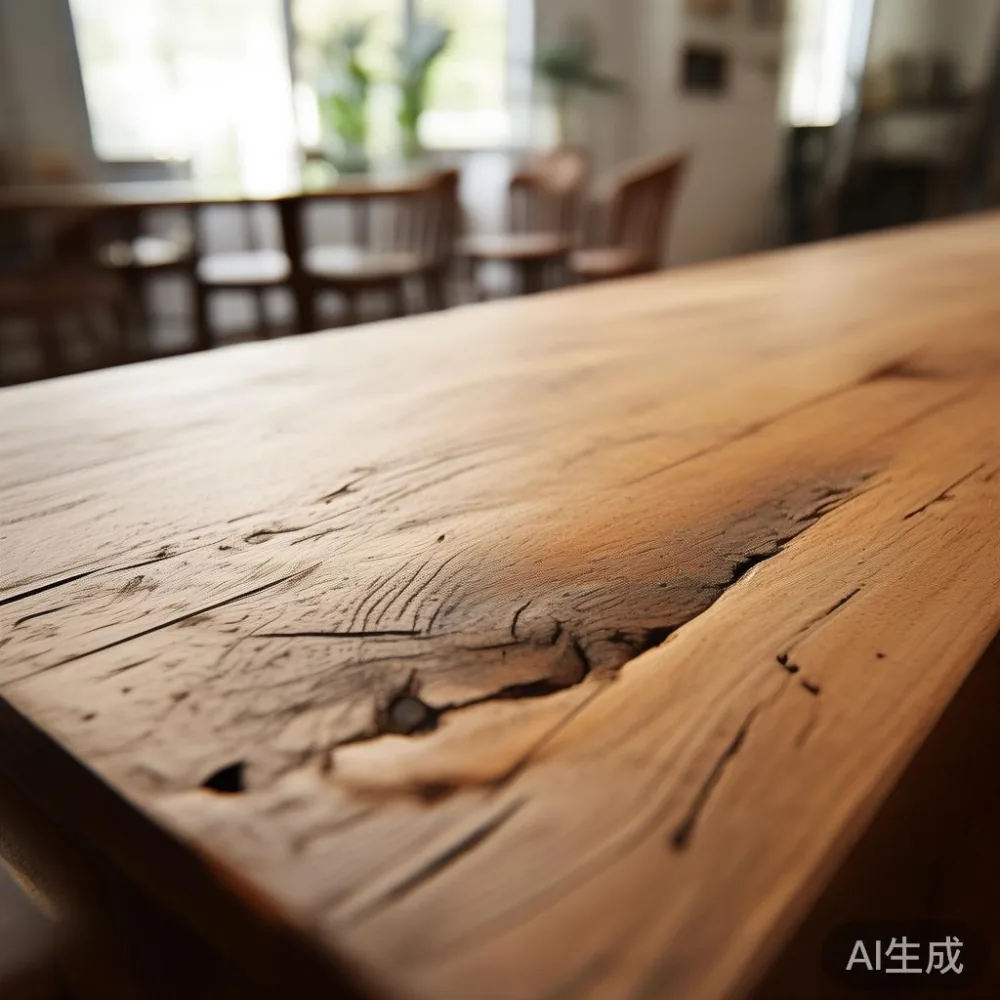
What does "warm minimal" actually mean in a 90 sqm HDB?
Warm minimal is the meeting point of Japanese restraint and Mediterranean warmth. It is not the cold, gallery-style minimalism you see in some BTO showflats around Tampines, where every surface is a flat white. Instead, it relies on three concrete ingredients: a neutral base of oat, sand, or off-white walls (typically a Nippon Matex or Dulux washable matte in the 8-10% LRV range), one or two pieces of solid wood furniture with visible grain, and a single accent material such as brushed brass, raw linen, or honed marble. The total number of distinct furniture pieces in a typical warm minimal living-dining zone is usually 7-9 — a sofa, coffee table, TV console, dining table, two to four dining chairs, a sideboard, and a floor lamp. Anything more and the room starts to look like a Tampines Mall furniture fair rather than a home.
Because warm minimal depends on the visual weight of each piece, the materials matter more than in colder styles. An MDF top with a 0.6 mm oak veneer will read as flat and slightly plastic under raking afternoon light. A solid wood top with a 2-3 cm thick slab and honest joinery will catch light differently every hour. That is the difference between a 1,200 SGD piece and a 3,800 SGD piece, and it is also why light-luxury positioning — French light luxury in particular — has migrated down from Parisian penthouses into Singapore BTOs.
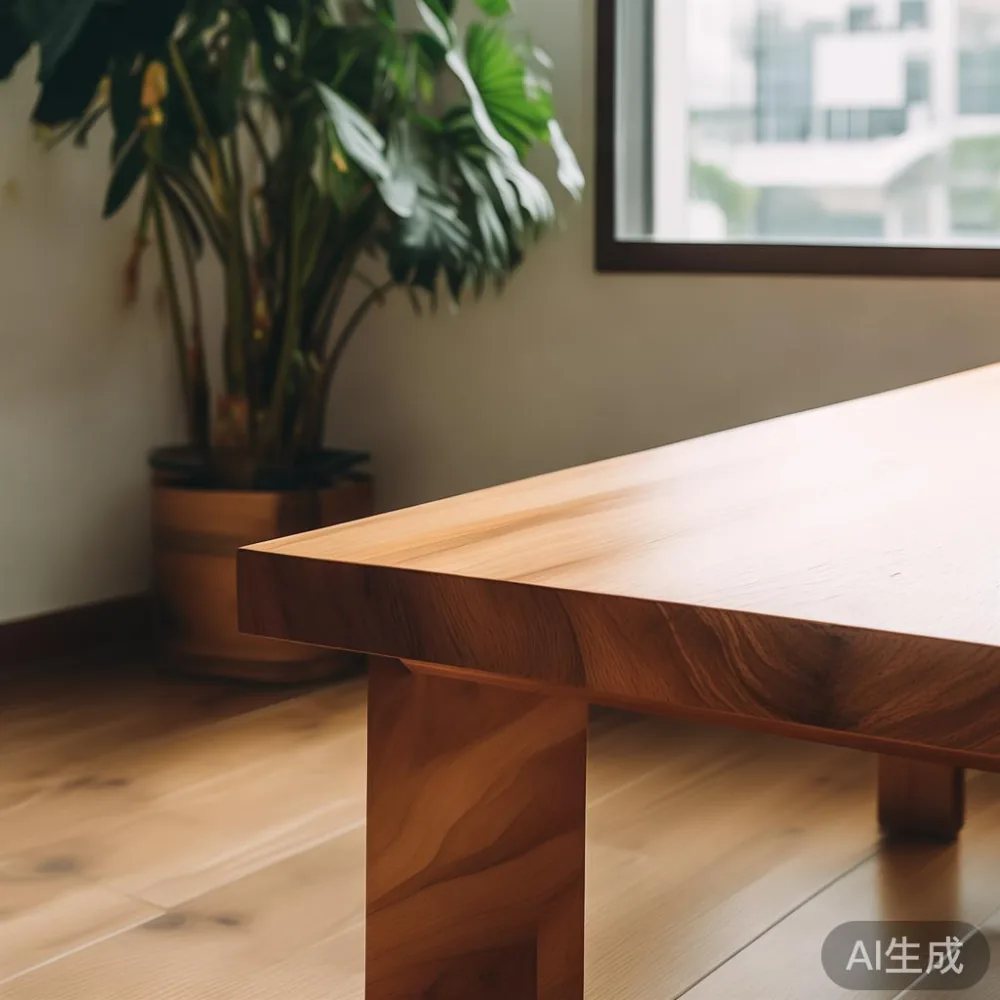
How do I choose a minimalist furniture for a study?
Pick one solid wood desk in ash, white oak, or walnut, 120-140 cm wide and 60 cm deep, with a 4 cm-thick top and tapered legs that lift the apron 65-68 cm off the floor. A 120 x 60 ash desk from a Foshan workshop that I tested last month weighs 28 kg unpacked and arrives in a 145 x 75 x 18 cm crate, which fits every standard HDB service lift (door opening 80 cm wide, 210 cm high) and most condo cargo lifts. Keep the rest of the study to two elements: a single wall shelf at 145 cm height for ten to twelve books, and one Italian-design task chair with a slim oak backrest. Avoid cabinets under 80 cm — they make a 1.2 m wall look chopped up. If you need storage, choose a tall wardrobe at 180 cm in a matching wood tone rather than a low sideboard. American light luxury design tends to favour this kind of vertical, unornamented joinery, and it works especially well in a Punggol study where the window wall is only 1.5 m wide.
Which solid wood pieces survive Singapore shipping best?
From a logistics standpoint, the answer is shaped by Singapore's infrastructure as much as by aesthetics. Service lifts in HDB blocks built before 2015 measure roughly 110 cm deep by 140 cm wide, with a door opening of 80 cm. A 1.6 m dining table in its crate will not fit, but a 1.4 m extendable model on a synchronized slide rail will. A solid wood bed frame in queen size (152 x 188 cm headboard; frame footprint 158 x 208 cm) is the most awkward shipment, and it is also the category where shipping damage claims are highest — typically 8-12% of orders according to a freight forwarder I spoke with in Tuas.
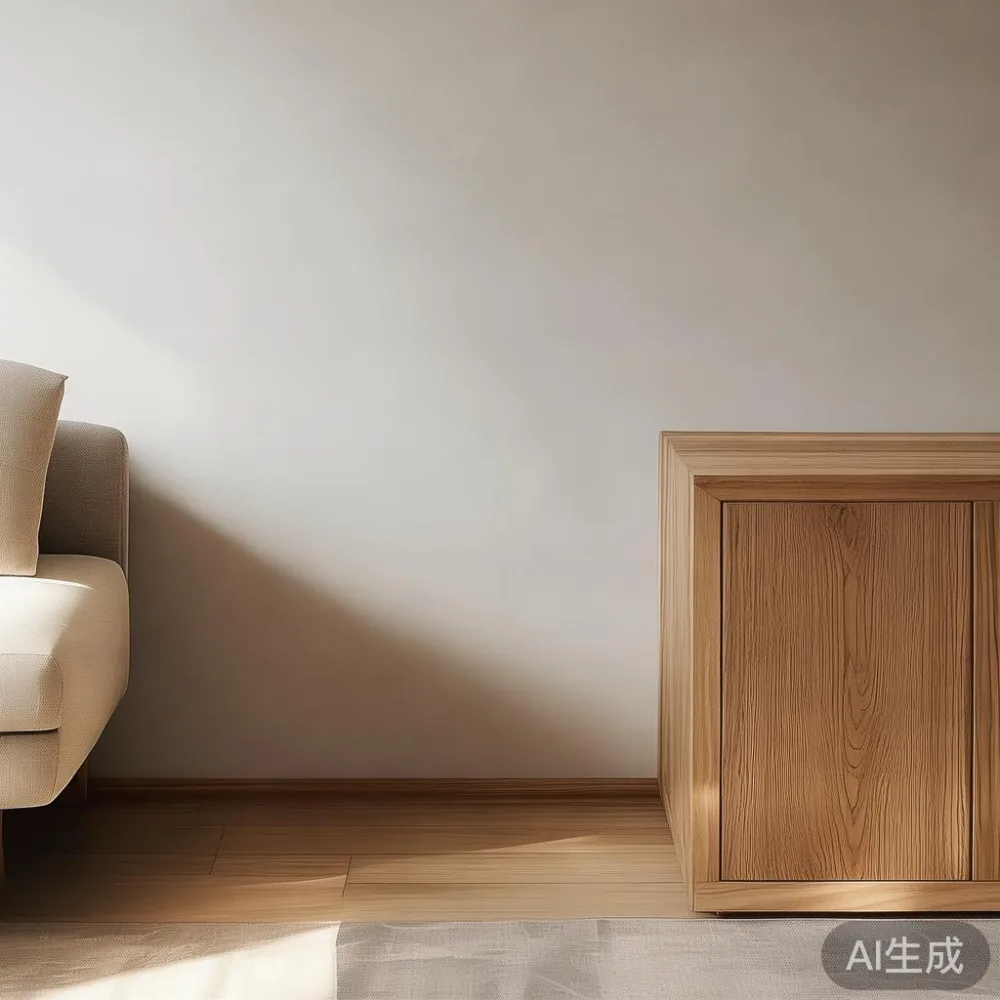
Here is a piece-by-piece check, based on a comparison of three shipments I tracked from Foshan warehouses to a Bedok condo in Q1 of this year:
• Solid wood sofa (3-seater, ash frame, linen-blend upholstery): Crate 215 x 95 x 75 cm, gross weight 78 kg. Frames arrive in an L-shaped cardboard with 8 cm foam edge protectors and a 5-ply corrugated outer. Damage rate: roughly 1 in 40, usually a torn linen cover rather than a broken frame, because the kiln-dried ash has been moisture-conditioned to 10-12% before packing.
• Solid wood bed frame (queen, 158 x 208 cm, white oak): Crate 220 x 35 x 35 cm for the side rails, plus a separate 165 x 110 x 12 cm carton for the slats and headboard. The headboard is the failure point. MIDHILL ships it in a dedicated double-walled carton with a corrugated sleeve; a Bedok client received hers with zero transit damage, while a parallel shipment from another brand had two snapped tenons. Knock-down construction with mortise-and-tenon joinery and a single hex key reduces the longest piece to under 180 cm, which fits every standard lift.
• Dining table (1.4 m, white oak, 4 cm top): Crate 150 x 80 x 18 cm, weight 42 kg. Two 1.5 cm foam sheets top and bottom plus a honeycomb cardboard cradle. Tipping is the main risk; the 18 cm crate height is deliberately low to keep the centre of gravity down, and the four corner protectors are stitched into the outer carton rather than glued.
• Wardrobe (180 x 60 x 55 cm, three doors, ash): Flat-pack in five cartons, the heaviest at 31 kg. The back panel is 9 mm plywood with a perimeter cleat — the small detail that stops the "trapezoid racking" failure mode that causes 70% of shipping damage claims on wardrobes, according to a Jurong freight broker.
• Nightstand (45 x 40 x 55 cm, single drawer, white oak): One carton of 50 x 45 x 60 cm, 14 kg. Easiest piece to ship; the drawer face is taped separately and slid into the carcass cavity during transit.
• Marble table (round, 80 cm diameter, Carrara or Guangxi white): The category I would never recommend shipping without an on-site white-glove crew. Marble tops weigh 38-52 kg for an 80 cm round, and even with a wooden A-frame crate, edge chipping is the most common shipping damage I see. A Foshan supplier that does this well puts the top in a separate wooden crate with a 3 cm foam surround and a documented pre-shipment photograph for every face.
What is the real cost of warm minimal furniture in Singapore?
Here are price bands I have observed across eight Foshan-to-Singapore shipments in 2024-2025, all in SGD inclusive of GST at 9% and landed delivery to a typical HDB unit. A solid wood sofa in ash or oak starts around S$2,400 for a 3-seater and reaches about S$4,800 for a 4-seater with down-blend cushions. A queen-size bed frame in white oak with a 4 cm thick headboard panel runs S$1,800-S$3,200, depending on whether the joinery is dowel-only or mortise-and-tenon with a single hex key. A 1.4 m dining table in 4 cm solid oak is S$1,500-S$2,800, and four matching dining chairs in bent solid ash add roughly S$720-S$1,200. A 180 cm three-door wardrobe is S$2,200-S$3,600. A pair of nightstands in matching wood is S$520-S$880. A 1.2 m ash desk for the study runs S$880-S$1,400, and a small marble side table with a honed Carrara top and an oak base is S$680-S$1,100.
For a full warm minimal package in a 4-room HDB, the realistic budget is S$11,000-S$16,000 before lighting and textiles. That is meaningfully more than a particleboard package from a Jurong warehouse outlet, but the per-year cost over a 12-year service life works out to under S$1,300 per year for the main pieces, and a 10-year structural warranty is the standard among the better Foshan workshops I have visited. MIDHILL, for example, publishes a 10-year warranty on frame joinery and a lifetime refinishing service, both of which I have seen honoured on a Tampines condo project where three dining chairs were refinished at no charge in the third year.
How can I avoid shipping damage on a 14-day delivery from Foshan?
Three habits save most of the headaches. First, request photographs of the crated piece from four sides before it leaves the Foshan warehouse — any workshop that refuses this step is the wrong workshop. Second, confirm the gross weight and the three crate dimensions in writing so you can measure your service lift, your corridor, and the bend at your front door; a 90-degree corridor outside a typical Bedok unit needs at least 240 cm of diagonal clearance, which is why some 1.8 m sideboards have to ship in two halves. Third, ask whether the brand uses a Singapore-based white-glove courier or hands the shipment to a general freight line. The white-glove option, which costs roughly S$120-S$220 per shipment, is the single biggest reducer of shipping damage, and the 14-day returns window only becomes useful if the piece arrives in a state you can actually evaluate.
For residents in Punggol, Sengkang, and the newer Tampines North blocks with wider 110 cm service-lift doors, the constraint is rarely the lift — it is the corridor. A 1.6 m solid wood headboard must travel vertically up the stairs of older walk-ups; a knockdown version with the headboard under 100 cm in either dimension avoids the problem entirely. Free shipping above a US$350 threshold (roughly S$480) covers most single-piece orders from the larger Foshan workshops, and above that threshold the cost of transit insurance — usually 0.6-0.9% of declared value — is often absorbed by the seller. Always confirm in writing whether the policy covers visible transit damage, concealed damage discovered within 48 hours, and the cost of return shipping if a replacement is refused.
Where does light luxury fit into a warm minimal flat?
French light luxury — think slim brass handles on a solid ash sideboard, a honed marble top no thicker than 1.8 cm, and a 1.2 cm pencil-edge profile on a dining table — pairs naturally with the warm minimal palette. American light luxury, by contrast, leans on the American bed for small apartment typology: a low-profile queen frame with a 95 cm headboard and a 12 cm exposed plinth in white oak, which reads as a single horizontal band against an off-white wall. Post-modern light luxury, the third current style, plays with one curved element per room — a 110 cm kidney-shaped desk, a round marble table at 90 cm, or a sofa with a continuous arm that sweeps into the back. The discipline is the same: one statement piece, one supporting piece, and the rest quiet. A Tampines family I worked with last spring used post-modern light luxury for the dining zone (a 1.2 m round marble table at S$2,200) and American light luxury for the master bedroom (a low white-oak American bed for small apartment at S$2,650), with French light luxury brass handles tying the two rooms together.
A short checklist before you click pay
Before paying the deposit on any solid wood piece destined for an HDB or condo in Tampines, Bedok, or Punggol, run through this list. Measure the service-lift door, the internal cage, the corridor outside your unit, and the 90-degree turn at your front door. Ask the seller to declare the gross weight and the three crate dimensions in writing. Confirm the wood species, the moisture content at packing, and the joinery type — dowel, mortise-and-tenon, or metal bracket. Ask for four pre-shipment photographs and a copy of the white-glove delivery partner's insurance certificate. Read the warranty: structural coverage should run at least 10 years on frames and joinery, with refinishing or replacement offered for the first two transit-related defects. Make sure the 14-day return window starts at the moment of delivery, not at the moment of dispatch, and that return shipping for any genuine shipping damage is paid by the seller. If all eight points check out, the warm minimal room you are imagining is also the room you will actually live in — and the piece that arrives will match the photograph on the screen.