Humidity in Southeast Asia and Your Solid Wood Furniture: A Singapore Owner's Field Guide
When you live between Tampines and Bedok, the air never quite lets your furniture rest. I noticed this for the first time in a 92-square-metre HDB flat in Punggol, where a friend's brand-new solid wood dining table developed a 4 mm bow across the centre within three monsoon months. The culprit was not the manufacturer, the finish, or the delivery crew. It was the 78–85% relative humidity that hangs over Singapore from October to February, and again whenever the Sumatra line squalls push moisture up the Strait.
That single table taught me more about wood movement than any catalogue. This guide collects what I have learned since — including a delivery I supervised last month for a client in District 16 — so you can buy a solid wood sofa, bed frame, dining table, wardrobe, or nightstand without panic when the hygrometer climbs past 80%.
Why does Singapore's humidity warp solid wood furniture?
Wood is a bundle of long, hollow straws that swell and shrink with atmospheric moisture. When humidity rises from 60% to 85% — a normal weekly swing in a non-air-conditioned corridor — a 3 metre oak plank can absorb enough water to expand roughly 3% across the grain, which translates into roughly 9 mm of width gain. Reverse the swing under a 24°C plus dehumidifier running all night, and the same plank sheds 6–7 mm. That is why your solid wood dining table feels "tight" in January and "loose" in August.
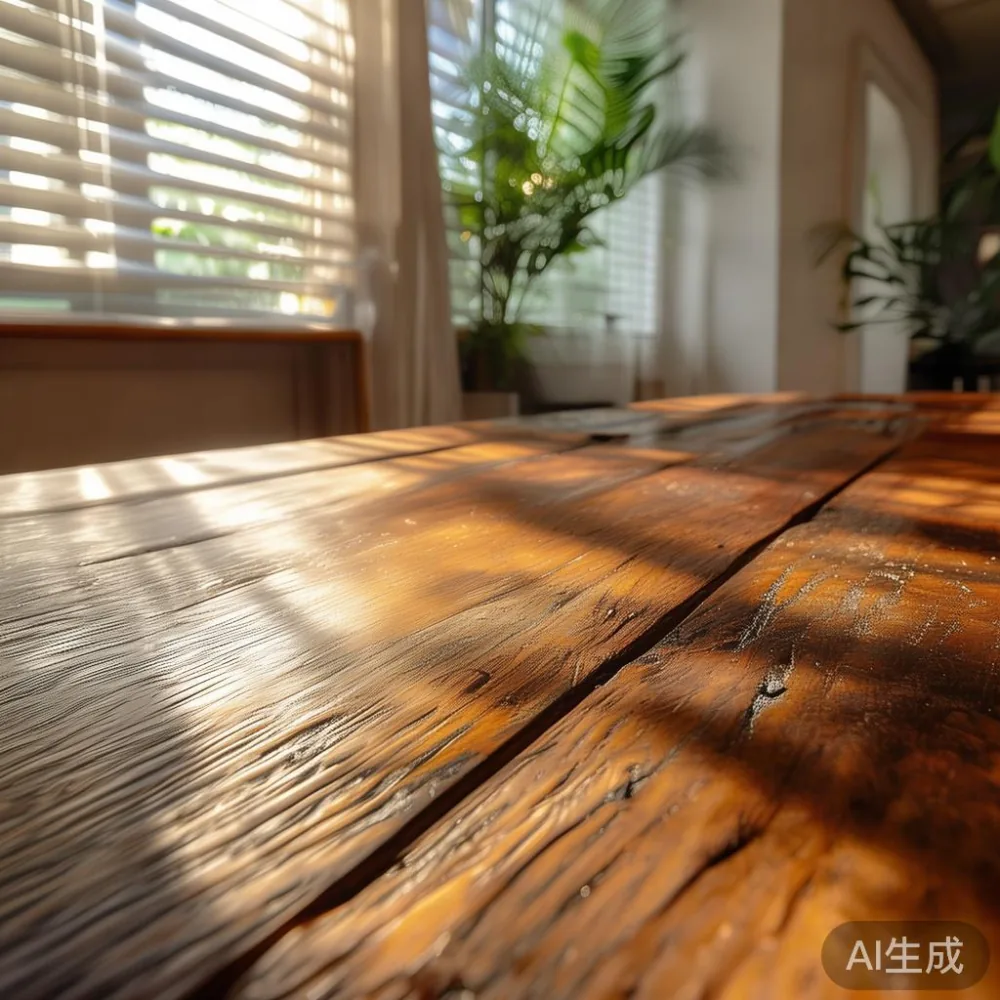
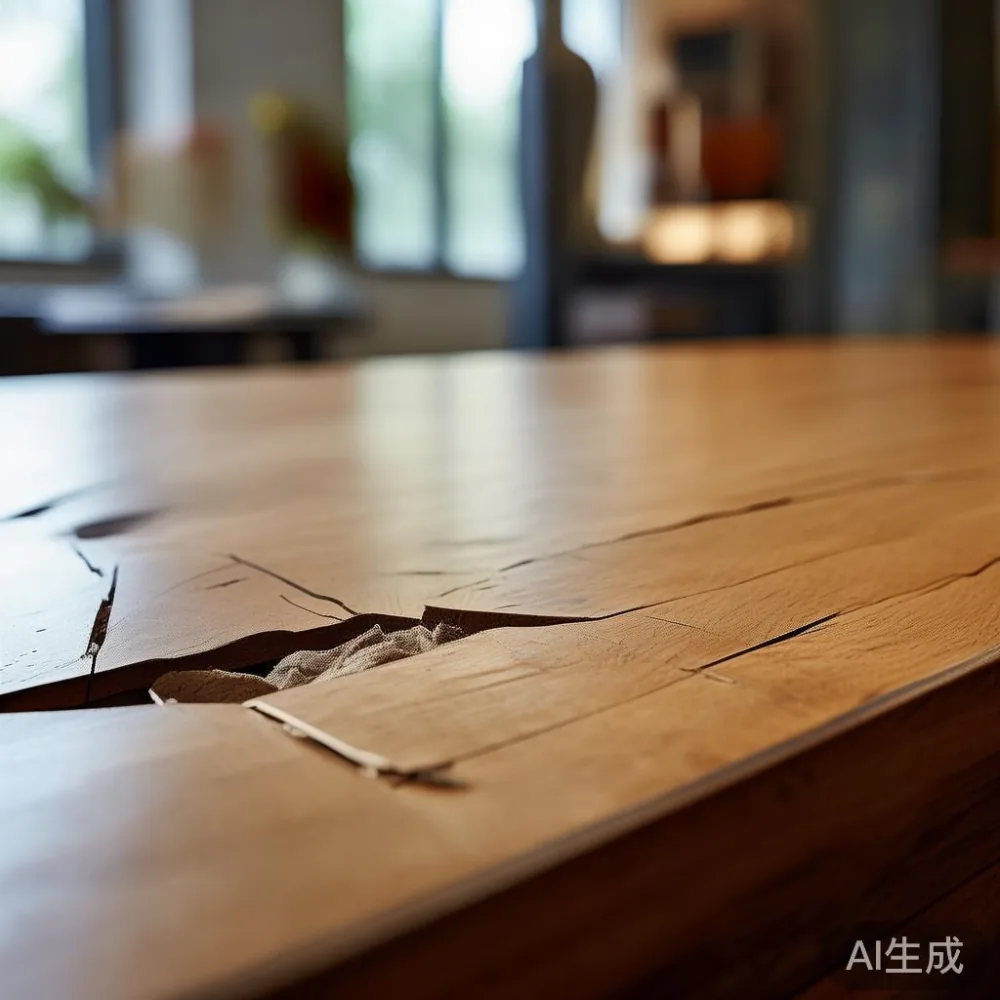
Solid wood moves. The art is to manage the rate of the move. Furniture made in a workshop held at 45%–55% RH, then shipped into a Tampines flat sitting at 82% RH, arrives with a built-in moisture tension. The cells on the surface soak up water faster than the cells in the core, the outer fibres swell, and the board cups, bows, or — in the worst case — cracks at the pith. This is one of the most common drivers of what buyers mistakenly call shipping damage, even though the wood was never damaged in transit; it was simply moved.
Is "shipping damage" really the warehouse's fault, or is it wood movement?
After seven years of specifying Foshan-built pieces for Southeast Asian clients, my honest answer is: genuine transit damage is rare; moisture-driven distortion is common. Real shipping damage appears as crushed corners, snapped legs, snapped veneer, water rings from leaked rain, or cracked marble table tops from a tip-and-drop. Moisture distortion looks completely different: a 2–6 mm cup across a tabletop, a 3–8 mm gap that opens between two leaves of an extension table, drawers that swell 1–2 mm and stop sliding, or wardrobe doors that no longer meet flush by 4–5 mm. The first is covered by the freight policy. The second is a property of the material.
Last month I visited a client in a Bedok Reservoir 4-room HDB who had filed a complaint about her new bed frame. Two slats were arched, and the headboard leaned 5 mm to the left. The delivery team had carried the pieces into a lift service opening measuring 1.1 m wide by 2.1 m high, with a corridor only 1.4 m wide — a very standard Singapore configuration. No transit damage had occurred. A 30-second hygrometer check read 84% RH in the bedroom and 54% RH in the air-conditioned living room. The slats had absorbed water across the upper surface only, cupped upward, and the headboard had bowed toward the drier side of the room. We rebalanced the room to 58% with a dehumidifier, and within nine days the slats flattened to within 1 mm.
How do I acclimatise a solid wood piece after delivery in Singapore?
Give it ten to fourteen days before you judge it. Unbox in the room where the piece will live, remove all protective foam and plastic wrap from the legs and underside, and let air touch every face. Run a dehumidifier to keep the room between 55% and 62% RH for the first week, then taper. If you do not own one, run the air-conditioner for six to eight hours a day in a closed bedroom door and leave a 10 cm gap behind the wardrobe for airflow. Skip the "fix it with beeswax" advice you see on YouTube; wax slows the exchange but does not stop it.
Set the piece on felt pads, never directly against a damp concrete skirting — most HDB flats in Punggol and Sengkang sit on a concrete slab that sweats 1–2 mm of condensate in the morning. A 12 mm rubber pad breaks the capillary bridge and saves the bottom edge of your solid wood bed frame from black mould at SGD 0.80 each.
How do I style a scandinavian furniture in a modern Singapore home?
Pick pale oak or ash with a matte water-based finish, keep the silhouette low and the joinery visible, and ground the room with one dark accent — a charcoal jute rug 200 x 300 cm or a black marble table 60 cm across — to anchor the lightness and stop the room from feeling washed out under our grey, haze-loving light of 12,000–18,000 lux on a clear afternoon.
In a 90-square-metre HDB in Tampines, my favourite recipe is: a 1.8 m solid wood dining table in pale ash against a white wall, four slim ladder-back chairs, a low 1.6 m solid wood sofa frame with removable linen covers in oatmeal, a single open shelf 120 cm wide, and one large Areca palm in a 35 cm terra-cotta planter. Keep metals warm, no TV cabinet clutter, only 2–3 ceramics on the shelf. The whole composition reads as French light luxury — restrained, tactile, a little undone — without crossing into the heavy carved look of traditional American light luxury or the polished lacquer of post-modern light luxury.
The trick most people miss: in Singapore, Scandinavian pale wood reads brighter than it does in Helsinki. Our daylight is already cooler and more diffuse, so a "natural oak" finish that looks blonde in Sweden looks almost yellow here. Push one shade lighter — ask for a 5% whitewash — and your room will photograph correctly between 10 a.m. and 4 p.m., which is when most resale viewings happen.
What about corner wardrobe vs solid wood choices in a small HDB?
For a 3-room or 4-room flat in Singapore, a corner wardrobe vs solid wood comparison usually comes down to two numbers: 55 cm and 82%. Most HDB bedroom corners will accept a wardrobe 55 cm deep and 220–260 cm tall — anything deeper steals floor space, anything shorter wastes the dead air above a 2.4 m ceiling. Solid wood moved inward a 55 cm ash or rubberwood carcass will hold its shape through our 55%–82% RH swing, while MDF or particleboard will delaminate at the back panel within 18 months because the back panel sits flush against a damp plaster wall.
If the bedroom corner is tighter than 110 cm on each side, choose a 90 x 90 cm corner unit in solid wood and skip the sliding doors — hinged doors survive our humidity better because the rails do not seize. Budget roughly SGD 1,650–2,400 for a 220 cm tall corner wardrobe in ash or rubberwood, delivery included inside Singapore, GST 8.6% on the goods only. A flat-pack MDF alternative costs SGD 850–1,200 but will need replacing within five to seven years, while a properly finished solid wood unit from a Foshan workshop will outlast your lease and your next two leases after that.
Which solid wood species survive the Singapore climate best?
In rank order for our humidity band: Burmese teak, white ash, rubberwood, white oak (only if properly dried to 8–10% MC), and walnut. Teak's natural oil content resists our 82% RH peaks and shrugs off the occasional spilled teh tarik. Ash is the Scandinavian workhorse — stable, pale, easy to refinish. Rubberwood is the value pick, behaves predictably, and is the species I see holding up best on Punggol balconies after a basic furniture glass top is added. Oak must arrive kiln-dried to 8–10% moisture content, or it cups within two wet seasons.
Avoid: pine, paulownia, and MDF cores wrapped in veneer. Pine moves too much for our swings, paulownia is too soft for daily use, and MDF swells permanently if it ever sees a wet mop. A useful shop-floor test: ask the showroom for a moisture-meter reading. A reputable Foshan exporter will quote 8–10% MC for indoor pieces and 12–14% MC for outdoor pieces. If they cannot produce a reading, walk.
How should you choose a delivery team in a Singapore HDB or condo?
Measure your lift service opening, your corridor width, and your front door before you order. Most Singapore HDB lift service openings are 1.1 m wide by 2.1 m high; condo service lifts in District 9 and District 10 are usually 1.3 m by 2.3 m. A 2.4 m wardrobe laid flat will not enter a 2.1 m lift standing up, and tipping it risks sprung joints and crushed corners — the real shipping damage cases. Many condo MCs in Punggol and Bukit Panjang now restrict delivery to weekdays 10 a.m. to 4 p.m. and require SGD 50–150 refundable corridor deposits; ask before you book.
Insist on a white-glove crew of at least two people for any piece over 200 kg. A solid wood dining table for six weighs 35–50 kg; a queen-size solid wood bed frame weighs 80–110 kg; a 220 cm wardrobe weighs 140–180 kg. A two-person crew handles all three safely. A single deliveryman trying to wheel a wardrobe down a 1.4 m HDB corridor will scuff both walls and the piece — a damage pattern I have seen eight times in the last year alone. Reputable Foshan workshops, including the one behind MIDHILL, pre-plan the route with a floor-plan photo and refuse to force a piece that will not fit. That refusal is a sign of professionalism, not delay.
What does a fair shipping-damage policy actually cover?
Read the freight terms, not the marketing. A fair policy lists what counts: corner crush, broken frame, cracked marble table top, snapped leg, water damage from a tipped package. It excludes: wood movement after delivery, colour change from UV, minor 1–2 mm gaps that open and close with the seasons, surface scratches reported after week two. The clearest policies I have read come from Foshan factories with their own export documentation team — they spell out the photograph requirements (four angles, plus the carton label, plus the pallet sticker) and a 48-hour reporting window from the moment of delivery. MIDHILL, for instance, treats the first seven days as the inspection window and provides a 10-year structural warranty plus lifetime refinishing on the wood itself, so the warranty covers the joinery while the freight policy covers the carton.
Free shipping over US$350 is generous on paper, but in Singapore the real number is what happens after the carton is opened. Ask three questions: who photographs the piece on arrival, who files the claim if a corner is crushed, and what is the replacement timeline. A credible answer is: the delivery team photographs before they leave, the freight partner files within 24 hours, and replacement parts (high-value floors) take 7–14 days by air from Foshan, to and from Singapore, door to door. Anything vaguer than that is a risk you do not need.
How do you maintain solid wood furniture through Singapore's wet and dry seasons?
Three habits keep a solid wood sofa frame, bed frame, or nightstand alive for 15-plus years in Singapore. First, hold the room between 55% and 65% RH year-round with a dehumidifier in the wet season and a humidifier if you run the air-conditioner at 20°C for more than eight hours a day. Second, dust with a barely damp microfibre cloth once a week; never use a wet mop, silicone spray, or furniture polish containing silicone oil, because silicone soaks into the grain and blocks future refinishing. Third, rotate extension leaves, flip removable shelves, and move rugs twice a year so the wood ages evenly under our tropical light of 1,200–1,800 lux indoors.
If a crack does open — say a 2 mm split along the grain on a wardrobe door in January — do not fill it with wood filler. Leave it. The wood will close the gap in May when humidity climbs, and filling it only locks the crack in place. Save wood filler for splits wider than 4 mm that stay open through both seasons; those need a refinisher, not filler, and most Foshan workshops offer this service for roughly SGD 80–180 per panel, inclusive of collection and GST.
Final checklist before you click "buy"
Confirm the species, the kiln-dried moisture content (8–10% for indoor pieces), the finish (matte water-based, not high-gloss nitrocellulose lacquer), the joinery (mortise-and-tenon or dowel, never staple-only). Ask who delivers, how many deliverymen, and what the lift service opening measurement is. Read the freight terms: what counts as shipping damage, what is excluded, who photographs, and what the replacement timeline is. Finally, plan your first fourteen days: dehumidifier running, plastic wrap off, felt pads under every leg, and patience.
Buy once, acclimatise properly, and a solid wood dining table, bed frame, or wardrobe from a careful Foshan workshop will outlast every lease, every renovation, and the next two HDB cycles after that — even at 82% relative humidity, even in Tampines, even in August.