How Southeast Asian Humidity Affects Solid Wood Furniture — and What It Means for Singapore Homes
I spent the first week of last month walking through a Tampines HDB on the 12th floor with a tape measure, a hygrometer, and a clipboard. The owner had ordered a Japandi walnut bed frame from Foshan two months earlier, and she wanted to understand why one of the side rails had developed a 2 mm bow by the end of February. Outside, the afternoon humidity sat at 84%. Inside, with the air-con running, the bedroom read 71%. That 13-point swing, repeated daily for sixty days, is the whole story of wood furniture in Southeast Asia, and it is the reason MIDHILL started publishing humidity data with every shipment to Singapore back in 2019.
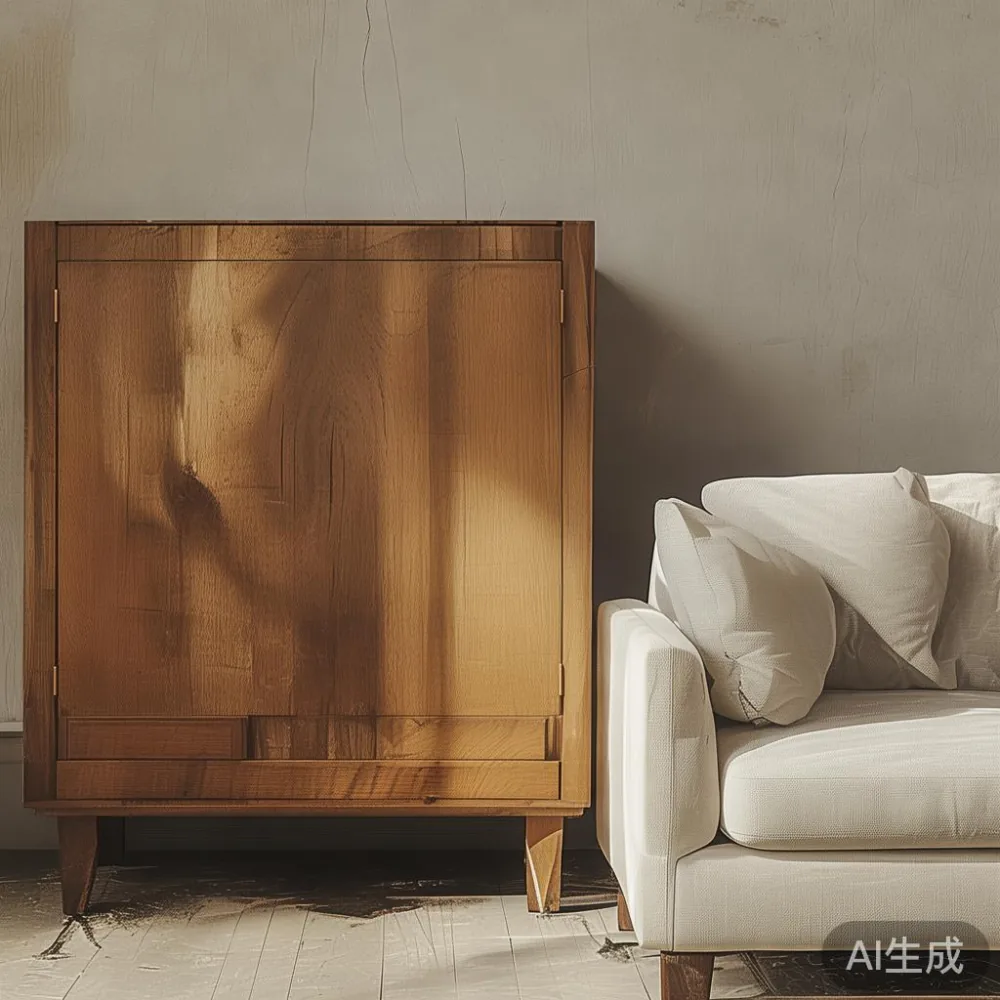
Wood is a hygroscopic material. It absorbs and releases moisture depending on the air around it, and in a region where outdoor relative humidity averages 78–90% for nine months of the year, that conversation never stops. The good news: with the right species, the right joinery, and a realistic maintenance routine, a solid wood sofa, bed frame, dining table, wardrobe, or nightstand can last decades in a Singapore flat. The harder news: most of the shipping damage claims MIDHILL processes from Singapore are not actually freight damage. They are humidity stories wearing a freight label.
Why does Southeast Asian humidity warp solid wood furniture?
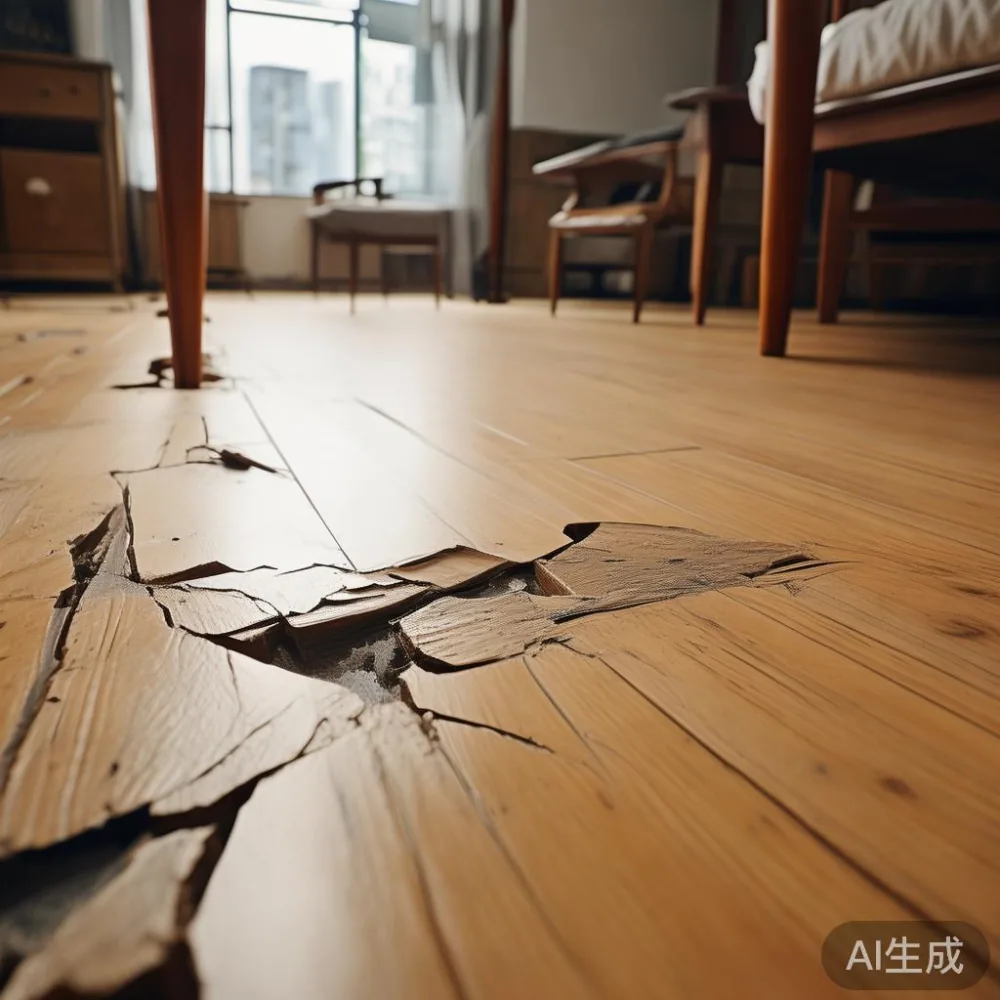
Solid wood moves. Every 4% change in moisture content produces roughly a 1% change in width across the grain, so a 200 cm oak dining top can swell or shrink by as much as 10 mm across a humid season. In a Tampines three-room flat with afternoon sun on the western wall, a dining table near the window can see its surface moisture content swing from 9% in a dry, air-conditioned afternoon to 16% by the next humid morning. That gap, repeated weekly, is what opens mitre joints and lifts veneer. MIDHILL kiln-dries its walnut, ash, and oak to 8–10% before container loading, which matches a typical Singapore home running air-con at 24–26°C and 55–65% RH. The furniture leaves the Foshan factory in balance with your bedroom, not with the monsoon.
What should I do the moment a 180 cm crate arrives at my Punggol doorstep?
Open the crate. This is the single most important sentence in this article, and the one most Singapore buyers skip because the lift booking is in twenty minutes and the corridor on the 14th floor is only 1.2 m wide. Crated wood needs air. Leave the crate open for 24 to 48 hours so the panels can equalise with your indoor climate before you lift them through the door. A standard HDB passenger lift internal is about 1.1 m deep by 1.4 m wide, with a 630 kg capacity. A flat-packed king bed frame usually arrives in two cartons totalling 95–110 kg; a six-seater sofa in three pieces at 140–160 kg. Both fit, but only if you measure the diagonal against the lift door before you call the driver. MIDHILL prints the exact carton dimensions and weights on every invoice so buyers can pre-check.
Once the cartons are inside the flat, cut the straps, lift — do not drag — the panels out, and stand them on edge with 10 cm of clearance on every side. Skip the urge to wipe the wood with a damp cloth on day one; the factory finish is still curing. Use a dry microfibre cloth only.
Is shipping damage the same as humidity damage?
No, and the distinction matters because it changes who pays. Shipping damage is freight damage: a cracked corner from a forklift, a chipped marble edge from a strap, a crushed carton from a mis-stacked container. Shipping damage shows up at the moment of unboxing, usually on the outer faces of the carton and the corresponding panels. Humidity damage shows up weeks or months later as a crowned tabletop, a stuck drawer, a hairline split along a rail, or mould bloom in a wardrobe that was pushed against an exterior wall. Insurance and the MIDHILL 10-year structural warranty cover the first category. The second category sits inside your maintenance routine. Conflating the two is why some Singapore buyers file claims that get politely declined, and why MIDHILL now includes a one-page humidity card in every Singapore shipment showing the kiln-dried moisture content, the target indoor range, and a 12-month acclimatisation calendar.
In the Tampines flat I visited, the bowed side rail on the walnut bed was not a freight event. The carton arrived intact on a Tuesday; the bow appeared six weeks later after a stretch of 87% RH days with the bedroom window left open for cross-ventilation. The fix took the owner fifteen minutes: MIDHILL sent a replacement rail under warranty because the bow exceeded the 3 mm tolerance, but the conversation on the phone was about airflow, not about the driver.
Is Japandi loveseat furniture worth it in a humid climate?
Yes — a Japandi loveseat built from kiln-dried walnut or white oak with mortise-and-tenon joinery handles Singapore humidity very well, because the low-profile silhouette leaves more exposed surface area for the wood to breathe and because the joinery allows micro-movement without splitting. A two-seater loveseat at roughly 150–160 cm wide also clears most HDB lift doors with 8–10 cm to spare, which removes the awkward angle-loader routine. In the post-modern light luxury idiom, a Japandi loveseat pairs a solid wood frame with linen-blend cushions and a slim black-metal stretcher, reading as quiet, understated, and slightly architectural — the opposite of a heavy carved mahogany settee that traps moisture in its crevices. Buyers who choose a kiln-dried, solid wood loveseat over a particleboard alternative usually keep it through two HDB moves and a condo upgrade, because the frame outlasts every cushion foam on the market.
How does corridor and lift access shape what I should order?
Singapore access constraints quietly dictate what is realistic. A typical HDB corridor is 1.2–1.5 m wide, the lift door is 0.9 m wide, and the lift car internal runs roughly 1.1 × 1.4 × 2.3 m. Condo service lifts in newer developments such as those in Punggol Digital District or the Bedok Reservoir area are larger, but the door swing is still the limiter. Anything with a single dimension over 2.4 m must be ordered in two pieces, and the join must be designed for the home, not just the factory. MIDHILL's split-king bed frames and modular dining tables all use a tongue-and-groove spline with a matching biscuit so the seam disappears after the wood acclimatises. A 220 cm marble-top dining table, by contrast, ships in a custom crate weighing 240 kg that will not fit through a standard HDB lift and must be hoisted via the service lift on a pre-booked slot, which is why MIDHILL's Singapore logistics partner charges SGD 80–180 per hoist depending on the development.
For wardrobes, the practical ceiling in most HDB bedrooms is a 240 cm height by 200 cm width three-door configuration, weighing 180–210 kg fully assembled. Anything larger should be specified as a flat-pack with cam-lock joinery, which adds SGD 220–340 to the order but eliminates the lift problem entirely and reduces shipping damage risk because the panels travel face-in, frame-out.
What does a realistic Singapore maintenance routine look like?
Three habits cover 90% of humidity-related issues. First, keep indoor relative humidity between 55% and 65% year-round. A SGD 35 digital hygrometer from any neighbourhood mall is worth more than any wood polish. Second, never push a wardrobe, nightstand, or bed frame flush against an exterior wall; leave a 3–5 cm air gap so the back panel can breathe. Third, condition the wood every six months with a hard wax oil — MIDHILL ships a 500 ml tin of Osmo Polyx-Oil with every walnut or oak order, which is enough for a six-seater dining table or a king bed frame and retails locally at around SGD 48 for a refill.
Wipe spills within ten minutes, rotate dining chairs so one seat does not absorb all the afternoon UV through the window, and lift — never slide — a marble table when you rearrange the客厅. Marble tolerates humidity well but not impact, and a 15 mm travertine top dropped 5 cm onto tile will crack along a vein every single time.
Will the GST and delivery fee change my budget as much as the freight quote suggests?
Singapore's 9% GST applies to the landed value, and for furniture imported under the local-delivery model MIDHILL uses, the GST is calculated on the CIF value plus insurance. On a SGD 4,200 walnut bed frame with SGD 380 freight and SGD 60 insurance, GST alone adds SGD 418. Free shipping kicks in for orders over US$350 (about SGD 475), so the typical Singapore buyer only pays freight on bulky add-ons such as a marble table or a six-seater sofa. Lift-booking fees at the condo, hoisting fees for oversize crates, and disposal of the wooden crating (a 30 kg carton costs about SGD 12 to send to the recycling bin in most HDB estates) all sit outside the invoice and should be budgeted separately. The honest total for a furnished primary bedroom in a Tampines five-room flat — bed frame, two nightstands, and a six-door wardrobe — usually lands between SGD 9,800 and SGD 13,500 all-in, including GST, hoist fees, and one round of accessorial charges.
How does the French light luxury or American light luxury finish hold up here?
Both directions work, but they age differently. A French light luxury finish — a lime-washed oak with a brushed brass pull and a honed marble top — reads cool and slightly chalky in a Singapore apartment because the lime wash softens the grain and lowers the contrast against pale HDB walls. The finish itself is stable, but the brass will patina within twelve months near the coast, which most buyers in East Coast or Marine Parade describe as desirable rather than defective. An American light luxury finish — a warm walnut with a satin matte topcoat and a blackened steel stretcher — reads warmer and absorbs more daylight, which suits the darker palettes common in newer Punggol and Sengkang BTOs. The satin matte topcoat is more forgiving than a high-gloss French polish because it hides the micro-movements that humidity produces. Across both styles, the principle holds: lighter finishes forgive movement, darker finishes show it. Buyers who want a near-black walnut should specify a tinted hard wax oil rather than a stain, because tinted oils move with the wood while stains sit on top and crack first.
What about the warranty and returns in practice?
MIDHILL's 10-year structural warranty covers frame breakage, joint failure, and kiln-dried moisture content falling outside the 8–12% range at delivery. Lifetime refinishing is a separate service: any MIDHILL piece bought since 2008 can be sent back to the Foshan factory for a sand-and-refinish cycle at a flat SGD 480 per dining table or SGD 320 per bed frame, including return sea freight from Singapore. Buyers use it once every eight to twelve years on average. The 14-day return window applies to unused, unassembled pieces in their original crates; once a panel is screwed into a bed frame or a drawer is cycled, the return moves into the exchange-or-repair path. For Singapore buyers, the practical move is to inspect every carton within 48 hours of arrival, photograph any freight damage on the unopened box, and email the photos plus the order number to the local logistics desk before discarding the packaging. Shipping damage claims filed after the cartons are broken down and stacked in the void deck take an extra five to seven working days to resolve because the logistics team has to reconstruct the delivery condition from photographs.
Final notes on choosing pieces that survive the next decade in a HDB flat
Three rules survive every trend cycle in this region. Buy solid wood, not veneer over particleboard, because only solid wood can be sanded and refinished. Buy kiln-dried wood matched to 8–10% moisture content, and ask the supplier for the factory reading on the invoice. Buy pieces that can physically reach your flat, which means measuring the lift, the corridor, and the bedroom door diagonal before you fall in love with a 280 cm wardrobe on the showroom floor. A walnut bed frame, a six-seater dining table, a marble-top side table, and a Japandi loveseat — built once, finished well, and maintained twice a year — will outlast two lease renewals, one BTO purchase, and a private condo upgrade. The humidity is not the enemy. The humidity is the conversation your furniture wants to have with your home, and it is much easier to manage once you know the numbers.