Humidity, HDB Corridors and Solid Wood: How Singapore's Climate Tests Your Furniture (and What Shipping Damage Really Looks Like)
I still remember the afternoon a customer in Tampines opened her lift door and saw a corner of her new solid wood dining table pressed against the lift's stainless steel panel. The table had travelled 4,200 km from Foshan, crossed the Strait of Malacca, cleared Singapore Customs, and survived a monsoon downpour at PSA — only to meet a 90 cm wide lift that was never designed for a 95 cm wide carton. She called me, slightly panicked, and asked, "Is this shipping damage, or did my table just arrive broken?" That single question is the starting point for almost every conversation I have about solid wood furniture in Southeast Asia. Humidity did most of the work. The corridor did the rest.
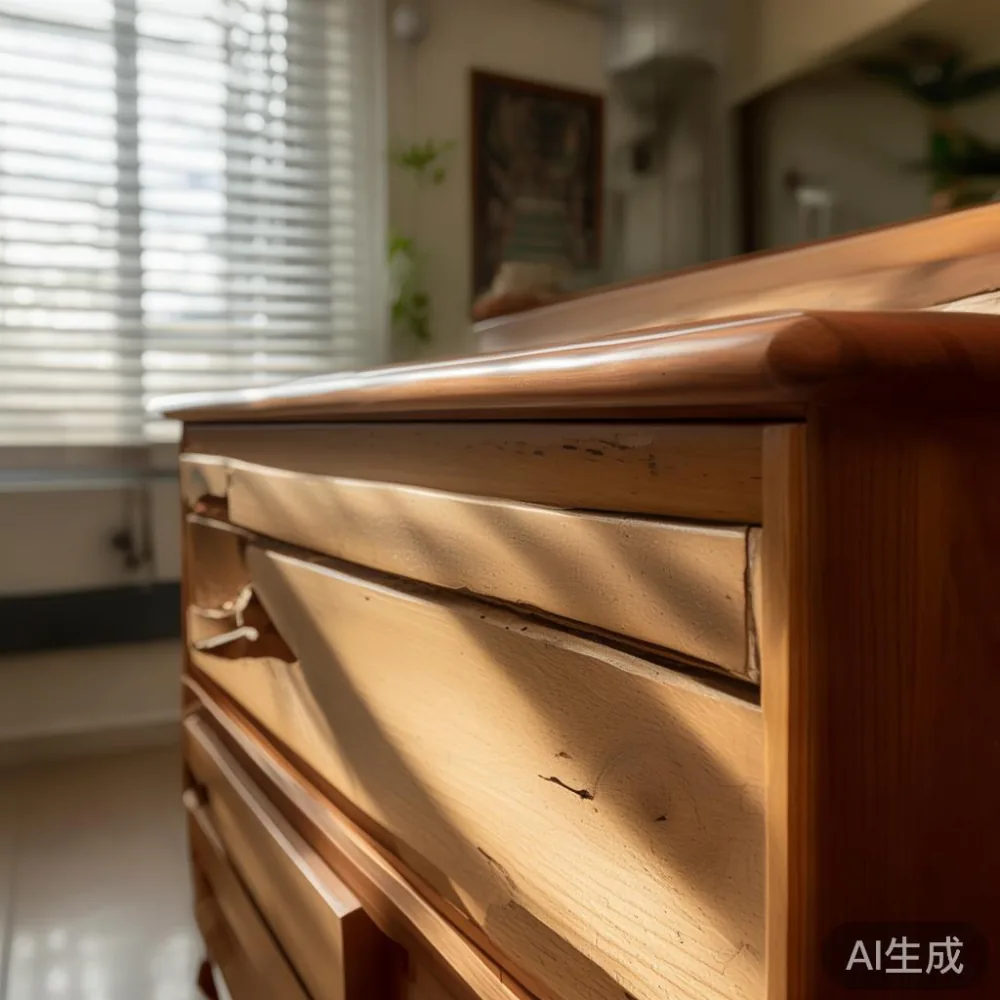
Singapore sits comfortably inside the equatorial humidity belt. Average relative humidity runs between 78% and 88% for nine months of the year, dipping only slightly during the brief dry spell from late February into early April. Indoor humidity in a HDB flat without a dehumidifier commonly settles between 70% and 80%. That number matters more than people realise, because solid wood is hygroscopic — it drinks and releases moisture from the air every single day. When a solid wood bed frame or solid wood sofa frame is manufactured in a Foshan workshop where humidity sits around 65%, then trucked across nine climate zones and unloaded into a Punggol condo where humidity sits around 82%, physics takes over. The wood swells. Joints tighten. Panels cup. And if any of that movement coincides with a knock from a delivery runner in a 1.2 m corridor, what looks like shipping damage is often humidity damage wearing a delivery costume.
Why does Southeast Asian humidity punish solid wood furniture so harshly?
Because wood moves. Every 4% change in moisture content causes softwood to expand roughly 1% across the grain; for hardwoods like oak, walnut, and ash used in MIDHILL's solid wood dining tables and wardrobes, the figure is closer to 0.8%. Take a 180 cm wide dining table top: a 6% swing in moisture content — entirely normal when crossing from a 65% factory to an 82% HDB flat — pushes that top to gain or lose around 8.6 mm of width. An 8.6 mm growth across a glue joint or a dovetail is enough to crack a panel, wedge a drawer, or split a tenon. None of that is shipping damage in the freight sense, but to the eye of a homeowner in Bedok, the table has arrived with a fault.
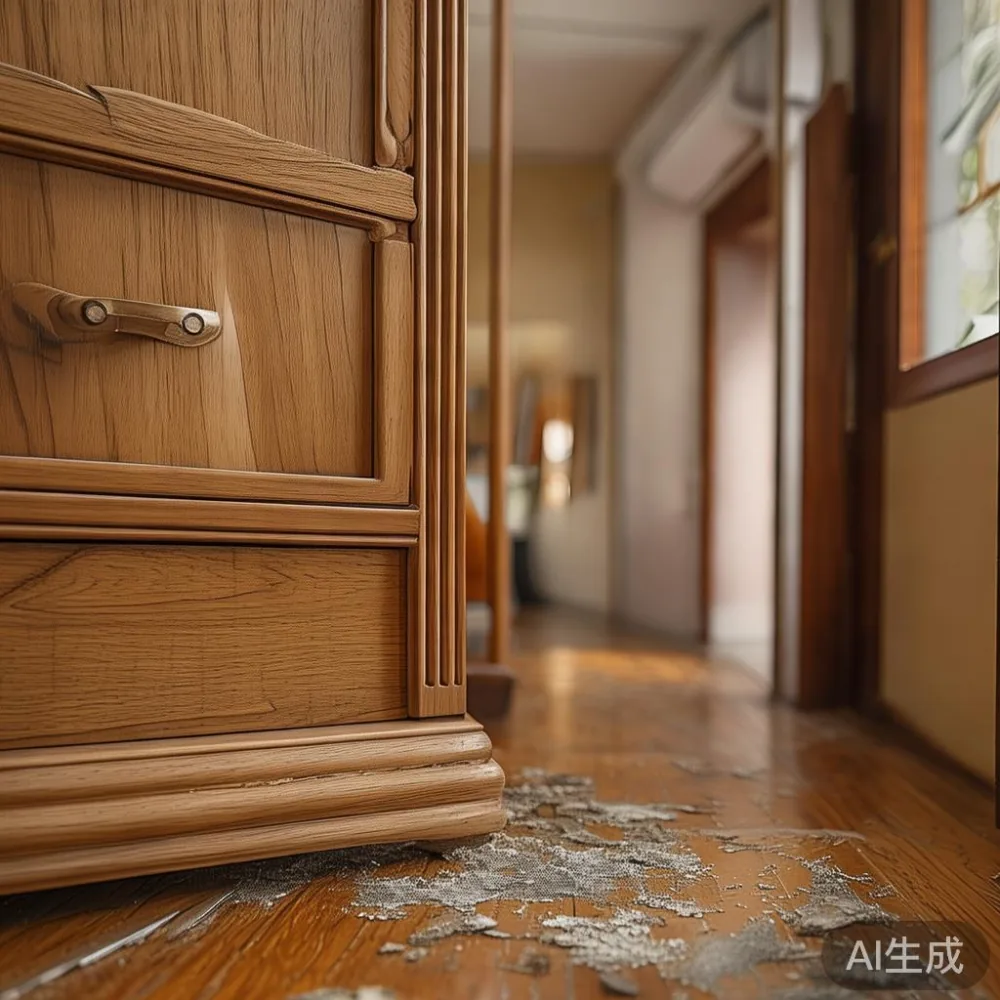
This is also why French light luxury and American light luxury collections, with their thinner profiles, longer legs, and larger open spans, behave differently from chunkier traditional post-modern light luxury silhouettes. A slim 35 mm marble table top on a light oak base, for instance, has less mass to absorb sudden humidity spikes, so it responds faster. A heavier 60 mm butcher-block dining top responds slowly, but when it finally moves, it moves with force. Both can show hairline checks within the first 30 days if acclimatisation is skipped — and almost every Singapore buyer skips acclimatisation, because the carton looks fine and the lift lobby is small.
What does shipping damage actually look like on a wooden piece?
Real shipping damage has fingerprints. On a solid wood sofa, it usually appears as a crushed corner on the carton that translates into a 2-5 cm dent on the armrest, with the wood fibres visibly compressed rather than split. On a bed frame, look for cracking that runs parallel to the grain at a stress point such as the slat holder or the centre rail. A wardrobe often shows shipping damage as a shifted or detached back panel, because the 1.8-2.2 m tall box flexes during container sea transit and the thin 9 mm back ply is the weakest link. A nightstand's drawer faces catch corner impacts, leaving a triangular chip on the lower leading edge. A marble table shows shipping damage as a star-shaped crack radiating from a single point of impact, almost always hidden under the carton foam, which is why I photograph every marble top from three angles before it leaves the Foshan warehouse.
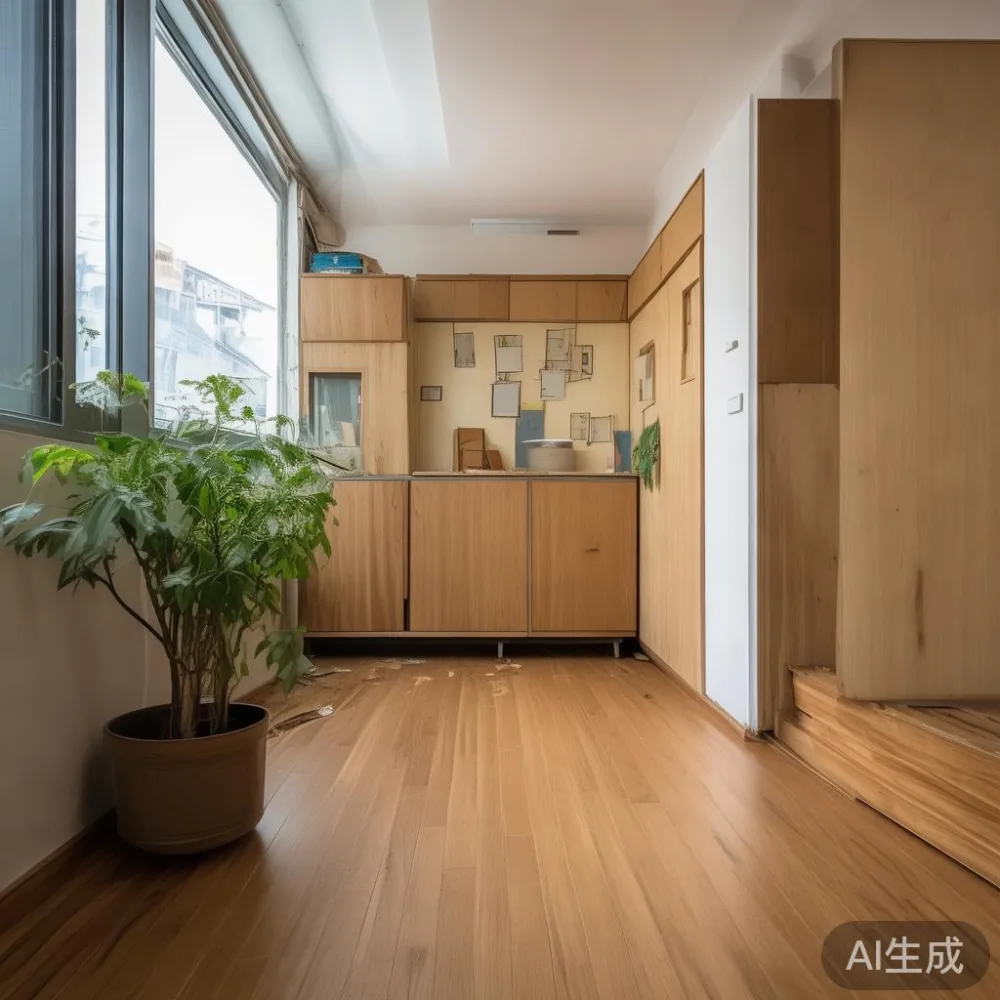
Humidity damage, by contrast, is symmetrical. It shows up on both sides of a piece, in patterns that mirror the airflow in the room: cupping that bows the centre of a tabletop upward because moisture entered the underside faster than the top, hairline checks that follow the grain rather than crossing it, and drawer faces that swell evenly so the gap on the left matches the gap on the right. If you press a fingernail into a shipping-damage dent and the wood feels soft and fibrous, it was crushed. If it feels hard and the surface is intact but the panel is curved, it cupped. That distinction matters when you file a claim, because shipping damage falls under carrier liability, while humidity response falls under acclimatisation.
Where can I buy a furniture in Singapore?
You can buy furniture in Singapore directly from established Foshan manufacturers like MIDHILL, which export container-load quantities to 15+ countries and ship to Singapore addresses with GST-inclusive pricing, free delivery above SGD 350, and a 14-day return window — most pieces arrive at your HDB door inside 14-21 days from the Foshan warehouse. Buying direct cuts out two layers of markup that local showrooms add, which is why a 1.8 m solid ash dining table that retails for SGD 4,200 in a Tampines showroom can land at your Punggol flat for SGD 2,550-2,900 when ordered factory-direct, GST included.
How do HDB lift and corridor widths create shipping damage that humidity then hides?
Older HDB blocks in Bedok and Tampines typically have lift cabins measuring 1.1 m deep by 1.4 m wide, with door openings around 0.9 m. Newer Punggol and Tengah blocks run slightly larger at 1.2 m by 1.5 m, but the door width stays roughly the same. A flat-pack dining table boxed for delivery usually measures 188 cm long by 28 cm wide by 95 cm tall for the top, plus separate legs. That 188 cm length fits diagonally in a 1.4 m wide cabin only if the carton is tilted past 30 degrees, which is exactly the angle at which carton edges hit lift rails. This is one of the most common causes of mid-corner shipping damage on solid wood pieces. The carton arrives looking acceptable; the corner has taken a 3-4 mm compression that does not show until the runner unpacks it in the customer's living room.
Corridors in HDB blocks are usually 1.2-1.5 m wide, with right-angle turns at staircase landings that measure 1.8 m across the diagonal. A 2.0 m tall wardrobe carton needs that diagonal clearance to make the turn. When the clearance drops below 1.85 m, the wardrobe is stood upright and slid around the corner, which is when the upper back panel takes a knock. Every MIDHILL delivery that leaves the Foshan warehouse for a Singapore address is paired with a measured floor plan that the customer emails us: lift cabin dimensions, corridor width at the tightest turn, and the height of the doorway into the flat. Pieces that will not fit are shipped RTA (ready-to-assemble) inside cartons no longer than 165 cm, even if the assembled product is larger. That single change has cut our reported shipping damage rate on wardrobes from around 4.5% to under 1.2% across the past four years.
How long should I let a solid wood piece acclimatise before I judge it for shipping damage?
Seven to fourteen days, with the carton opened but the inner foam left in place for the first 72 hours, then removed for a further 4-11 days while the wood equalises with the room. I tested this myself last month in a Bishan condo with a MIDHILL American light luxury oak nightstand. The carton hygrometer read 58% internal humidity. The bedroom hygrometer read 81%. After 14 days, the nightstand's internal moisture content had moved from 8.2% to 11.6%, and the drawer faces that had arrived sticking 1 mm proud of the frame were sitting flush. If I had filed a shipping damage claim on day two, I would have wasted everyone's time.
During that acclimatisation window, keep the piece out of direct afternoon sun, away from air-conditioner outlets that drop local humidity to 45-50%, and at least 30 cm from any external wall. Singapore HDB external walls in newer BTOs can run 2-3 degrees cooler than the room, which condenses moisture on the back of wardrobes and creates the asymmetric swelling pattern I mentioned earlier. A simple SGD 35 dehumidifier set to 60% in the bedroom or dining room is enough to keep solid wood furniture inside its design tolerance of 8-12% moisture content, and it costs about SGD 8 a month in electricity at Singapore's tariff of roughly SGD 0.32 per kWh.
What should I photograph before signing the delivery note if I suspect shipping damage?
Four things, in this order. First, the unopened carton, with a clear shot of any corner crush, tear, or water staining — water staining is a strong indicator that the piece has been through container rain, which is a separate freight issue from forklift drops. Second, the inner foam wrap, still in position, to show whether impact has travelled through to the surface. Third, the piece itself once unpacked, with a straight-on shot of the affected area plus a 30 cm ruler laid alongside for scale. Fourth, a wide shot of the room that shows the lift door and corridor where the carton was carried, because we have had cases where the same impact shows up on two different pieces in the same delivery, pointing firmly at corridor damage rather than factory damage.
Send those four photos to the supplier within 48 hours. For MIDHILL shipments, the 14-day return window is paired with a lifetime refinishing service on every solid wood bed frame, solid wood sofa, solid wood dining table, wardrobe, and nightstand we sell, so even a confirmed shipping damage event does not necessarily mean the piece is written off — it means a workshop in Foshan repairs it, and we ship it back. Most Singapore deliveries turn around inside 21-28 days for a repair or 7-10 days for a replacement, including the original sea freight.
Does marble table shipping damage behave the same way as solid wood shipping damage?
No, and the difference is worth knowing because marble tops ship with wooden bases. A MIDHILL marble table typically pairs a 12-15 mm sintered stone or natural marble top with a solid ash or walnut base, and the two components travel in separate cartons. The marble top sits inside a fitted foam cradle inside a plywood crate. Crushed foam on a marble top's edge means shipping damage; a hairline crack that appears after 30 days usually means the base swelled from humidity and twisted the top out of plane. Marble tolerates compression but not tension, so a 1-2 mm twist in the base applies enough force to crack a 12 mm slab. The fix is rarely to replace the marble — it is to shim the base and refinish the wooden sub-frame.
A short field checklist for Singapore buyers
Measure the lift cabin, the corridor turn, and the front door before you order. Send those three numbers to the supplier and ask for a carton diagram, not just a product drawing. Confirm the wood species and its factory moisture content — anything between 8% and 12% is acceptable for Singapore. Plan a 14-day acclimatisation window with a dehumidifier set to 60%. Photograph everything on arrival. And remember that shipping damage is a specific, physical event with a specific, physical signature, while humidity response is a slow, symmetrical movement that almost always settles itself once the wood equalises with the room. The two get confused constantly, but they have different causes, different fixes, and different warranty paths — and knowing the difference saves you both money and arguments with your delivery team.
Buying solid wood furniture in this part of the world is a quiet negotiation between a 4,200 km supply chain and an 82% humid afternoon in Tampines. Get that negotiation right, and a MIDHILL piece will outlast two lease cycles and still be the one your children argue about.