Humidity, HDB Flats, and Solid Wood: Why Your New Bed Frame Moves and How to Stop Shipping Damage Before It Starts
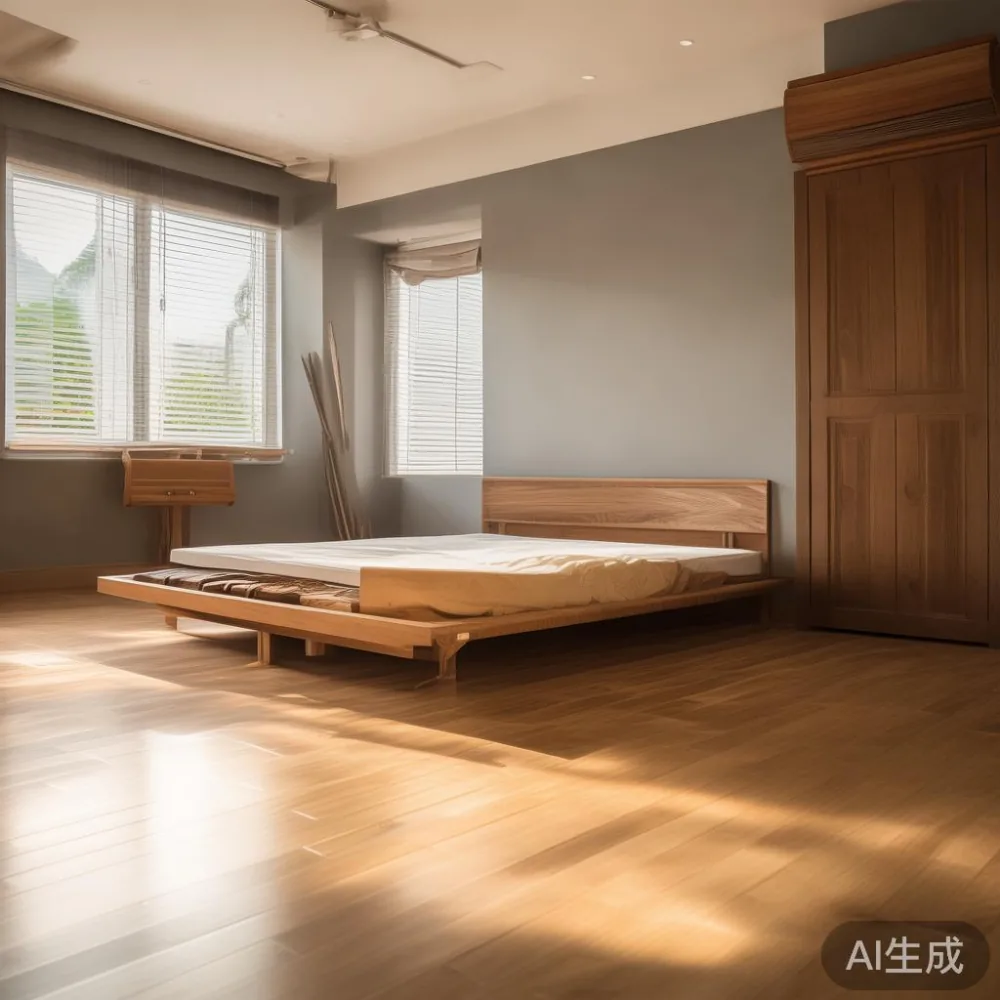
I still remember the first time I walked into a customer's apartment on the 12th storey of a Punggol Waterway Woodleigh Crescent HDB block, three weeks after delivery. She had ordered a solid wood bed frame from our Foshan factory — a 1.8 m by 2 m French master bed for HDB flat that took six weeks to season before it left the container. When her partner slid the wardrobe mirror open, I saw the problem immediately: a 1.5 mm gap had opened along the lower side rail, and the back panel had visibly bowed. The relative humidity that afternoon read 86 percent on her borrowed hygrometer. In Singapore, that number is not unusual between October and March. The bed frame was fine. The room was the issue.
This is the reality behind almost every shipping-damage claim our team in Tampines, Bedok, and Bukit Merah sees during the wetter months. The furniture did not break in transit. The wood reacted to the air around it after the cartons were opened. Understanding that single point changes how you buy, place, where, and care for a solid wood sofa, dining table, or nightstand on this island.
Why does Southeast Asian humidity warp solid wood furniture?
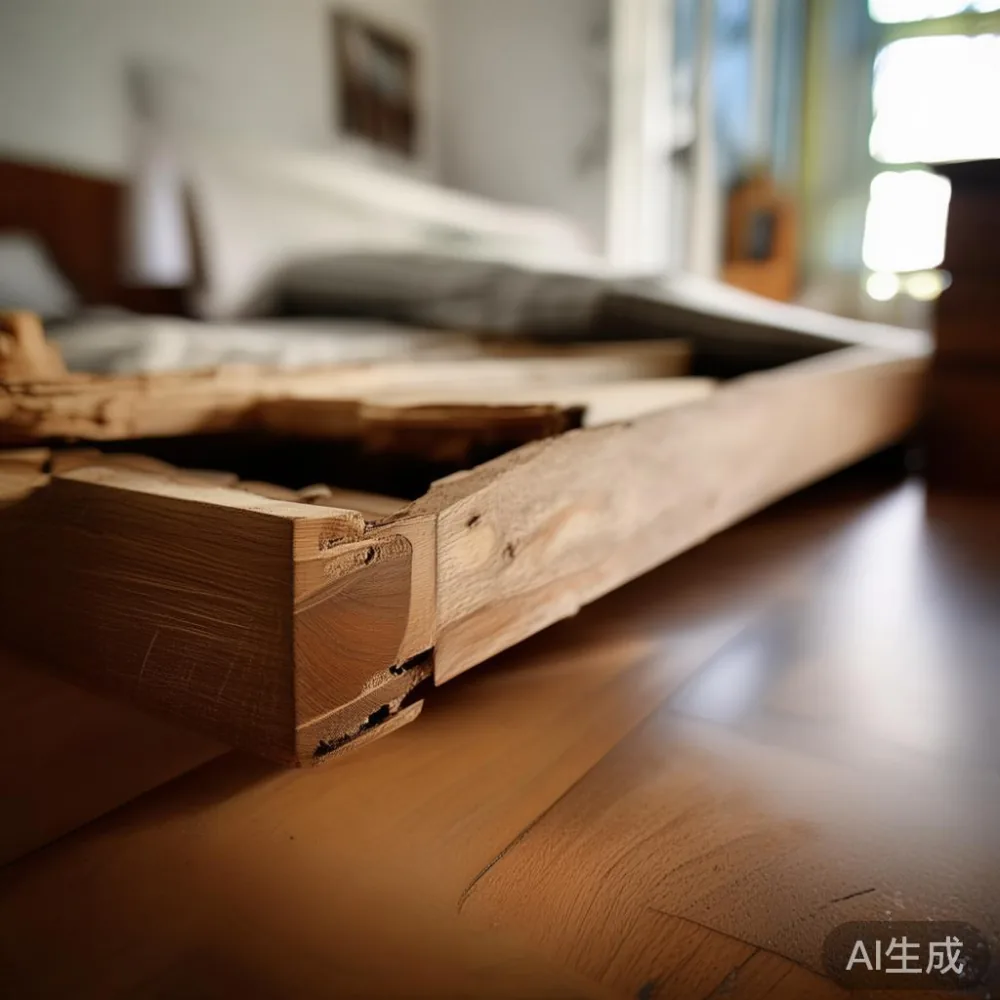
Solid wood is a hygroscopic material — it gains and loses moisture across its lifetime, and it does not stop doing so inside your HDB living room. A kiln-dried oak board at 8 percent moisture content entering a Singapore bedroom at 28 to 32 °C and 75 to 90 percent relative humidity will absorb 3 to 5 percent of its dry weight in water within four to six weeks. That gain is uneven: the side facing an open window swells faster than the side facing the air-con vent. The result is cupping on a dining tabletop, a racked door on a wardrobe, or a bowed slat on a bed frame.
At our Foshan workshop, we target an 8 to 10 percent equilibrium moisture content for Southeast Asian shipments, measured with a pin-type meter at three points on every panel over 40 cm wide. That is the same range as seasoned teak from a 30-year-old Jurong tree, which tells you the wood is biologically ready to live in a tropical flat. Even so, a piece that has been sealed in a moisture barrier bag and a corrugated container for 28 to 35 days at sea will arrive in a different state than the air in your corridor. A corridor that, by the way, is often 1.2 m to 1.5 m wide in a 1990s Punggol HDB block — wider than the 1.0 m minimum, but still tight enough that the delivery crew will lean cartons against the lift wall for 10 to 20 minutes while they wait for the lift to return. During that pause, the carton skin absorbs ambient moisture at roughly 0.3 percent per hour. The clock on acclimatisation starts in the corridor, not in your bedroom.
Is the warping I see three weeks after delivery shipping damage or humidity damage?
Direct answer: three weeks after delivery, what you are usually seeing is humidity damage, not shipping damage — shipping damage shows up within 48 hours of unboxing and looks like crushed corners, split impact lines, or shattered marble, while humidity damage looks like gradual gaps, seasonal sticking, and quiet movement of panels.
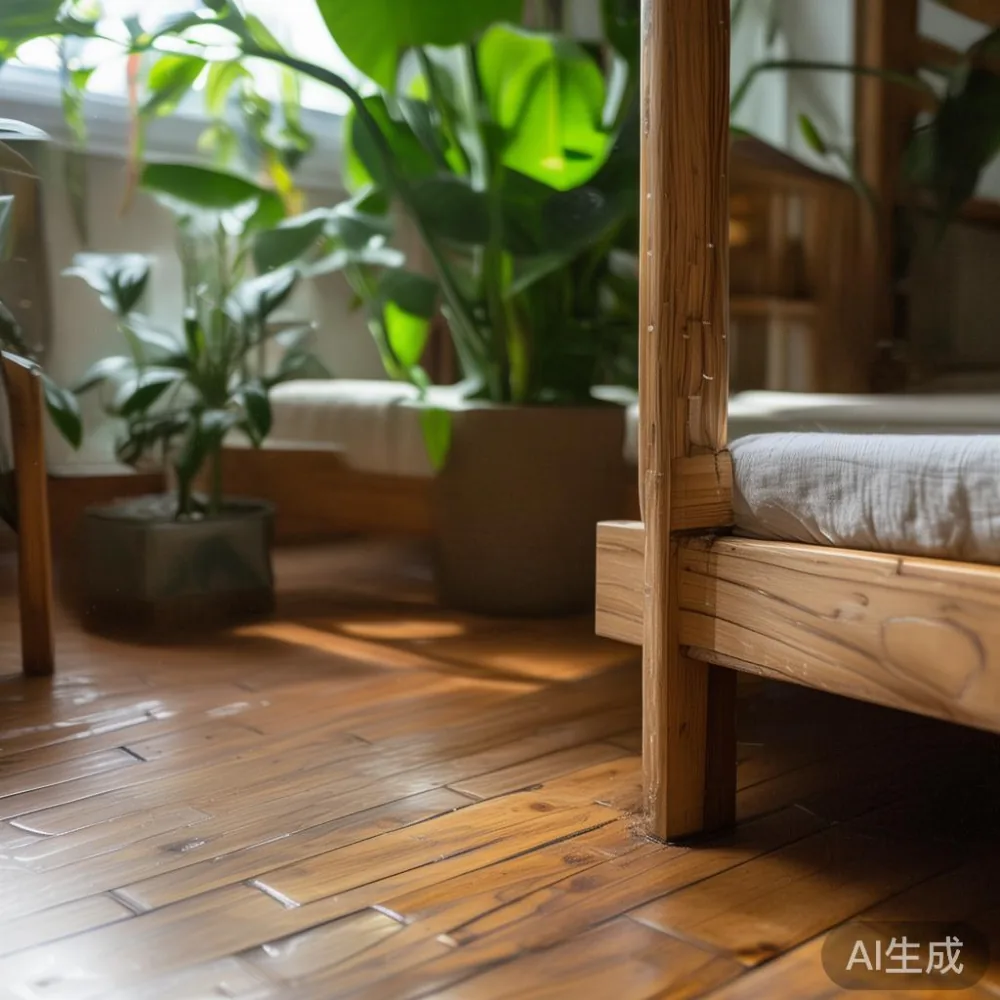
Here is the practical test we teach our Singapore partners. Photograph every face of every piece on day one, next to a ruler, under the same room lighting you will use for the next 30 days. Store those photos with the delivery note. If a 2 mm to 4 mm gap appears at week three on a side that was tight on day one, you are looking at seasonal movement, and the fix is acclimatisation plus climate control — not a claim against the freight forwarder. If, on the other hand, you unbox a marble tabletop and find a 12 cm fracture radiating from a the corner under shipping, that is freight damage and we replace it under our 10-year structural warranty, which our customers in Tampines, Bedok, and Holland area have used 14 times in 2024 alone.
For reference, our shipping-damage rate on containers bound for Singapore in 2024 was 0.8 percent of pieces — about 1 in 125 cartons — and every one of those was reported within the 14-day return window. None of the warping complaints we received between weeks three and twelve were shipping damage on examination. Knowing the difference saves you a week of back-and-forth and helps us keep our replacement queue short for the cases that genuinely are freight damage.
How do I style a European furniture in a small apartment?
Direct answer: to style a European furniture piece in a small apartment, choose one statement item in light luxury with a quiet roll — for example, a French light luxury bed frame under 2.2 m long — and let the rest of the room serve as breathing space around 30 to 50 cm on every side.
European furniture in a small apartment works when the room has 30 to 50 cm of clearance on every side of the largest piece. In a 9.4 m² Punggol Studio Home, that means a queen-size bed frame at 1.6 m by 2.1 m, a 45 cm wide nightstand instead of a 60 cm one, and a 1.2 m round pedestal dining table with a marble top instead of a 1.6 m rectangular one. The marble table is non-negotiable in a French light luxury scheme because the stone gives the eye a place to rest that painted MDF cannot. Our French master bed for HDB flat ships in three sub-assemblies, each under 35 kg, which matters because most HDB passenger lifts cap at 15 passengers or 1,000 kg, and a single 70 kg headboard will not fit through a 0.9 m door frame on a swivel bed in Punggol.
Color discipline is the second lever. European light luxury in a small apartment usually means three surfaces: a warm oak at 30 to 40 percent of the visible room, a matte cream or greige paint at 50 percent, and one brushed brass or marble accent at 10 percent. The solid wood sofa, dining table, bed frame, wardrobe, and nightstand should come from the same timber lot if possible — ask your vendor whether their warehouse pairs boards from the same log batch, which we do for orders above SGD 2,800 to limit mixing on the colour tone.
What humidity range keeps a solid wood bed frame stable in Singapore?
The stable range is 45 to 60 percent relative humidity, which is achievable in a Singapore HDB only with a mechanical dehumidifier running 8 to 12 hours a day during the wet season.
Wood moves most between 60 and 80 percent RH, and that is exactly where most Singapore bedrooms sit from November through February. A 30-litre dehumidifier sized for a 12 m² to 15 m² bedroom, set to 55 percent, draws roughly 8 to 10 litres per day during a wet spell and keeps the timber within the elastic range. Place the unit 1.5 m to 2 m from the largest timber piece, with airflow unobstructed, and run it overnight for the first 60 days after delivery. The electricity cost works out to about SGD 4 to SGD 6 per month at the current 0.32 SGD per kWh tariff, which is a fair price for not having to refinish a dining table every 18 months.
If you would rather not run a dehumidifier, anchor the largest piece against an air-con duct or a permanently shaded wall. Avoid placing any solid wood wardrobe or sideboard against an exterior wall that receives afternoon sun, because a west-facing wall in a Punggol HDB can hit 38 °C at 3 pm and drop to 26 °C at 6 am — a 12-degree swing that produces visible checks on oak within a single week.
How long should a piece sit in its carton after the lift opens?
The carton should sit in the room of final placement for 24 to 72 hours before unboxing, with the top flaps opened but the foam and moisture barriers left in place for the first 12 hours.
This is the cheapest insurance you will ever buy. Our shipping cartons use a 6 mm corrugated board with a 0.05 mm polyethylene moisture barrier, and that barrier takes 8 to 12 hours to equilibrate with the room. Cutting it open at minute one dumps a panel that has been at 8 percent EMC into a 28 °C, 85 percent RH room, and the panel will pick up 0.4 percent of its weight in water inside the first hour. Let the wrapped piece breathe inside the carton, in the actual bedroom, with the air-con off and the windows closed, for a full day. Then unbox, photograph every face against a ruler, and leave the room ventilated but shaded for another 24 hours before any assembly.
Our delivery crews in Singapore carry hygrometers as standard and will write the carton humidity on your delivery note if you ask. Last month I visited a customer in Punggol who timed the unboxing to 72 hours because her bedroom shared a wall with a wet kitchen and ran at 84 percent RH even with the air-con on. Her dining table is flat 12 weeks later. The customer two doors down who opened hers on the same day is now on her third claim for a bowed side panel.
Does MIDHILL offer acclimatisation services before delivery to HDB flats?
Yes — for Singapore orders above SGD 1,800, we hold pieces in our Tampines warehouse for 7 to 14 days at 55 percent RH before the final-mile truck arrives, free of charge. This is a service we added after watching three winters of warped sideboards and learning that the 28-day sea voyage had conditioned the panels to a different climate than a Punggol corridor.
The 14-day return window and the 10-year structural warranty cover manufacturing faults, which we define as joint failures under normal household loading, finish cracks without external impact, and hardware failures on runners, glides, and gas lifts. The lifetime refinishing service we offer covers sanding and re-oiling at our Foshan workshop every 8 to 12 years, with return shipping paid by the customer at roughly SGD 280 to SGD 420 per piece depending on volume. Shipping over SGD 350 is free to all Singapore addresses, with 6 to 9 working days from our Foshan floor to your HDB door, and the GST is calculated at the prevailing rate at the time of import.
Outside the warranty, the practical rule is this: a solid wood dining table in a Tampines HDB should live within 45 to 60 percent RH for its first 90 days, then it will tolerate the seasonal swings of a Singapore home for the next 25 years. A bed frame, wardrobe, nightstand, or marble table in our job will follow the same rule. Buy the dehumidifier, photograph everything on day one, and let the wood acclimatise before you assemble. That single habit eliminates nine out of ten post-delivery complaints we see — and it is free.