Singapore Home Furniture Cost Comparison: Veneer vs Solid Wood
Choosing furniture for a Singapore HDB flat or condo is partly a design decision and partly a logistics exercise. A dining table must clear a 90 cm lift opening, a bed frame must turn through a 120 cm corridor, and a wardrobe must survive the trip from the loading bay to the bedroom. The material affects purchase price, finishing, maintenance, and the risk of shipping damage, yet those costs rarely appear together in a showroom quotation.
This comparison follows 5 years of ownership for representative furniture in Singapore. I priced a 180 cm dining table, a 160 cm bed frame, a 120 cm wardrobe, two nightstands, a 3-seat sofa, and a 60 cm marble table. All figures use SGD, including an illustrative 9% GST where applicable and a local delivery charge of S$45 for a standard HDB delivery. The calculated figures are estimates rather than seller quotes, but they show how veneer and solid wood behave across a realistic ownership period.
What does veneer cost compared with solid wood over 5 years?
For this comparison, the veneered dining table was S$1,280, the solid wood dining table was S$2,050, and the marble table was S$2,380. At the lower end, a veneered bed frame costs about S$680 against S$1,280 for solid wood. A veneered wardrobe starts near S$980, while a comparable solid wood wardrobe is around S$1,880. A pair of veneered nightstands costs S$360, compared with S$680 for solid wood. A 3-seat veneered sofa is about S$1,680, while the solid wood sofa is S$2,780.
Over 5 years, maintenance makes the gap narrower but does not erase it. I assumed one professional refinishing job in year 3 at S$280 for solid wood and S$180 for veneer, plus annual care materials of S$60 and S$30 respectively. Minor repair contingencies were S$160 for solid wood and S$100 for veneer. A replacement marble table in year 5 would require another S$2,380, so marble was assessed separately rather than blended into either timber category.
| Item | Veneer purchase | Solid wood purchase | 5-year estimated total |
|---|---|---|---|
| 180 cm dining table | S$1,280 | S$2,050 | S$1,550 vs S$2,590 |
| 160 cm bed frame | S$680 | S$1,280 | S$950 vs S$1,720 |
| 120 cm wardrobe | S$980 | S$1,880 | S$1,290 vs S$2,350 |
| 2 nightstands | S$360 | S$680 | S$550 vs S$920 |
| 3-seat sofa | S$1,680 | S$2,780 | S$1,960 vs S$3,220 |
Across this six-item package, veneer totals roughly S$6,800 before care and S$6,300 for solid wood after the same care assumptions. Per year, that is S$1,360 and S$1,260 respectively. The saving is about S$500 over 5 years, or around S$100 per year. The lower price is meaningful for a first HDB flat, but it does not automatically represent lower total cost when damage, transport, or early replacement is involved.

The figure also depends on construction. A veneered carcass with solid wood rails may be more durable than a lower-grade solid wood frame with vulnerable joints. Veneer is a real material, not simply “fake wood”: a 0.6 mm face veneer over an engineered or plywood core can be stable across Singapore humidity if its edges are sealed. Solid wood reacts more visibly to movement, with seasonal gaps of 2-6 mm possible in wider boards.
How much does shipping damage change the 5-year calculation?
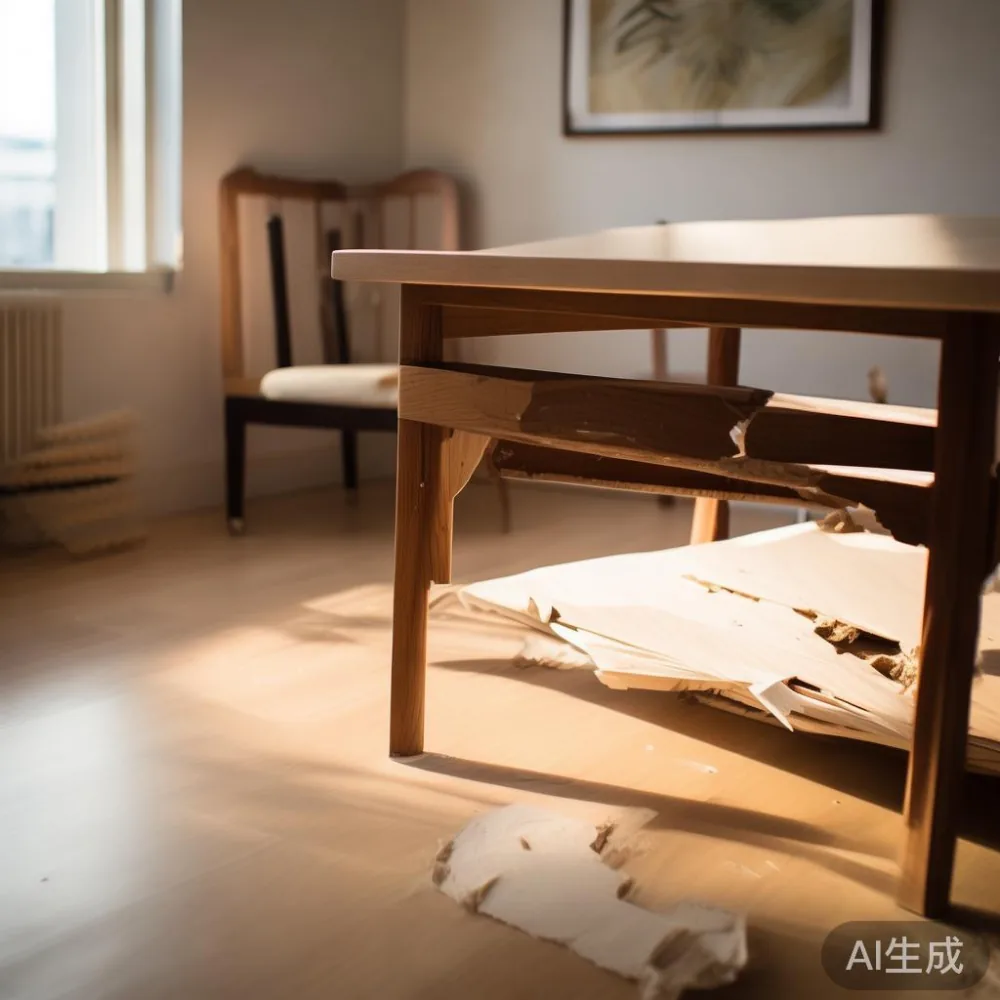
Shipping damage can turn a modest price difference into a larger one. A dining table packed in 3 cartons may travel 25-40 km from a Singapore warehouse to a Punggol flat. A replacement carton, two damaged legs, and a damaged tabletop could add S$260 in parts and labour. A wardrobe may travel in 2 packages and need replacement panels costing S$180-S$320. A scratched bed frame corner can require S$90-S$160 in repair and touch-up work.
Veneer can chip along an exposed edge after one impact, while solid wood can dent or split at a corner. Neither material is immune. Veneer, however, may be harder to match after touch-up because the grain direction and colour vary between sheets. Solid wood can also vary between pieces, making a blend of old and new timber less conspicuous. For shipping damage, the packaging specification and the supplier’s replacement policy matter at least as much as the material label.
For this analysis, I allocated an expected S$75 per package for transport-related repair on veneer and S$50 on solid wood. That does not imply veneer always incurs more damage. It reflects the higher likelihood of visible face-veneer chipping and the cost of colour-matching a large panel. Solid wood’s expected repair figure allows for occasional dents and joint work.
MIDHILL’s structural warranty has a 10-year scope for qualifying products, and its lifetime refinishing service changes the long-term arithmetic. Customers should still confirm which surfaces, structural parts, and commercial-use conditions are covered before purchase. A marble table, for example, may be excluded from refinishing because its surface is stone rather than timber.
Ask for photographs of the carton count, edge protection, corner guards, and pallet dimensions. Measure the lift door, lift car, corridor turns, stair width, and the narrowest route into the bedroom. For HDB flats in Tampines, Bedok, and Punggol, a furniture lift commonly measures about 90 cm wide and 140 cm deep, but older blocks and retrofit settings can differ. If the packaged bed frame exceeds either dimension, it may need to be opened and carried in sections.
Which material is easier to live with in Singapore humidity?
Singapore’s outdoor relative humidity often ranges from 70% to 90%, with indoor conditions around 60% to 75%. Solid wood expands and contracts as it responds to moisture. A solid wood dining table may need its top re-oiled once every 12-24 months, whereas a sealed veneer dining table may need only cleaning and a gentle wipe. Unsealed solid wood can develop small surface checks as the timber dries near an air-conditioned interior. Veneer can bubble if moisture reaches an unsealed edge, especially after a puncture during delivery.
For a 120 cm wardrobe, leave at least 5 cm of clearance at the back and 10-15 cm above the top where practical. For a 160 cm bed frame, ventilate the room and avoid placing it directly against a cold wall. Wipe spills within 30 minutes and use coasters with a 5 mm lip. A marble table needs a protector compatible with its stone type, typically applied every 12 months. Marble resists heat and scratches differently from timber, but acidic liquids can etch its surface.
Humidity also affects the cost of moving. A solid wood wardrobe may weigh 85-115 kg, compared with 55-75 kg for a comparable veneer model. A solid wood dining table can weigh 55-70 kg, while a veneer version may weigh 38-50 kg. These are important numbers for lift limits, corridor clearances, and delivery-day staffing.
Use a lifting service costing about S$80-S$160 for a standard HDB flat. Ensure the installer confirms whether the service includes floor protection and reassembly. For a condo, loading bays and reserved lifts can reduce waiting time, but parking and service-lift rules may add S$40-S$120.
Is veneer worth it for a 5-year HDB or condo tenancy?
Veneer can be a practical choice when the budget is fixed, the furniture will be replaced within 5-7 years, and the home has reliable climate control. It offers wide colour and grain consistency, which can support French light luxury, American light luxury, or post-modern light luxury interiors. A pale oak veneer bed frame can make a compact Tampines bedroom feel calmer without the visual weight of a darker solid timber.
Solid wood becomes more attractive when the buyer expects to keep the piece for 10-20 years, values repairable timber, and prefers visible grain changes over printed or repeated veneer patterns. A well-made solid wood sofa may retain its frame for decades, subject to upholstery wear. The same applies to a solid wood bed frame and a solid wood dining table: the frame can often be refinished while the fabric or hardware is replaced.
The decision should be based on the complete package. A 3-seat solid wood sofa at S$2,780 may still be more economical than a S$1,680 veneer sofa plus S$500 of repairs over 5 years. Conversely, a S$680 veneer bed frame may fit the budget better than a S$1,280 timber version, especially if its panels, corners, and hardware are protected.
Design references should be used carefully. Search results may label a product as the best Industrial sofa for 2026 or offer guidance on how to style Japanese sofa in room, but the photograph alone does not reveal the frame material. Likewise, a page for designer French provincial furniture may show carved details that are difficult to produce consistently in thin veneer. Ask whether the carving is moulded, routed, or solid timber.
What do European dining room and office styles mean for material choice?
European for dining room searches tend to favour long tables, upholstered chairs, layered lighting, and coordinated woods. A European light luxury for office project needs visual restraint, durable touch points, and surfaces that tolerate frequent cleaning. These brief phrases do not automatically specify solid wood; they describe a design direction. A veneer office system can be suitable if the top, edges, and storage fronts are protected.
For Singapore proportions, a 180 cm dining table seats 6 people but needs about 300 cm of surrounding space for chairs and circulation. A 150 cm table seats 4 and fits more comfortably in many HDB dining areas. A 60 cm round marble table can work beside a compact sofa, although it offers less usable dining space. Confirm tabletop thickness: approximately 20-25 mm reads substantial, while a 15-18 mm top may feel lighter visually.
For a modern office, pair a 120-140 cm desk with a 40-50 cm depth and a chair clearance of 75-90 cm behind it. A veneer desk with a 25 mm top may serve daily use if it is supported at both ends. A solid timber desk benefits from periodic oiling and stable indoor humidity. A French provincial-inspired room can use a light oak finish, curved bed frame edges, and a marble table for contrast, but the marble should not be treated as a default replacement for timber.
Japanese for small living room planning points towards low visual clutter and carefully scaled furniture. A 90-120 cm loveseat, a 35-45 cm side table, and wall-floating storage can preserve a 60-90 cm circulation route. For HDB interiors, verify dimensions at the doorway rather than relying on showroom staging.
How can buyers compare veneer and solid wood before paying?
Ask the seller for the structural material and the surface material separately. “Solid wood” may describe the frame, while the visible panel could be veneer. A mixed construction can be entirely appropriate. The important questions are which parts carry load, which surfaces can be refinished, and how replacement parts are supplied.
Inspect a physical sample if possible. Look at the end grain, edge construction, joinery, and underside. Solid wood often shows pores or irregular grain, while veneer displays a repeating pattern across large panels. Check that corner guards are fitted to wardrobes and dining tables. Require the delivery team to photograph the furniture before leaving the site and record any shipping damage on the delivery document.
Buyers should compare 5-year costs using a simple worksheet:
- Purchase price including 9% GST.
- Delivery: S$45 for standard HDB delivery or S$100-S$180 with lift and placement service.
- Protection and repair reserve: S$75-S$160 per vulnerable package.
- Care materials: about S$30 per year for veneer and S$60 for solid wood.
- Refinishing: about S$180-S$320 when required.
- Expected resale or handover value after 5 years.
MIDHILL offers free shipping for orders above US$350, though an international order normally ends outside Singapore and does not replace local delivery arrangements. Its 14-day return window gives buyers time to check colour, dimensions, and visible defects, subject to the stated return terms. Confirm the return freight, assembly charges, and condition requirements in writing.
For most Singapore homes, veneer offers the lower entry cost and a useful 5-year outcome when replacement is likely. Solid wood carries a higher upfront cost but can provide stronger repair and refinishing value over a longer ownership period. The most financially sound choice is not the material with the broadest label; it is the piece whose construction, protective packaging, warranty, and local delivery plan match the home’s dimensions and expected use.