Humidity, HDB Homes and Shipping Damage: A Practical Guide for Solid Wood Furniture
Singapore’s warm, humid climate can change solid wood by more than a few millimetres. A solid wood dining table may gain 2–3 mm across its width during a humid week, then lose 1–2 mm as the air dries. That small movement matters when doors no longer close, drawer fronts begin to catch, or a veneer bubbles after a rainy delivery. Humidity can also exaggerate the knocks that occur during shipping damage, especially when a wardrobe or bed frame is moved through a narrow HDB corridor.
For shoppers in Tampines, Bedok, Punggol and newer condominium developments, furniture has to cope with lift dimensions, shared corridors and air-conditioning that does not always run continuously. The goal is not to pretend wood never moves. It is to choose furniture that is stable, inspect it properly, acclimatise it carefully and reduce the risk of shipping damage.
At MIDHILL, our approach has always been practical: solid wood should be built to move, finished to withstand humid conditions and packed to survive the route from the workshop to the home. A 10-year structural warranty reflects the frame; lifetime refinishing addresses surface wear over the years of ownership.
Why Singapore humidity changes solid wood furniture
Wood is hygroscopic. It absorbs moisture when relative humidity rises and releases it when humidity falls. The amount of movement depends on species, grain direction, panel construction and the thickness of each board. Solid wood can expand across the grain much more than it expands along the grain.
Singapore’s monthly relative humidity commonly ranges from about 65% to 85%, while air-conditioned rooms may fall to 50% or below. A dining table with 5 solid timber leaves might move approximately 1–3 mm across a 180 cm width through seasonal changes. A solid wood bed frame may develop slight movement at its joints. A wardrobe door fitted in a very dry air-conditioned bedroom may need adjustment after being installed in a corridor exposed to humid outside air.
These changes are normal. Problems occur when moisture changes too quickly, a piece arrives wet, or a finish traps moisture against the timber. Water rings, dull patches, mould around joints and swollen drawer runners need prompt attention. Prolonged dampness can also encourage fungal growth, although a sound factory finish and sensible indoor care make serious decay uncommon.
I tested a 160 cm oak dining table last month across two rooms in a Bedok HDB flat. With a calibrated humidity meter, one side of the dining room measured 78% while the bedroom near the air-conditioner measured 54%. Over 14 days, the table’s width changed by about 2 mm. The movement remained even because the top had been joined with staggered grain and supported underneath. My colleague then left a similar table near an open balcony door during a heavy storm. It picked up moisture faster, and a temporary water mark appeared near a screw head. That observation reinforced how much placement matters in Singapore.
What shipping damage looks like after delivery
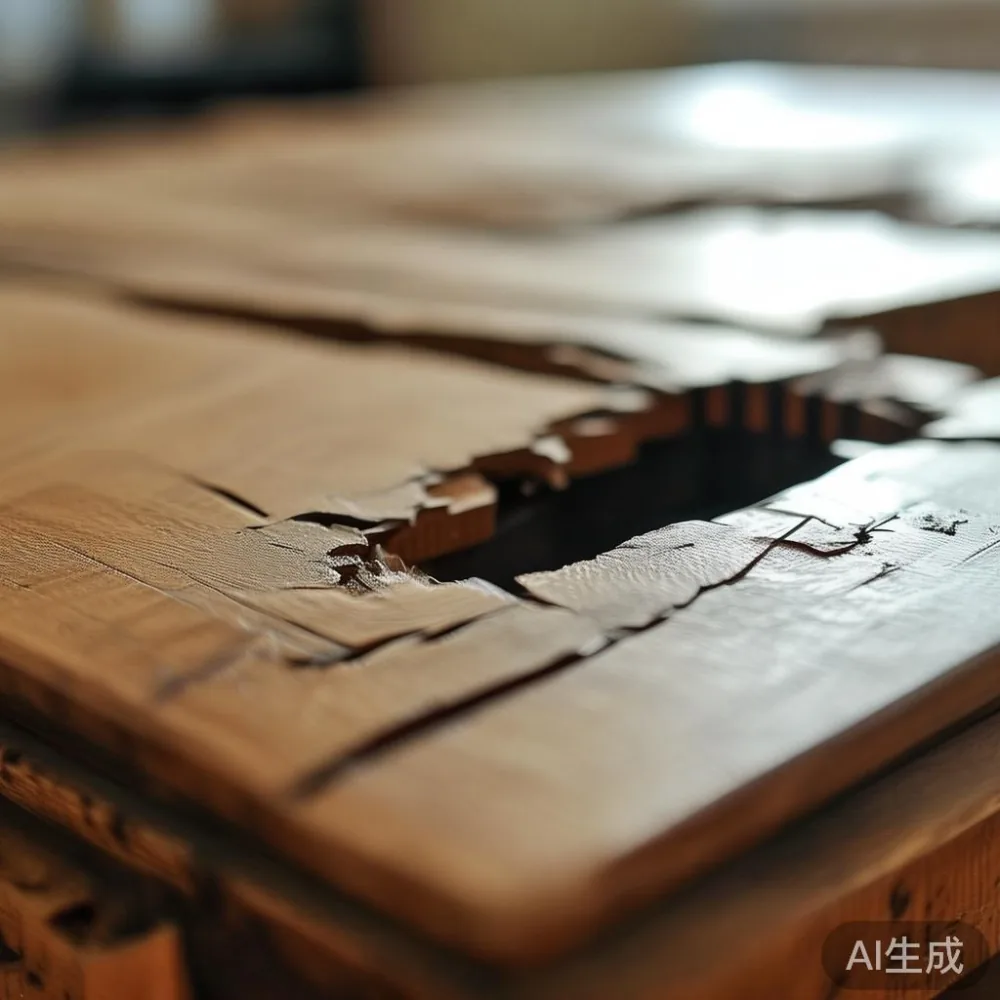
Shipping damage can include crushed corners, split rails, chipped joints, scratched table tops, displaced door panels and detached legs. Humidity may not create the injury, but it can make an impact more visible. A protective corner that has absorbed dampness can soften, while a tight joint may loosen slightly as wood swells. Similarly, a small dent in a marble table may be easier to notice beside a swollen solid wood cabinet door.
Common delivery-day risks in Singapore homes are specific and physical. HDB lift cars are often about 210 cm deep and 110–140 cm wide, with door openings near 90 cm. A boxed wardrobe side may pass through vertically, yet the turning space at a corridor bend can be tighter than expected. Bed frames and solid wood sofas may require tilting through a 90 cm opening. Dining tables may fit the lift diagonally, although a 220 cm tabletop can be longer than the car’s diagonal in some blocks.
Before delivery, request the packed dimensions and weight for every carton. A solid wood sofa might arrive in packages weighing 35–85 kg, a dining table in a 45–70 kg crate, and a wardrobe in panels weighing 20–60 kg per carton. Check whether the lift booking already includes the service, and reserve a 30-minute window if the building requires it.
Inspect the furniture while the delivery team is still present. Photograph all 6 sides of each carton before opening it. Photograph corners, rails, legs, drawer fronts, marble surfaces and every scuffed area. Use a 30 cm ruler beside larger marks so scale is clear. Record damage in the delivery paperwork instead of relying on memory after the van leaves.
For Singapore orders above US$350, MIDHILL provides free shipping, while local purchases are charged in SGD under the stated terms. That does not remove the need for access planning: a shipment can still be delayed or handled awkwardly. Shipping damage should be documented within 24 hours, and our 14-day returns policy gives buyers a defined period to assess an item indoors.
How to choose European sofa for humid Singapore homes
If you are comparing how to choose European sofa options for a Singapore living room, start with the frame and the climate response rather than the style label alone. Look for kiln-dried hardwood, solid wood sofa construction where requested, and joints that allow controlled movement. A European-style sofa with turned legs can still be stable if the rails are properly joined and the feet are fixed with durable inserts.
Measure the HDB living room before ordering. Allow at least 75–90 cm for a walkway beside a sofa in an active family home, or 60 cm if the route is used only occasionally. Check the sofa’s packed dimensions, not only its assembled width. A 220 cm three-seat sofa may enter through the main door without touching the frame, but it may not turn inside a narrow corridor.
Upholstery deserves equal attention in humid conditions. Rotatable or reversible seat cushions can be aired more easily, while removable covers can be washed according to their care instructions. For solid wood sofa arms and exposed bases, ask whether the finish is water-based, low-sheen and suitable for tropical interiors. Avoid placing the piece against a wall that receives persistent dampness.
Do French provincial details survive a condo or HDB setting?
French provincial furniture can suit a light-luxury apartment, but curved profiles and decorative edges need careful space planning. A dining table with cabriole-style legs should have enough room to seat 6 people at approximately 60 cm per place setting. The top should measure at least 180 cm long and 90 cm deep. If space is limited, a 150–160 cm table may be more practical for 4 people.
Budgets often begin with under 2000 French provincial furniture, but the category can include both ready-made pieces and made-to-order work. Compare what is included: solid timber, joinery, finish, marble top, delivery and assembly. A marble table may add SGD 300–1,200 to a project, while premium European hardware can add another SGD 150–600.
French provincial for office searches often lead to desks, bookshelves and writing tables, yet the same climate rules apply. A solid wood desk should have a stable modesty panel, not a narrow decorative frame that twists under humid conditions. For a 140 cm desk, check that the room can accommodate a minimum 70 cm circulation space behind a seated user.
For storage, MIDHILL French provincial wardrobe shoppers should confirm the door swing, ceiling height and skirting clearance. A 120 cm-wide wardrobe may need 125–130 cm of total space because the door opens 90–110 degrees. In a compact bedroom, a wardrobe 200–220 cm tall may look balanced, but ensure that the top is at least 15–20 cm below the ceiling so airflow and installation are easier.
Bed frames, dining tables and nightstands: control movement at the source
A solid wood bed frame is often the largest furniture item in an HDB bedroom. Check that the assembled width fits the bed position and the cartons fit the lift. Mattress support slats should sit at regular intervals—typically no more than 5–8 cm apart for common foam mattresses—so seasonal panel movement does not create an uncomfortable dip.
Allow the bed frame to acclimatise before tightening every fixing. Over 3–7 days, keep it away from open windows and use the bedroom’s normal air conditioning gradually. Do not force a slightly swollen drawer or wardrobe door. Apply the appropriate adjustment after the wood reaches a more stable moisture level.
For a dining table, keep it away from air-conditioner outlets, kitchen sinks and balcony doors. Use a stable indoor humidity range, ideally around 50–65% where practical. Place coasters and mats rather than leaving wet glasses or dishes directly on the surface. Wipe spills within 10 minutes and dry the area with a soft cloth.
A nightstand offers an easy test of local conditions because it is usually moved between the bedroom and corridor. If one side feels damp, do not place the unit against a chiller wall or exterior wall that remains cool. A fitted felt pad can protect the floor, while a 3–5 cm gap from the wall can improve airflow.
Style can remain light luxury without fighting the climate. French light luxury often uses pale timber, restrained curves and linen textures. American light luxury tends toward generous proportions, clean profiles and substantial wood details. Post-modern light luxury may mix shapes and materials. Each approach can work in a condo, provided the construction handles tropical humidity and the dimensions suit the building.
Marble tables and mixed-material rooms
A marble table can be durable, but it has different moisture and handling requirements from solid wood. Natural marble can react to acidic substances, while veining and corners can chip if the top is struck during transit. Keep cleaning agents neutral, use a soft cloth and avoid vinegar, lemon and abrasive cleaners.
Ask how the marble is reinforced and supported. A 12–20 mm top may be suitable for a dining table, but dimensions, frame support and edge treatment matter more than thickness alone. During delivery, the table should be lifted by the frame rather than dragged by the marble edge. If the lift has a 5 mm threshold, have the team use a suitable dolly and protective blankets.
Many light-luxury rooms pair a marble table with a solid wood dining table nearby. This is visually appealing, but the two materials can show dirt and moisture marks differently. Stone should not be treated as a surface for standing water. Wooden tables need controlled wiping; marble needs prompt removal of acidic spills. Labeling each surface can help households maintain them correctly.
When comparing European light luxury sofa vs Modern sofa options, consider the timber frame, cushion construction and delivery dimensions together. “Modern” describes appearance, not moisture resistance. “European” identifies a style tradition, not a guarantee of kiln-drying or joinery. Ask for the actual material and construction specifications before purchasing.
Acclimatisation: what to do in the first 14 days
Solid wood furniture should acclimatise gradually after arrival. Leave the dining table, bed frame, wardrobe or nightstand in its protective packaging for 24–48 hours if the cartons were damp or the air conditioning was switched off during the trip. If the packaging is dry and the room is stable, unwrap the furniture promptly so the wood can adjust to indoor humidity.
For the first week, use the air conditioner in a moderate setting and avoid sudden changes. Keep furniture at least 30 cm from open windows and 15 cm from external walls when practical. Check drawer doors, cabinet hinges and table joints twice daily for the first 3 days. If a door binds, adjust the hinge rather than sanding the door immediately.
Do not use a dehumidifier aggressively in a small room. Moving from 80% to 35% humidity in 2 days can cause more stress than a gradual change over 2–3 weeks. A small unit can maintain a practical 50–65% range, provided the room is monitored with an inexpensive hygrometer costing about SGD 20–40.
For unfinished or lightly finished timber, follow the product care guide before applying oil or wax. Oiling too soon can trap moisture. For sealed surfaces, use a pH-neutral cleaner and a dry microfibre cloth. Never place a solid wood bed frame or dining table directly beneath a persistent roof leak; repair the water source before treating the furniture.
How to prevent shipping damage before the van arrives
Good delivery planning reduces both damage and humidity stress. Measure the lift car, door opening, turning points and stair landings. For a condo, obtain the loading-bay rules and lift reservation requirements. For an HDB flat, note whether the route includes a 90 cm fire door and whether furniture must pass a shared corridor used by residents.
Use a 5 cm clearance as a practical working margin when a carton must turn at a corner. For large pieces, add protective corner guards and blankets around vulnerable edges. Ask the delivery team to bring straps, blankets and a suitable trolley rather than improvising with rope or cardboard.
Clear the route before the delivery window. Remove shoes, plants and floor mats from the corridor, protect skirting boards and reserve parking for the van. If a wardrobe panel is heavier than 25 kg, arrange at least 2 people. Marble sections may need 3 people even when the total table is below 50 kg because the material is awkward and vulnerable at the edges.
Inspect before signing, but also check the furniture after the room has been conditioned for 24 hours. A small impact mark visible only after the protective film is removed should still be photographed and reported. Record the serial number, delivery date and condition of every panel. Keep the packaging for up to 7 days if space permits, because evidence is useful when filing a shipping damage claim.
MIDHILL was established in 2008 and exports to more than 15 countries. That cross-border experience informs the packing details: tables are protected at vulnerable corners, hardware is secured, and solid wood components are separated where appropriate. Shipping damage remains possible, but clear specifications and careful preparation make claims more straightforward.
Simple humidity checklist for Singapore furniture owners
Buy the dimensions, not just the photograph. A 200 cm sofa may look suitable in a living room but fail to clear a 90 cm doorway or lift turn. Compare product dimensions with the building’s lift-car internal measurements and ask for carton dimensions if the supplier has not listed them.
Choose stable timber, controlled joinery and a finish suited to tropical use. Solid wood sofa frames, bed frames, dining tables, wardrobes and nightstands should allow seasonal movement rather than being rigidly trapped. If a browsing term such as cheap Mid-century modern furniture appears in search results, verify the timber, hardware and finish rather than using price as the only filter.
Measure indoor humidity with a meter, keep readings near 50–65% when possible, and avoid direct dampness. Wipe water promptly, use coasters, check hinges and allow new furniture to adjust for 3–7 days. For product availability or delivery planning, api.midhill.co provides a direct route to current information.
Humidity does not mean Singapore homes are unsuitable for solid wood furniture. It means the furniture must be understood as a natural material that responds to its surroundings. With the right construction, protected delivery and patient acclimatisation, a solid wood dining table, bed frame or wardrobe can remain an attractive part of an HDB flat or condo for many years.