Delivery, Shipping Damage and Assembly: What Singapore Homeowners Should Check Before Ordering
Buying a solid wood dining table or bed frame online can be convenient, but the photographs on a product page reveal very little about the route from warehouse to your HDB flat. The final 20 metres may involve a service lift, a common corridor, a staircase and a tight turn at the door. Those details decide whether delivery finishes smoothly or ends with shipping damage, a delayed installation and a frustrating claim.

SGD 1,680 may look reasonable for a long solid wood dining table until the seller asks about the lift dimensions, the staircase geometry and whether two people are available at the delivery slot. A compact 140 cm nightstand may fit through a 90 cm door, while a 210 cm wardrobe can require partial dismantling. Measuring before checkout is therefore part of choosing the furniture, not an administrative afterthought.
MIDHILL has manufactured solid wood furniture since 2008 and exports to more than 15 countries. Its 10-year structural warranty and lifetime refinishing service provide useful context when comparing an online purchase with a showroom order. They do not, however, replace realistic access planning. This guide explains how delivery, shipping damage and assembly work in Singapore, using HDB homes in Tampines, Bedok and Punggol as practical examples.
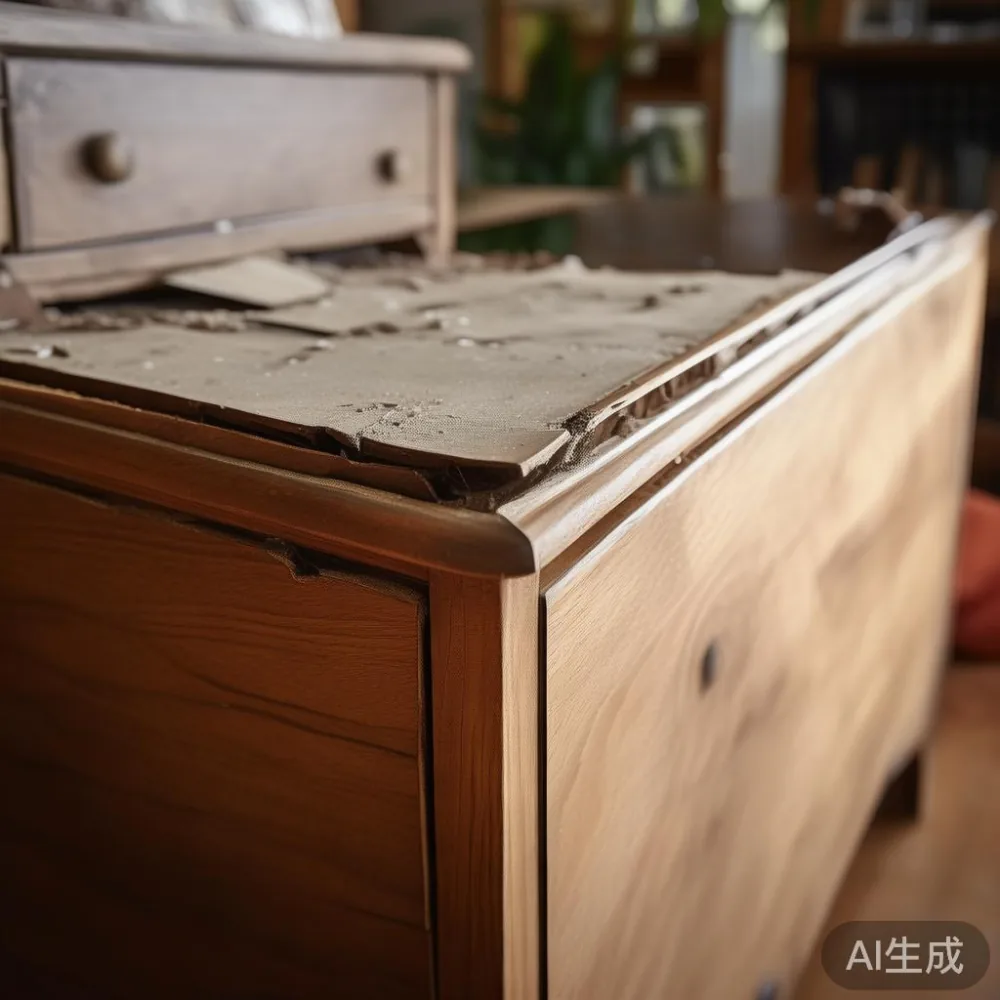
What delivery actually involves for Singapore online furniture orders?
A furniture delivery normally has four stages: warehouse preparation, parcel or pallet handling, final-mile transport and doorstep assembly. The order may leave the workshop as one protected carton, several labelled cartons or a palletised crate. Larger pieces such as wardrobes and dining tables often need more than one carton, while a marble table may arrive on a dedicated pallet with the stone secured separately.
After the goods reach a Singapore warehouse or forwarder, the delivery team may inspect the package before the scheduled date. Some couriers call the recipient first, while others arrive within a stated window, commonly between 9.00 a.m. and 6.00 p.m. A precise delivery day is useful, but access restrictions can still cause a delay if the booking is made for a morning slot and the building does not permit that hour.

Check whether the quoted price includes carrying the item up a staircase, positioning it inside the room and removing packaging. Some quotations stop at the ground-floor loading area. Others include one room placement but exclude the upper-floor lift. In an HDB block, the lift opening, internal depth and turning radius should all be checked; a package can fit into the lift but still prevent the doors from closing around a long carton.
Get the packed dimensions, not only the assembled dimensions. A dining table measuring 180 × 90 × 76 cm may have a top packed at 184 × 96 × 18 cm. A wardrobe measuring 120 × 60 × 210 cm might arrive in two sections of approximately 121 × 62 × 115 cm. The difference is small on screen but decisive at the landing.
How narrow are HDB corridors, lifts and condo entrances?
There is no single standard corridor width across Singapore because block age, design and renovation work differ. A common internal corridor may be around 120 cm wide, while some older blocks use passages closer to 90 cm. Renovations can add a shoe cabinet, shoe rack or dining extension that reduces the usable route. Rather than relying on a typical figure, measure the narrowest point from the service entrance to the flat.
For lifts, record the door width, cabin depth, cabin height and diagonal clearance. Door widths of 80–90 cm are frequent, but not universal. A 195 cm lift door may accept a 190 cm carton diagonally, yet the turn from the corridor into the lift can remain the limiting factor. Ask the building management for the lift’s posted internal dimensions if the packaging approaches them.
Condo loading bays add another layer. A driver may unload at the main porte-cochère, but a second trolley or porter fee may apply if the unit is beyond the permitted entrance. Use a tape measure for the lobby door, private corridor and bedroom doorway. Also inspect whether the route includes a security gate, a raised threshold, a 2 cm doorway lip or a turn beside a structural column.
My colleague delivered a solid wood dining table to a Punggol HDB flat last month. The assembled table was 180 × 90 cm, but the packed top was 186 × 98 cm. The lift door measured 90 cm, and the internal turn made the carton impossible to enter without tilting it at a steep angle. The team checked the stairwell before unloading and used the alternate service lift. That check prevented a crushed carton and the sort of shipping damage that turns a simple delivery into a dispute.
For a Bedok flat, the opposite issue appeared: a 140 cm nightstand fitted easily through an 82 cm door, but the route crossed a 105 cm landing with a right-angle turn. The carton had to be turned on its side, which meant checking whether the nightstand’s legs or drawers could tolerate that orientation. Small dimensions alone do not guarantee a safe delivery.
How do I prevent shipping damage before the order is placed?
Ask for the packed dimensions and package weight in centimetres and kilograms. These figures should appear in writing before payment. If a sales adviser cannot provide them, the product may be too large for a predictable standard delivery, or the seller may not have completed the delivery assessment.
Compare the longest rigid package with the narrowest route. Keep approximately 10 cm of clearance where possible, especially near a corner, lift threshold or doorway. If the package is 95 cm wide and the lift door is 90 cm, do not assume that diagonal loading will solve the problem; the driver needs enough space to rotate it safely without striking walls, handrails or lift doors.
Inspect the photos of the packed item when they are available. Look for corner protectors, foam around rails and legs, separate hardware bags and a moisture barrier around solid wood. A marble table should have the stone individually protected, with foam or corrugated dividers and a rigid base. A solid wood sofa should have the frame protected from straps and the upholstery separated from any rough surfaces.
Photograph the parcel immediately after handover. Record the tracking number, visible dents, crushed corners, punctures and water marks. Do this before the driver leaves, if possible, and include the vehicle registration number in the notes. Clear photographs showing the parcel in place can support a later shipping damage claim.
Singapore’s humid climate also matters. Solid wood can move as humidity changes, so the manufacturer may recommend leaving a bed frame or dining table acclimatised indoors for 48–72 hours before tightening or finishing installation. Avoid placing a newly delivered piece against an air-conditioning vent or directly beneath a window where condensation may form.
Will I have to assemble the furniture myself?
Some online furniture listings use “free delivery” for curbside drop-off and charge separately for assembly. Others include doorstep placement and basic assembly. The wording matters. Confirm whether the legs, rails, drawer slides, wardrobe doors and bed slats will be fitted, and whether old packaging removal is included.
A typical solid wood bed frame may require assembly of a headboard, footboard and side rails. One person might manage a light nightstand, while two adults may be needed for a bed frame weighing 65–90 kg. A dining table can weigh 45–75 kg, and a large wardrobe may exceed 100 kg in packaged form. The published product weight should guide the crew size more accurately than the category label.
Tools matter too. A complete 180 cm dining table may need a 10 mm hex key, a 4 mm Allen key, a screwdriver and a rubber mallet. A bed frame may use 13 mm and 15 mm wrenches. If the instructions call for unusual tooling, verify that it is supplied or included in the delivery kit before the team arrives.
Ask whether assembly is done in the room of the final position. Moving a completed wardrobe around a 120 cm corridor is harder than assembling it beside the intended wall. For a large bed frame, clear at least 300 × 200 cm of floor space. For a dining table, allow 90 cm around the table for chairs and movement, or 75 cm where space is limited.
Some pieces should not be fully assembled immediately. A solid wood sofa may need 48 hours for cushions to recover. A wardrobe may need 24–48 hours before door alignment is adjusted, as wood responds to indoor humidity. Follow the care instructions supplied with the specific model rather than tightening every fixing with unnecessary force.
What should I do if my furniture arrives with shipping damage?
Do not sign a delivery document that states the parcel is visibly damaged without recording the issue. Photograph the outer packaging, the affected furniture and the serial or order label before opening further. Note the damage on the electronic proof of delivery or paper receipt, then contact the seller within 24 hours.
Keep the packaging until the claim is assessed. Foam, corner guards and straps provide evidence about the direction and severity of the impact. If a rail is cracked, a drawer front is split or a marble table corner is chipped, do not attempt to glue or hide the defect. A structural component should remain unloaded, and the item should not be placed into regular use.
For a solid wood sofa, check the frame, suspension, feet and rear panel under the cushions. For a bed frame, examine the headboard, footboard, side rails and fixing points. For a dining table, inspect the top, apron and joints along all four sides. A wardrobe requires checking of the carcass corners, door edges and adjustable hinges. For a marble table, compare the stone’s edges under direct light and look for hairline cracks near mounting plates.
A transparent claim process should distinguish cosmetic marks from functional damage. A small surface scratch may qualify for repair or refinishing, while a cracked structural rail may require replacement. MIDHILL’s lifetime refinishing service is relevant here because it can address selected surface wear over the product’s life, but shipping damage should still be reported as a delivery incident rather than treated as ordinary wear.
If the damage makes the item unsafe, stop assembly and ask for a replacement, repair or refund under the seller’s policy. Singapore’s Consumer Protection Fair Trading Act and applicable e-commerce obligations may support a claim when goods are not of the agreed description or are defective. Preserve invoices, chats, delivery records and photographs rather than relying on verbal assurances.
How much should delivery and assembly cost in Singapore?
Delivery charges vary with size, weight, access and labour. A small nightstand may fall within a standard parcel threshold, while a solid wood bed frame, dining table or wardrobe usually requires a dedicated vehicle and a two-person crew. Singapore does not have a single fixed furniture-delivery tariff, so obtain a written quotation rather than guessing from a general shipping banner.
Use SGD as the reference currency. A standard flat delivery might fall around SGD 30–80 for a compact item, while a large-item delivery with indoor placement may range around SGD 80–250. Upper-floor HDB service can add roughly SGD 20–60, depending on whether the lift is usable and whether stairs are involved. Condo porterage or additional handling may add another agreed fee.
These figures are planning ranges, not universal rates. The exact quote should state whether it includes lift carrying, room placement, assembly, packaging removal and damage inspection. Ask for the full amount before checkout, including the 9% GST shown at the point of sale where applicable. Some international websites display prices without GST and reveal it only at payment.
MIDHILL offers free shipping on orders over US$350, but an overseas purchase can still create local costs. International freight, Singapore import duties or taxes, customs handling, lift booking and local delivery may be separate. The converted order value should be checked in SGD, not only compared with the US dollar threshold. Exchange rates and bank fees also affect the final payment.
For a Singapore buyer comparing local stock with a made-to-order import, ask for the landed total. For example, a USD 900 dining table is not simply converted into a Singapore price; delivery, assembly and import charges may add SGD 300 or more. A transparent breakdown prevents a “free” international shipment from becoming an expensive doorstep.
Is light luxury bed worth it compared with a modern metal bed?
For an HDB bedroom, an oak bed frame may offer warmer proportions and better repairability than a painted steel frame, but the design and dimensions must suit the room. A queen bed frame with an upholstered headboard often measures 160–170 cm wide and may weigh 60–85 kg. The mattress is commonly 152 cm wide in Singapore, while the frame is wider, which affects corridor turns and wardrobe doors.
Light luxury styling works well when the grain, joinery and spacing feel restrained rather than ornamental. French light luxury may use pale oak, soft cream upholstery and curved silhouettes. American light luxury often pairs solid wood with generous proportions and relaxed comfort. Post-modern light luxury can use clean geometry, unexpected material combinations and carefully controlled contrast.
When shoppers ask whether light luxury bed worth it decisions come down to the frame, access and maintenance rather than a trend label. Solid timber can usually be sanded and refinished, while bent metal may be difficult to repair after powder-coating damage. The trade-off is weight and price: an imported upholstered frame may cost SGD 1,200–2,800, while a simpler oak option may sit around SGD 700–1,500.
The same discipline applies to an Italian light luxury sofa. A 220–240 cm three-seat sofa may weigh 75–110 kg and arrive in several large cartons. Check whether each carton passes the lift and doorway. A light luxury sofa vs Modern sofa comparison should include seat depth, cushion recovery, frame material and module size, not only appearance.
For dining, a marble table may be visually cool and compact, with a 140–180 cm top, but a stone top can weigh 70–140 kg. Marble needs careful lifting and should not be carried by the pedestal alone. A solid wood dining table typically weighs 45–80 kg and can flex more under concentrated loads. Ask for the top thickness, leaf support and recommended centre span.
How do you choose a European wardrobe for an HDB bedroom?
Learning how to choose European wardrobe designs for an HDB home starts with usable wall width and door clearance. A wardrobe 180 cm wide may be impossible beside a 90 cm door if it opens outward, while a sliding-door model may work in the same position. Internal layouts should match the contents: hanging space for daily clothes, drawers for folded items and a ventilated section for bedding.
Measure the wall, ceiling height, skirting and nearby sockets. A 210 cm high wardrobe on a 200 cm ceiling may require altering its height or choosing another model. Leave about 5 cm above tall pieces for stability and wall movement, subject to the manufacturer’s installation guide. Doors should open through an arc that does not strike a bed, desk or bathroom door.
European styling can suit a Singapore bedroom when pale oak, muted taupe and slim profiles reflect available light. Full-height doors can visually reduce a room under low lighting, so a lighter tone or fewer upper doors may suit a compact flat. For daily use, drawer runners should be smooth, and internal shelves should hold at least 25–30 kg for books or equipment where specified.
Search terms such as under 2000 Boho furniture can lead towards rattan details, woven textures and warmer silhouettes, but the material should be understood before purchase. Rattan may be used as a cabinet insert or decorative panel while the carcass remains solid wood. If searching for best light luxury furniture options, compare the timber species, hardware, finish, dimensions and service terms; the phrase should not narrow the decision to appearance alone.
For installation, confirm whether the wardrobe is delivered flat-packed or upright. A flat-packed carcass is easier to move through a 90 cm door but needs floor space for assembly. An upright unit may arrive complete but weigh 100–160 kg and require a professional crew. Both formats need an access plan and a clear room.
What questions should I ask before paying for an online furniture order?
Ask for five written answers: the packed dimensions in centimetres, the package weights in kilograms, the delivery days, the assembly scope and the damage-resolution process. “Free shipping” should not be the only delivery detail in the conversation.
Useful access questions include: Will the longest package pass the service lift and all turns? Is upper-floor carrying included? Is there a lift booking fee? Is assembly completed in the final room? Are packaging materials removed? Will the crew photograph the item before leaving?
Ask how the product will be protected. For solid wood, the finish should be sealed against moisture and the components separated with suitable padding. For upholstery, cushions should be bagged and the frame shielded from dirty straps. For marble, the stone should have individual edge protection and a rigid pallet.
Finally, check the timeline in working days, not vague phrases such as “soon”. A typical Singapore stock order may arrive within 7–14 days, while a made-to-order piece may require 6–10 weeks plus 3–10 days for local delivery. Peak periods, customs inspections and building renovations can extend the schedule. A stated range is more useful than a single optimistic date.
Good online furniture buying is not about finding the largest item that fits a catalogue filter. It is about matching a real package to a real route, understanding who carries it upstairs and knowing what happens if shipping damage occurs. Measure first, document second and keep expectations in writing. That approach can give a Tampines, Bedok or Punggol household the right piece without turning delivery day into a renovation project.