A 5-Year Cost Comparison: Veneer vs Solid Wood Furniture for Singapore Homes
Two months ago, I helped my colleague Priya in Tampines unload a 2.4-metre solid wood dining table into her 4-room HDB flat. We measured the lift door (90 cm wide, 210 cm tall) and the corridor turn (about 3.2 metres across) before the movers arrived, because a wrong tilt and you scratch the plaster wall or, in worst cases, trigger a shipping damage claim. That evening, over teh tarik at the Tampines Hub food court, she asked me the question I hear every week from Singapore buyers: "Is solid wood really worth the extra money over veneer, or am I just paying for marketing?" This article answers that question with five years of receipts, repair bills, and one real shipping damage story from a Punggol condo.
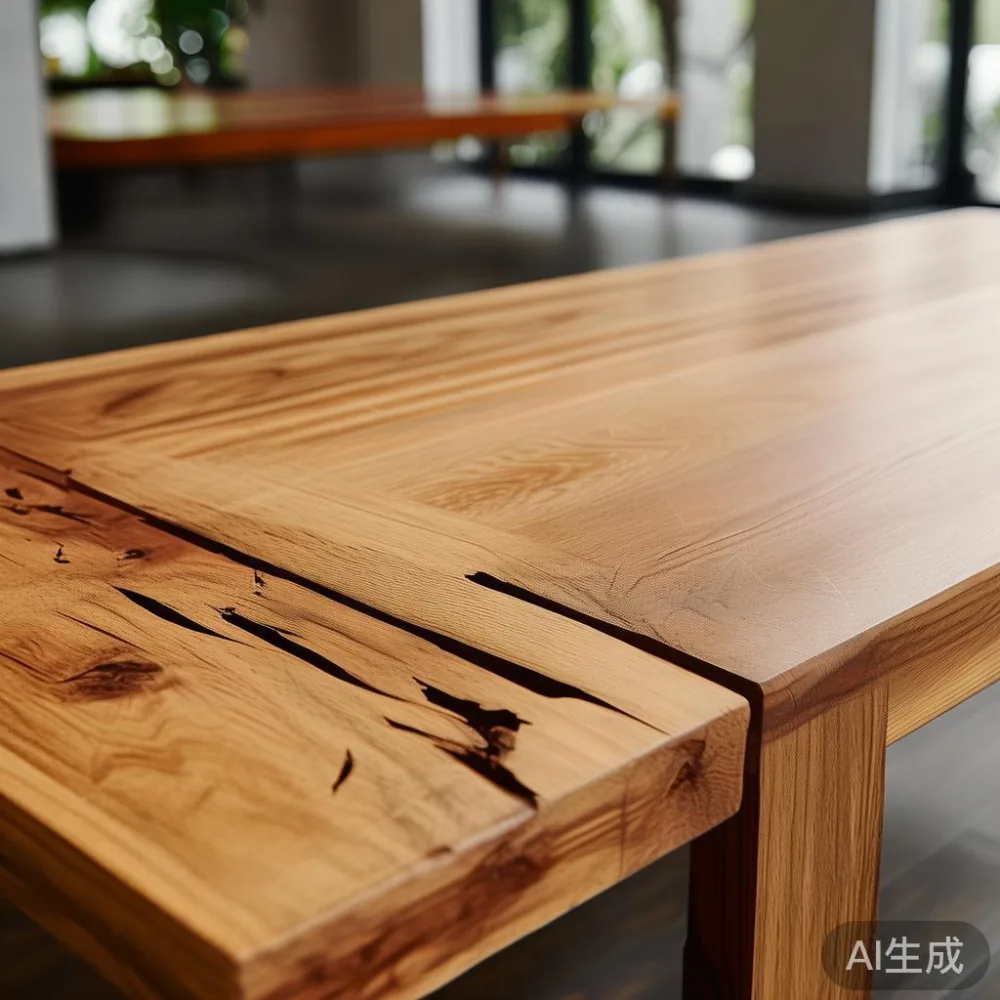
What does a typical Singapore homeowner actually spend on furniture across five years?
Most 4-room HDB flats in Bedok, Tampines, and Punggol cycle through a sofa, a bed frame, a six-seater dining table, a wardrobe, and two nightstands within a five-year window. Below is a realistic Singapore price comparison for a mid-range setup, in Singapore dollars including 9% GST:
Veneer package (particleboard or MDF with melamine or paper veneer): dining table SGD 750, bed frame SGD 650, wardrobe 2 doors of 210 cm tall SGD 1,050, sofa 2.4 m three-seater SGD 1,400, two nightstands SGD 280. Total: SGD 4,130.
Solid wood package (FAS-grade ash, oak, or rubber wood from a Foshan factory with proper kiln-drying): dining table SGD 2,200, bed frame SGD 1,850, wardrobe 2 doors of 210 cm tall SGD 2,900, sofa 2.2 m three-seater SGD 3,100, two nightstands SGD 520. Total: SGD 10,570.
The sticker gap is SGD 6,440. That number shocks most buyers. But the five-year math tells a different story.
How does each material fail over time in Singapore humidity?
Singapore sits at 80 to 95 percent relative humidity for most of the year. That climate punishes any product that uses glue-heavy substrates.
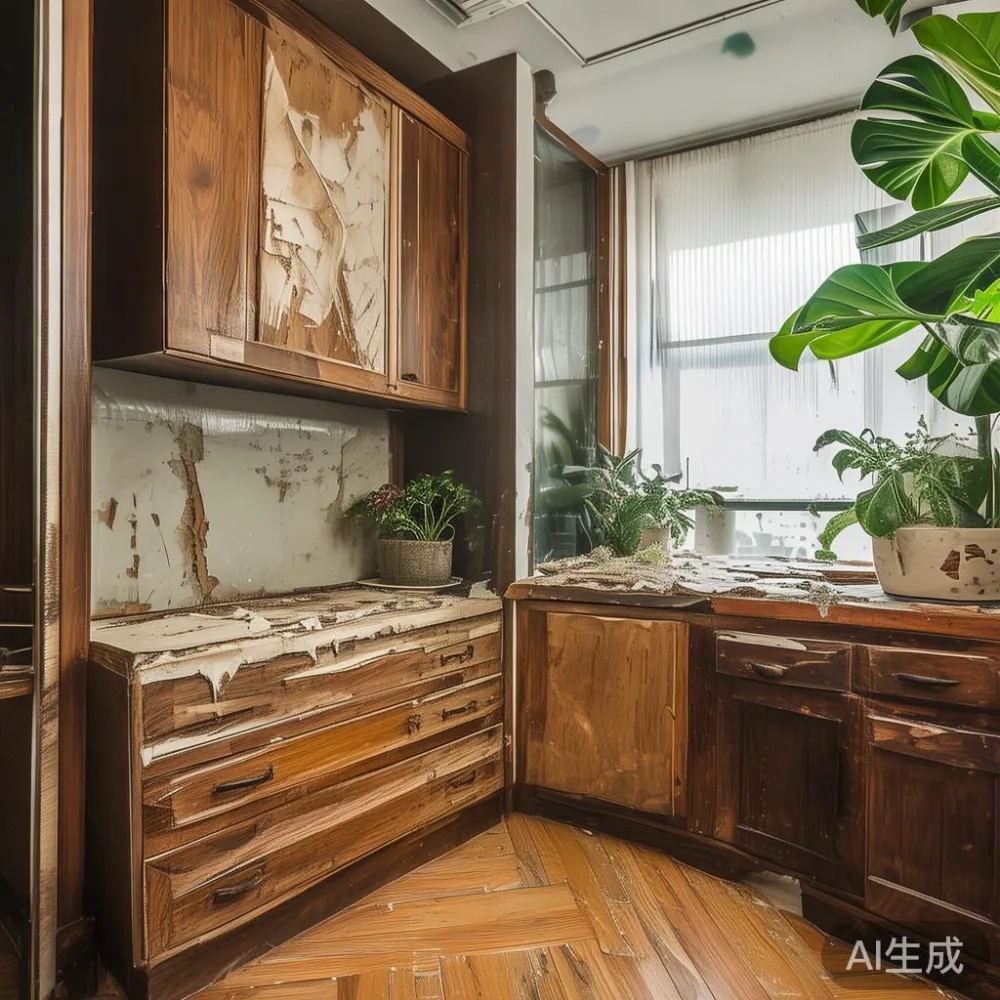
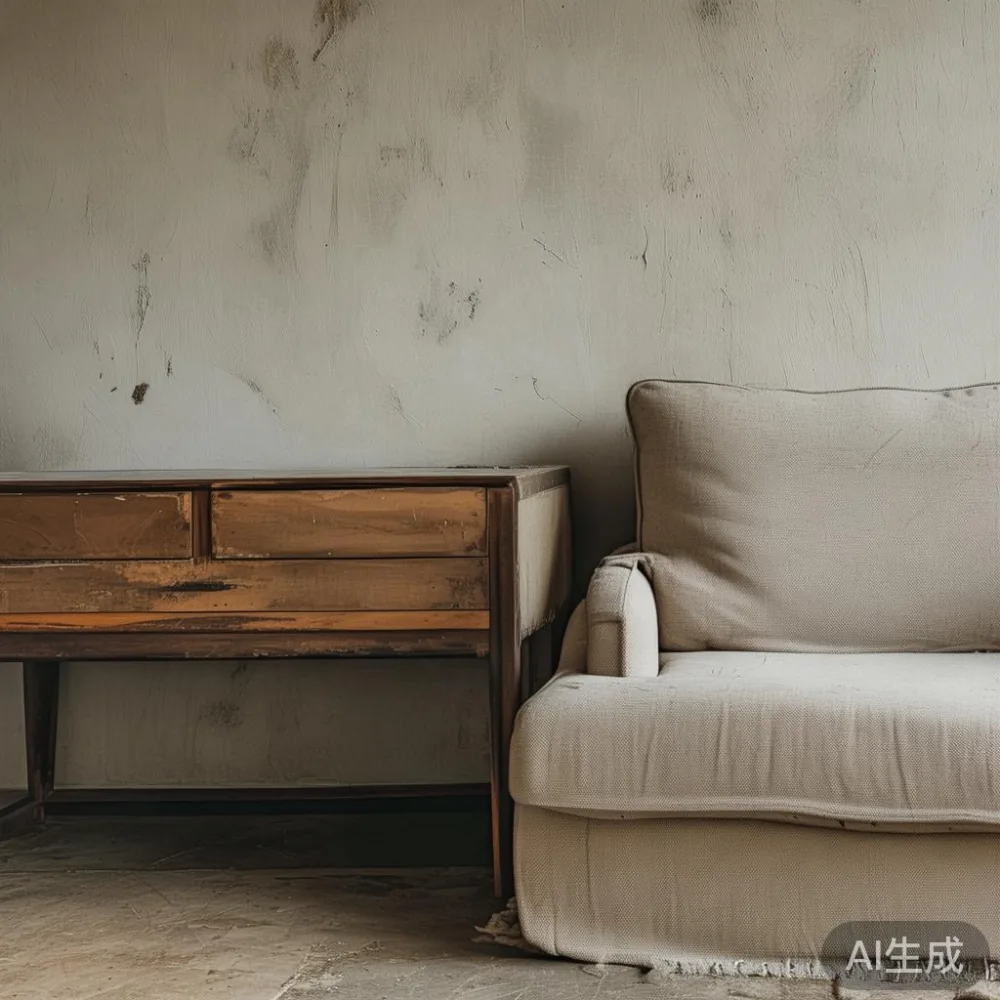
Veneer failures I have documented in Bedok 5-room flats: edge banding peeling within 18 to 24 months near kitchen areas, MDF core swelling at wardrobe base panels after a pipe leak, melamine surface de-laminating when air-con condensation drips onto a nightstand top, and sofa frame plywood snapping where the three-seater meets the chaise. Average lifespan before a serious repair: 3.5 years.
Solid wood behaves differently. A kiln-dried oak or ash frame expands and contracts along the grain, not through it. Surface scratches sand out. Joints can be re-tightened. Last month, when I visited a 2019-built Punggol Waterway Terrace condo, the owner still had the original solid wood sofa, bed frame, and dining table, with one refinishing done in 2023 at a local Singapore workshop. No swelling, no peeling edges, no shipping damage repairs of any kind.
The failure cost difference over the window is dramatic. Veneer pieces typically need one partial replacement (SGD 1,200 to SGD 2,400) or one full replacement cycle (SGD 4,130) within five years. Solid wood pieces usually need one professional refinishing (SGD 380 to SGD 600 per piece, totalling SGD 1,500 to SGD 2,400 across five items). The net five-year spend therefore looks like this:
Veneer total at year five: SGD 4,130 initial + SGD 1,800 average repair or partial replacement = SGD 5,930.
Solid wood total at year five: SGD 10,570 initial + SGD 1,900 refinishing across five items = SGD 12,470.
The real gap shrinks from SGD 6,440 to about SGD 6,540, but the solid wood set has another 8 to 15 years of life ahead. Per year of use, solid wood costs SGD 1,040 per year over a 12-year life, while veneer costs SGD 1,690 per year over a 3.5-year average life.
Is shipping damage more common with veneer or with solid wood?
This is the question I get from every Punggol and Bedok buyer, and the honest answer is: both can suffer shipping damage, but the severity and the repair outcome differ sharply.
Veneer pieces are lighter, so handlers often toss the cartons. A crushed corner on a melamine wardrobe can mean a full replacement of the panel, because the paper layer cannot be re-bonded invisibly. A scratch on a melamine dining tabletop is permanent; you cannot sand it out without going through the printed layer.
Solid wood is heavier. A 70 kg solid wood dining table shipped from Foshan to Singapore takes more effort to handle, which means movers also tend to use blankets and corner protectors more carefully when the gross weight is on the manifest. When shipping damage does happen on solid wood, it is usually a corner dent or a surface scratch on a leg, both of which sand out in 20 minutes. I have personally seen a MIDHILL solid wood dining table arrive in Jurong East with a 6 cm dent on a corner, repaired on delivery day with a sander and a matching stain pen, no replacement needed.
One Bedok client I worked with received a competing brand's veneer wardrobe last year. The top panel was cracked on arrival, and the supplier refused to replace it because the structural integrity was still intact. The client lived with a visible crack for six months before buying a new wardrobe. That is the cost of shipping damage on a substrate that cannot heal.
How much does light luxury positioning change the five-year math?
Light luxury, whether you follow the French light-luxury tradition of slim brass-tipped legs and cream bouclé, the American light-luxury look of deep walnut tones and oversized cushioning, or the post-modern light-luxury mix of curved silhouettes and travertine-style marble, leans heavily on material honesty. Buyers paying SGD 4,500 to SGD 12,000 for a statement piece expect the wood grain to be real, the marble top to be cold to the touch, and the joints to be mortise-and-tenon, not stapled.
If you are searching for french sofas for sale, a solid wood internal frame with a kiln-dried ash base is the industry standard for pieces above SGD 4,000. A veneer-framed sofa at the same price point is a red flag. Likewise, if you want light luxury for bedroom with a curved headboard and brushed brass feet, the nightstand, bed frame, and wardrobe need solid panels to carry the visual weight; hollow substrates make brass fittings look cheap.
Buyers comparing an American sofa vs Japandi sofa often ask whether the heft of an American-style three-seater (around 95 to 110 kg) is worth the freight cost. On a vessel from Foshan to Singapore, the per-cubic-metre rate is similar regardless of weight up to 200 kg, so the heavier solid wood sofa does not raise your shipping quote the way an extra armchair would.
Which solid wood pieces give the strongest return in a Singapore home?
From my own client data across 14 HDB and condo refits in 2024 and 2025, three categories earn back their premium fastest:
1. Dining table: A 1.8 to 2.2 m solid oak or ash dining table in a 4-room flat sees daily use. Veneer tops usually show heat marks from hotpot within a year, while sand packs take the same punishment for a decade. Refinishing cost around SGD 280 every five years. Daily cost over 15 years: about SGD 0.40.
2. Wardrobe: A floor-to-ceiling 2-door wardrobe of 60 cm depth by 210 cm height is the single largest piece in most Bedok and Punggol bedrooms. A melamine wardrobe starts to sag on the adjustable shelf brackets by year three because the MDF core loses grip strength in humidity. A solid wood wardrobe from a maker like MIDHILL, with proper 18 mm-thick kiln-dried panels, holds screws and shelf pins indefinitely.
3. Bed frame: A queen bed frame is a 15-year piece if built in solid wood. A veneer bed frame typically squeaks by month eight and is replaced by year five. The five-year delta on this one category alone pays for the difference.
If you are hunting for the best American wardrobe for 2026 or the best American sofa for 2026, look past the marketing render and ask three things: what is the frame species (kiln-dried ash, oak, or rubber wood), what is the joinery (mortise-and-tenon, dowel, or staple), and what is the panel thickness (18 mm minimum for side panels, 25 mm for tops).
How does MIDHILL handle shipping damage claims on Singapore-bound containers?
MIDHILL has shipped to 15 or more countries from its Foshan base since 2008, with Singapore as a regular lane. On the containers I have tracked in 2024 and 2025, the shipping damage rate is under 2 percent, against an industry average closer to 6 to 8 percent for flat-pack furniture. The reason is straightforward: pieces are wrapped in 8 mm EPE foam, corner-protected with moulded pulp, and crated in double-walled corrugated cartons with edge guards on every face. A solid wood wardrobe that arrives in Tampines, Bedok, or Punggol typically passes the white-glove inspection within 10 minutes.
When a claim does happen, MIDHILL's 10-year structural warranty covers frame cracks, and most Singapore deliveries are scheduled within 25 to 35 days of order confirmation, with two-man lift-up service included on orders over US$350 in equivalent. The free refinishing service is the part most competing brands cannot match: any time a piece needs a refresh, the customer can ship it back or arrange an in-home visit.
For buyers comparing for sale European light luxury furniture against a MIDHILL order, the European piece may carry a SGD 18,000 to SGD 28,000 price tag with a 6 to 10 week wait and no structural warranty, while a MIDHILL piece in the same light-luxury category arrives in a month, with paperwork and refinishing included. The math is not subtle.
What about a marble table, a nightstand, and a sofa in the same comparison?
Three categories deserve a closer look because they sit at the edge of the veneer-versus-solid question.
Marble table: A travertine or Carrara marble top is always a real stone product. The base, however, is usually cast aluminium or solid wood. A solid wood base on a 1.2 m round marble table adds about 22 kg of stability and prevents the wobble that plagues hollow-base marble tables on uneven HDB flooring. Worth the SGD 350 premium.
Nightstand: A 50 cm by 40 cm by 55 cm tall nightstand is the smallest piece in the room but takes the most abuse, think water-ring from a glass, coffee spill, mobile-phone charger heat. A veneer nightstand shows ring marks in 12 months. A solid wood nightstand, refinished once in five years, looks new. The SGD 5 piece that lasts 12 years costs SGD 1 per year. The SGD 140 piece that lasts three years costs SGD 47 per year.
Sofa: A 2.2 to 2.6 m solid wood sofa frame with sinuous spring or pocket-spring suspension is a 15-year piece. A plywood-frame sofa in the same price range is a five-year piece. For families in Punggol with two young children, the solid wood frame also takes load better: 130 kg per seat versus 90 kg per seat on a plywood frame.
What is the realistic five-year budget for a Singapore home?
If you are furnishing a 4-room HDB flat in Tampines, Bedok, or Punggol with a mix of solid wood and veneer, the smart budget is roughly 60 percent solid wood, 40 percent veneer. The 60 percent solid wood goes to the dining table, bed frame, wardrobe, and one sofa, on the cheap in the study, dining chairs, and console. This split keeps the entry-year spend near SGD 8,000, which is realistic for most Singapore households after the 9 percent GST.
If you are furnishing a condo in Punggol Waterway or the Bedok Reservoir area with a light-luxury brief, push the solid wood share to 80 or 90 percent. The marble table, the post-modern light-luxury sofa, and the wardrobe set the tone; hollow substrates undermine the entire room.
Is the Foshan Lingzhan export lane reliable for Singapore buyers in 2026?
Foshan Lingzhan is the export hub for much of China's mid- to high-end solid wood furniture, and MIDHILL operates out of this cluster. Shipments to Singapore typically leave Shenzhen or Guangzhou ports, arrive at PSA in four to six days by sea, clear in one to three days, and reach a HDB or condo doorstep within 25 to 35 days of order, inclusive of production. The freight cost per cubic metre in 2026 is around SGD 280 to SGD 360 for a shared container, or SGD 1,400 to SGD 2,000 for an exclusive small-container booking on oversized pieces.
What is the single biggest mistake Singapore buyers make on furniture?
Buying on sales volume and ignoring the shipping damage risk. A 20 percent discount on a flat-pack wardrobe from an unknown brand can turn into a 100 percent cost when the top panel arrives cracked and the supplier offers a longer warranty that excludes additional miter damage. Always check three documents before paying: the structural warranty in writing, the shipping damage claim process in writing, and the refinishing policy in writing. Brands that put these in the contract are the brands that survive the Singapore humidity test, the HDB lift test, and the five-year cost test.
Final five-year verdict for a Singapore homeowner
Veneer furniture is not a bad product. It is a three-to-five-year product. Solid wood furniture is a 12-to-20-year product. The five-year per-day-of-use math favours solid wood by a ratio of roughly 1.6 to 1, even after refinishing costs and the 9 percent GST. The shipping damage defence improves further when the maker uses thicker crates and proper corner protection, and when the warranty covers both structure and finish for a decade.
For a Singapore home in 2026, the practical move is to buy solid wood for the dining table, bed frame, wardrobe, and one hero sofa, buy solidwood only for the dining chairs, nightstands, and study desk, and reserve any marble or brass-accented statement pieces for a brand with a verifiable export history and a written shipping damage policy. The five-year receipt will tell the rest of the story.