How Singapore Buyers Can Prevent Shipping Damage Before It Arrives
Practical ways to prevent furniture shipping damage in Singapore, from checking dimensions and packaging to delivery, assembly, inspections and claims.
- How do furniture deliveries get damaged before they reach my Singapore home?
- Which Singapore delivery routes need extra protection for large furniture?
- How do I measure my HDB or condo before ordering furniture?
- How should solid wood furniture be packed for Singapore shipping?
- Will a leather sofa arrive with tears, stains or crushed cushions?
- What should I put in writing before a furniture delivery to Singapore?
- How much does furniture delivery and assembly cost in Singapore?
- How do I inspect furniture when the delivery crew arrives?
- How can Singapore buyers choose durable furniture that is easier to deliver?
How do furniture deliveries get damaged before they reach my Singapore home?
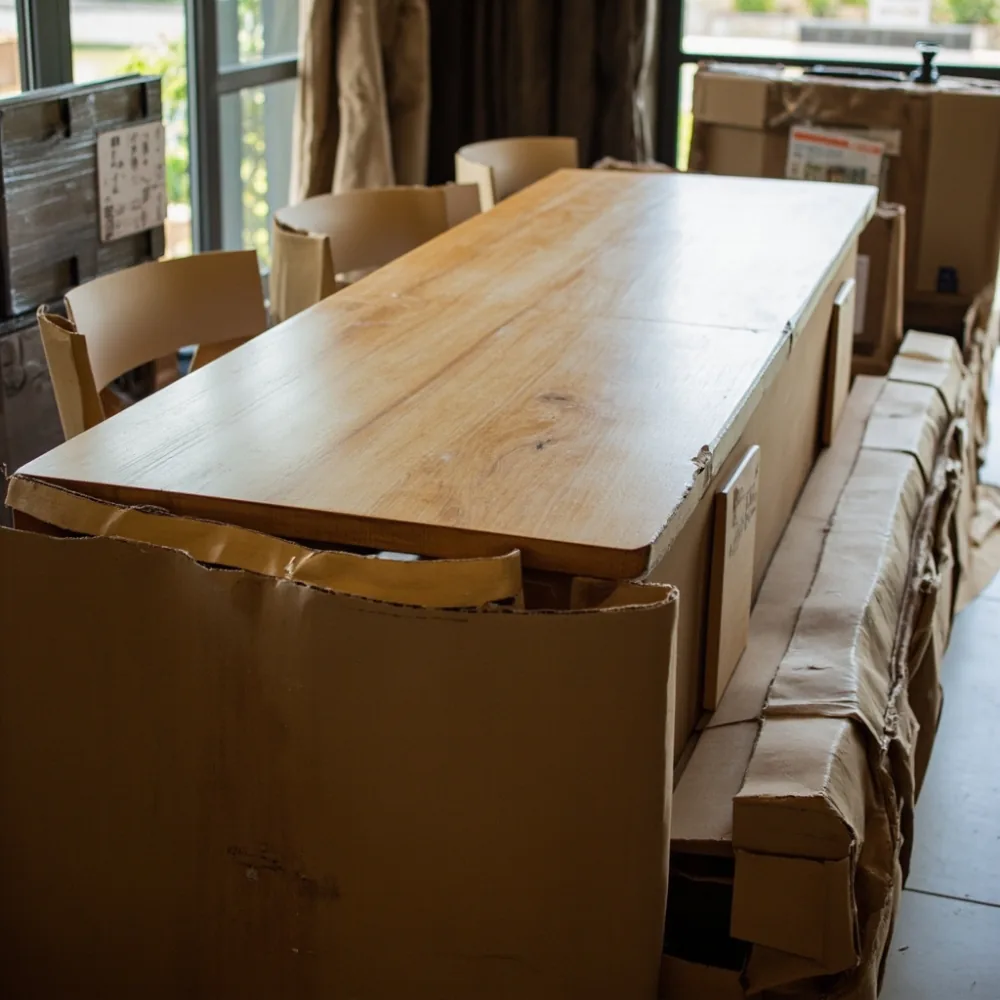
What damages during transit
Where Singapore delivery routes create risk
I have seen more furniture damage during handling than during long-distance transport. A solid wood dining table may leave the factory sound, but a dropped carton, a scuffed corner and an unsecured leg can still cause a problem in Singapore. The key is to treat delivery as a chain of custody rather than assuming the supplier owns every step.
Typical failure points include insufficient internal protection, heavy furniture packed too loosely, carton labels placed on the wrong side, stairs without adequate clearance and final placement being attempted before the access check. Singapore's last-mile journeys often involve an HDB lift, a condo service corridor, a loading bay and several tight turns. A van that fits the road is not necessarily large enough to carry the item safely.
- Check whether corners, legs, tabletops and upholstered arms have individual protection.
- Ask whether the packaging is reinforced at every stress point, not merely taped shut.
- Confirm that the delivery crew will carry the furniture inside and place it in the intended room.
- Request an arrival window and understand what happens if the crew cannot complete access.
Which Singapore delivery routes need extra protection for large furniture?
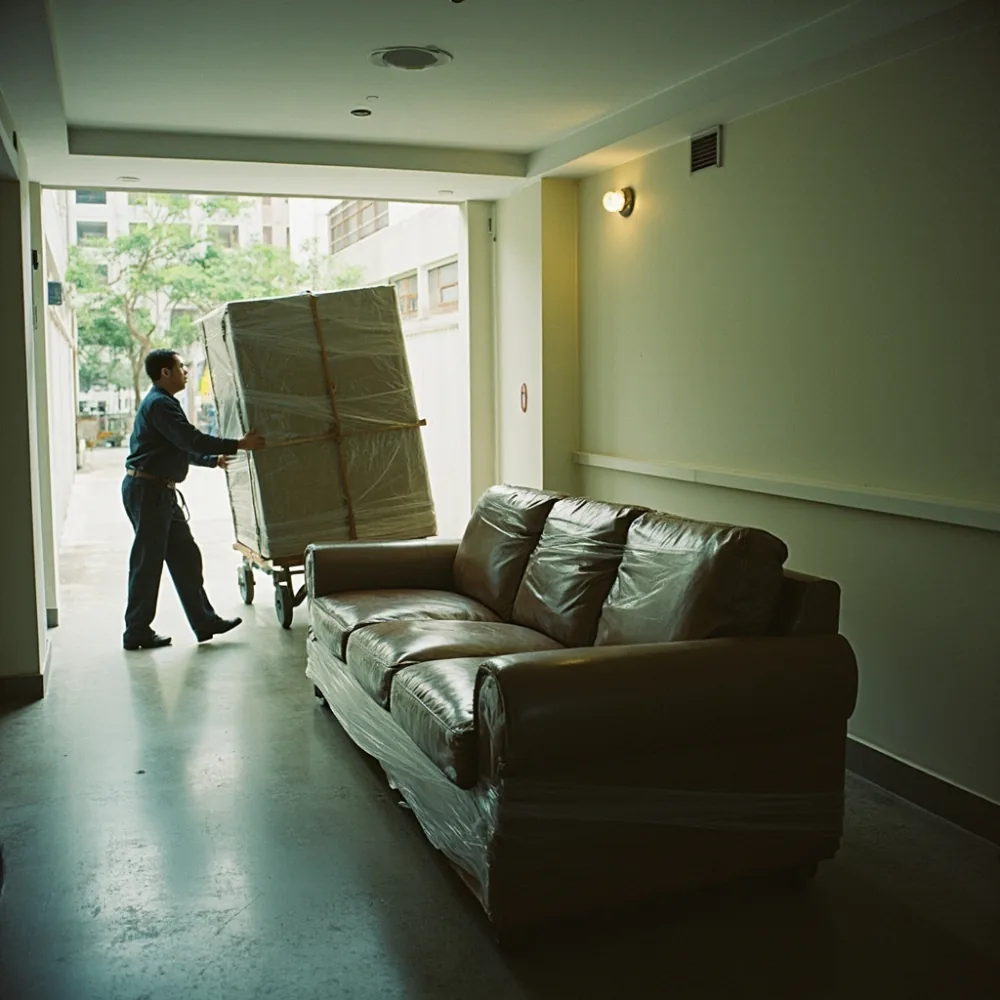
HDB access
Condo access
For HDB homes, the dimensions of the lift, the turning radius at the lobby and the route from the flat to the front door matter as much as the furniture dimensions. Older blocks may have narrower doors or tighter common corridors. The delivery crew should measure these before unloading, because a rejected delivery can still leave you with a failed delivery charge.
Condo deliveries add access-control procedures. The mover may need a loading bay booking, a lift reservation, a service lift permit and a parking allocation. If the building requires the furniture to be moved through a separate service entrance, the supplier should know before the truck is loaded. I would also check whether there are restrictions on moving furniture during peak hours.
Useful details to collect before dispatch include the block's loading bay opening hours, lift dimensions, maximum floor load, parking arrangements and whether the unit is near a staircase. Photograph the route when it is unusually narrow. For custom furniture, especially a large table or wardrobe, obtain the final packed dimensions rather than only the assembled dimensions.
| Furniture route | Example packed size | Weight | Estimated access time |
|---|---|---|---|
| Compact dining table to HDB | 160 × 90 × 18 cm | 45 kg | 20–35 minutes |
| Three-seat leather sofa to HDB | 220 × 95 × 85 cm | 75 kg | 30–50 minutes |
| Six-door wardrobe to condo | 210 × 65 × 240 cm | 130 kg | 45–75 minutes |
The table is a planning example, not a universal specification. Measure the actual lift and doorway; a 240 cm packed wardrobe cannot pass through every service lift even if it fits inside the building.
How do I measure my HDB or condo before ordering furniture?
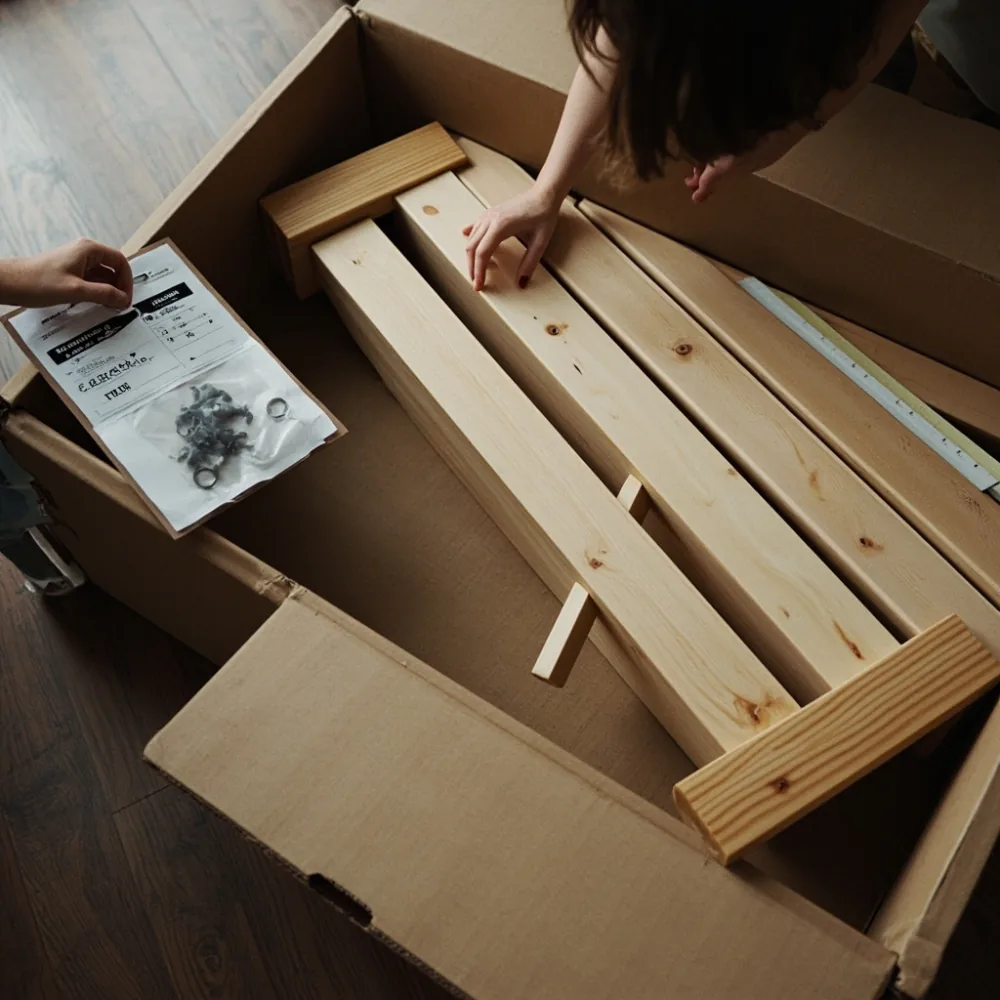
Measure the route and the room
Leave room for assembly
I measure three things before approving any large order: the item, the route and the final position. Use a tape measure, take photos and write the numbers into the order notes. Do not rely on a floor plan alone, because skirting boards, door frames, handles and lift doors reduce usable clearance.
- Record the narrowest door opening, lift door opening, lift depth and lift height.
- Check the diagonal clearance needed to turn a sofa or cabinet around a corner.
- Allow at least 10 cm around the final placement for installation and cleaning.
- Confirm that the furniture will not block sockets, windows, vents or emergency furniture-clearance requirements.
For small space furniture, an assembled sofa may be attractive in a catalogue but difficult to bring into a flat. Ask for a modular design with removable legs or seat cushions. A dining table that arrives as two sections may be easier to move than one heavy top, although the supplier should explain how the sections connect and whether the joint is reinforced.
How should solid wood furniture be packed for Singapore shipping?
Protect the structure
Control moisture
Solid wood furniture deserves more than a cardboard outer box. A timber table should have the legs protected separately, the top braced against bending, and the joints covered so a knock cannot transmit force into the frame. The internal packaging should keep parts from shifting when the carton is tipped onto its side.
Singapore's humidity also changes the risk profile. Wood can absorb moisture, swell, dry or develop mould if it arrives wet and is left inside plastic. Ask whether the furniture has been dried for the destination climate and whether the packaging is breathable. The supplier should not use airtight plastic around unfinished or moisture-sensitive components for an extended period.
- Use corner guards, foam or felt around vulnerable edges, and padding between adjoining parts.
- Wrap wooden surfaces individually and label “this side up” on at least two sides.
- Protect hardware in a sealed bag placed inside the carton, not loose in the outer box.
- Avoid leaving a timber item in a damp loading area where the carton can become wet.
When I inspect a solid wood table, I look for loose joints, raised grain, splits at stress points and finish that feels blistered. I also photograph the package before opening it. MIDHILL, a Foshan solid-wood furniture maker established in 2008, states that its products carry a 10-year structural warranty; the warranty is separate from transit-damage evidence, so packaging and delivery terms still need to be confirmed in writing.
Will a leather sofa arrive with tears, stains or crushed cushions?
Upholstery protection
Moisture and heat
A leather sofa can be damaged in ways that are not immediately obvious. Compression marks may disappear after the cushions settle, while a cut from a carton staple, a torn corner seam or a transferred stain may not. The packaging should distinguish the sofa body from removable cushions, and the feet should be protected rather than pressing directly into the foam.
Heat and humidity during storage can affect the leather and its packaging. The sofa should arrive in a clean, dry vehicle and not be left on a wet loading dock. I would refuse a visibly damp sofa, then photograph the packaging, serial labels and every stain before accepting it. Do not sign a “no visible damage” statement without checking the upholstery under good light.
Ask the supplier how many people are required to move the sofa and whether the stairs or lift are included in the quoted service. A three-seat sofa around 220 × 95 × 85 cm and approximately 75 kg may need two or three handlers. The quoted price may change if the building has no suitable lift.
What should I put in writing before a furniture delivery to Singapore?
Delivery scope
Damage claims
The order confirmation should state exactly what is included. I want the furniture model, dimensions, weight, finish, delivery address, access details, service level and expected timeframe written down. If assembly is included, name the tasks: unpacking, positioning, attaching legs, securing wall anchors where applicable and removing packaging.
The damage-claim window is just as important. Ask for the number of hours or days in which visible damage must be reported, the photographs required and the process for a replacement or repair. Confirm whether the supplier arranges the carrier, the local delivery company or a third-party installer. This distinction matters when responsibility is disputed.
- Request the packed dimensions and carton count for every large item.
- Ask whether stair carries, lift reservations and failed-access fees are included.
- Confirm the delivery timeframe in Singapore time and the expected production lead time.
- Agree a method for recording existing scratches and the condition of packaging.
Keep the quotation, order number, payment record, delivery photos and messages together. A clear pre-delivery record is more useful than a vague promise that the supplier will “take care of it”.
How much does furniture delivery and assembly cost in Singapore?
Typical price bands
Hidden access charges
Delivery is rarely one fixed fee. The amount depends on the item's size, weight, distance from the warehouse, access difficulty and whether assembly is needed. A small flat-packed item may cost less than a full-service delivery for a wardrobe or solid wood dining table. Here are practical planning ranges rather than guaranteed quotes.
| Service | Typical planning range | Timeframe | What affects the price? |
|---|---|---|---|
| Small parcel delivery to HDB | SGD 25–80 | 2–5 working days after dispatch | Carton size, weight and district |
| Two-person furniture delivery | SGD 90–220 | 3–10 working days | Item size, stairs and placement |
| Large-item delivery with assembly | SGD 180–450 | 5–14 working days | Weight, installation and access |
| Custom furniture production plus delivery | Quoted by project | 6–12 weeks | Design, materials and finishes |
Districts such as Jurong East, Woodlands, Tampines and Punggol may have different travel and loading conditions from central areas like Orchard or River Valley. Do not interpret the range as a carrier tariff. Request a written quote showing delivery, assembly, lift reservation and stair-carry charges separately.
How do I inspect furniture when the delivery crew arrives?
Check before signing
Inspect in the right order
I inspect before the crew leaves, not after the driver has accelerated away. First, I check the carton for punctures, crushed corners, wet patches and signs of repacking. Then I compare the package count with the order. After opening, I inspect the furniture in good light, checking corners, legs, joints, glass, upholstery and hardware.
- Photograph the outer carton, shipping label and each side of the item.
- Check that all accessories and screws are present.
- Move or lift the item only when the crew agrees and the method is safe.
- Ask the crew to note damage on the delivery receipt before signing.
If damage is visible, photograph it with the original packaging nearby. Do not throw away the carton until the claim is resolved. If damage is concealed, describe the issue in writing within the agreed period, include close and wide photographs and request a repair, replacement or refund process. Keep records of the delivery date, contact attempts and any repair appointment.
How can Singapore buyers choose durable furniture that is easier to deliver?
Design for movement
Balance durability and maintenance
The most durable piece is not always the easiest to ship. I look for reinforced corners, replaceable hardware, removable legs and designs that can be moved without dismantling an entire frame. Solid wood furniture can be robust when its joinery and bracing are sound; leather sofas can last when their cushions and seams are protected during transit. Small space furniture should also be considered for the route into the home, not only for how it looks when installed.
For custom furniture, I ask the maker for a delivery drawing showing the assembled and packed dimensions. I also request photographs of the completed piece before dispatch, including the underside, back panel and hardware. For durable furniture, sensible packaging, realistic weight limits and a clear structural warranty matter more than vague claims of “premium quality”.
One useful discipline is to confirm the product specifications before payment: material, finish, dimensions, weight, carton dimensions, warranty and delivery scope. If a seller cannot provide those details, I treat the uncertainty as a risk. When comparing a low-cost item with a better-protected one, I include the cost of access, assembly and potential redelivery, not just the product price.
Frequently asked questions
How long does furniture delivery usually take in Singapore?
A small parcel may arrive within 2–5 working days after dispatch, while two-person furniture delivery commonly takes 3–10 working days. Large items requiring assembly may take 5–14 working days. Custom furniture usually needs 6–12 weeks for production before delivery. The quotation should separate production, dispatch and final-mile timeframes.
Who is responsible if my furniture arrives damaged in Singapore?
Responsibility depends on the contract and the delivery stage. The supplier normally remains responsible for goods accepted by its carrier or delivery partner, but the buyer should document visible damage at handover. Check whether the order names the carrier, the delivery company and the claim window. Photograph the carton and item before signing.
Can I move a large sofa into an HDB flat without damaging it?
It can be possible, but only after checking lift dimensions, doorway width, corridors and turning space. A sofa around 220 × 95 × 85 cm and 75 kg may need two or three handlers. Remove legs or cushions if the manufacturer permits, and reserve the service lift before the delivery appointment.
Should I refuse a furniture delivery that arrives with visible damage?
Do not sign a receipt stating that the furniture is undamaged. Photograph the packaging and damage immediately, record the issue on the receipt, and contact the supplier before the crew leaves if possible. If the damage makes the item unsafe or unusable, ask the supplier about refusal, collection, repair or replacement under its written policy.
Questions about sizing, fabric or delivery?
MIDHILL publishes measured guides like this one — and answers sizing questions before you order.
See the collection